
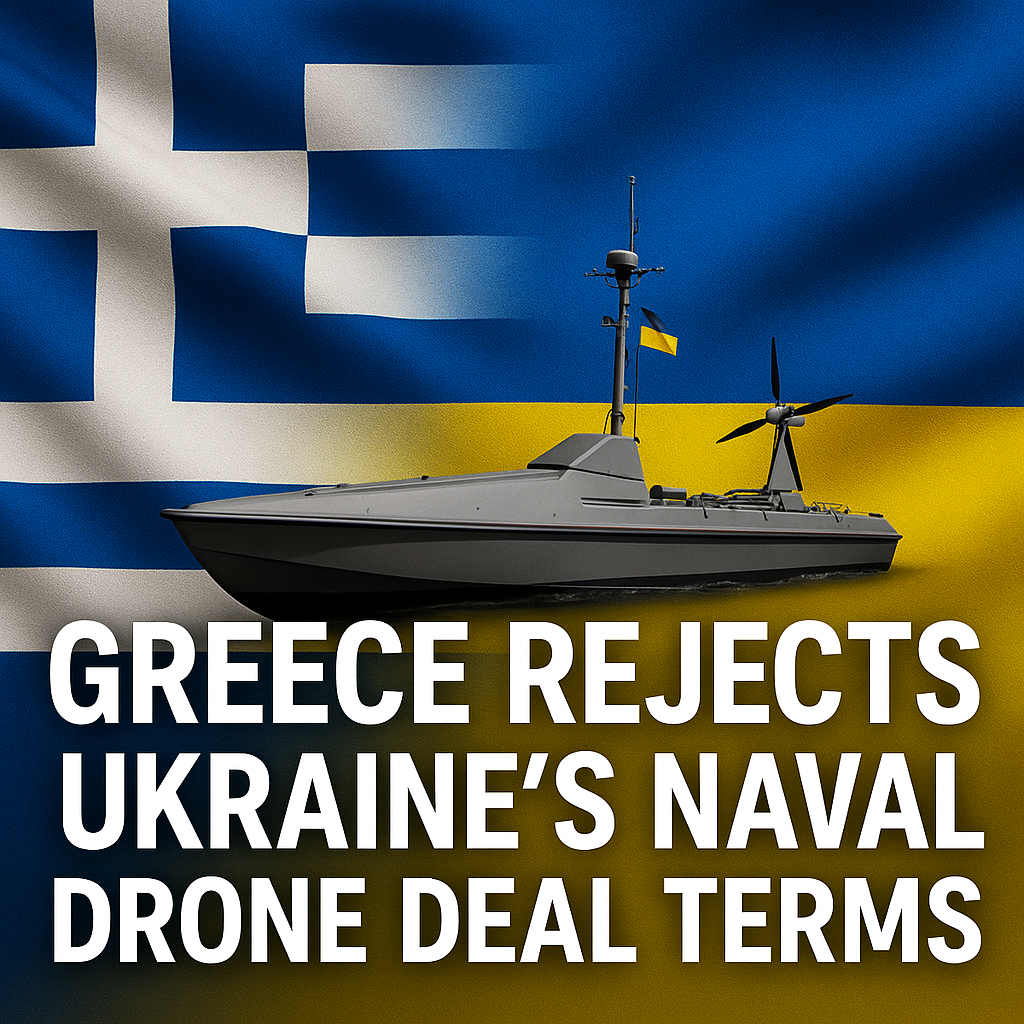
Greece Rejects Ukraine’s Naval Drone Deal Terms

Greece Rejects Ukraine’s Naval Drone Deal Terms
Greece’s recent decision to reject Ukraine’s proposed terms for a naval drone deal has raised eyebrows and sparked discussions about the interplay of geopolitics and military cooperation in Eastern Europe. With tensions on the rise in the region, this development underlines not only Greece’s strategic priorities but also the complexity of its relationships within NATO and the EU.

The Context of the Naval Drone Deal
Ukraine has been bolstering its naval capabilities in response to ongoing conflicts, particularly in the Black Sea, where it faces threats from Russian maritime power. The proposed deal aimed to provide Greece with the opportunity to acquire advanced naval drones, which could enhance its defense systems amid increasing regional instability.


Reports indicate that negotiations between Greece and Ukraine had been ongoing, with both parties expressing interest in military cooperation. However, the talks have now come to a standstill due to Greece’s reluctance to accept what it perceives as unfavorable terms. According to sources, one of the stumbling blocks was the financial implications associated with the deal, which Greece felt were not justifiable given its current economic situation.


Diverse Reactions to the Decision
While Greece’s decision has been met with disappointment in Kyiv, it reflects a broader trend where nations assess military partnerships through the lens of national interests and economic stability. Various analysts have pointed out that Greece is navigating a particularly complex geopolitical landscape, balancing its commitments to NATO and the EU while also evaluating its economic priorities.
1. Support from Defense Analysts: Some defense analysts argue that Greece is right to be cautious. They stress the importance of ensuring any military expenditure aligns with national interests, particularly in light of tight budgets. Their view echoes the sentiment that military deals should only be entered into when they unequivocally enhance national security.
2. Criticism from Pro-Ukraine Advocates: Conversely, pro-Ukraine commentators suggest that Greece’s hesitance could embolden adversarial forces in the region. They raise concerns that by turning down the opportunity to bolster military cooperation with Ukraine, Greece is potentially weakening its own defenses and undermining efforts to collectively counter Russian aggression.
Both these perspectives showcase the intricate balancing act that Greece finds itself in as it navigates its alliances and obligations in a challenging geopolitical environment.
Implications for Future Relations
The breakdown of the naval drone deal may have larger implications for Greece’s international relationships. Should the standoff continue, it may influence Greece’s future military collaborations not only with Ukraine but also with other Eastern European countries that share similar security concerns.
– Potential Strains on NATO Relationships: Greece’s rejection of the deal could lead to strains in its relationships within NATO, where collective defense is a foundational principle. Allies may interpret Greece’s hesitance as a reluctance to support Eastern European states under duress from Russian aggression.
– Opportunities for Other Partnerships: On the other hand, Greece may explore partnerships with other nations, potentially seeking to procure similar technologies from alternative allies. This may prompt a re-evaluation of Athens’ defense spending and procurement strategy, possibly focusing on domestic capabilities or partnerships with nations outside the immediate EU framework.
The Way Forward: A Delicate Balancing Act
As Greece reassesses its military priorities, the hope remains that a balanced approach will emerge that prioritizes both economic viability and robust defense capabilities. The current geopolitical tensions necessitate a careful strategy that does not compromise national security while still upholding alliances and international commitments.
Moving forward, both Greece and Ukraine must consider how to bridge their differing perspectives. Dialogue and negotiation could pave the way for modified agreements that take into account Greece’s concerns while still aligning with Ukraine’s desperate need for military assistance.
In conclusion, Greece’s decision to reject the terms of the naval drone deal with Ukraine serves as a reminder of the intricate web of international relations, especially in a time of heightened tensions. The responses to this decision highlight the complexity of national interests, economic realities, and the pressing need for enhanced military cooperation to address ongoing security challenges in Eastern Europe. Both nations will need to navigate this sensitive landscape thoughtfully to find common ground and foster a spirit of collaboration for future partnerships.















