
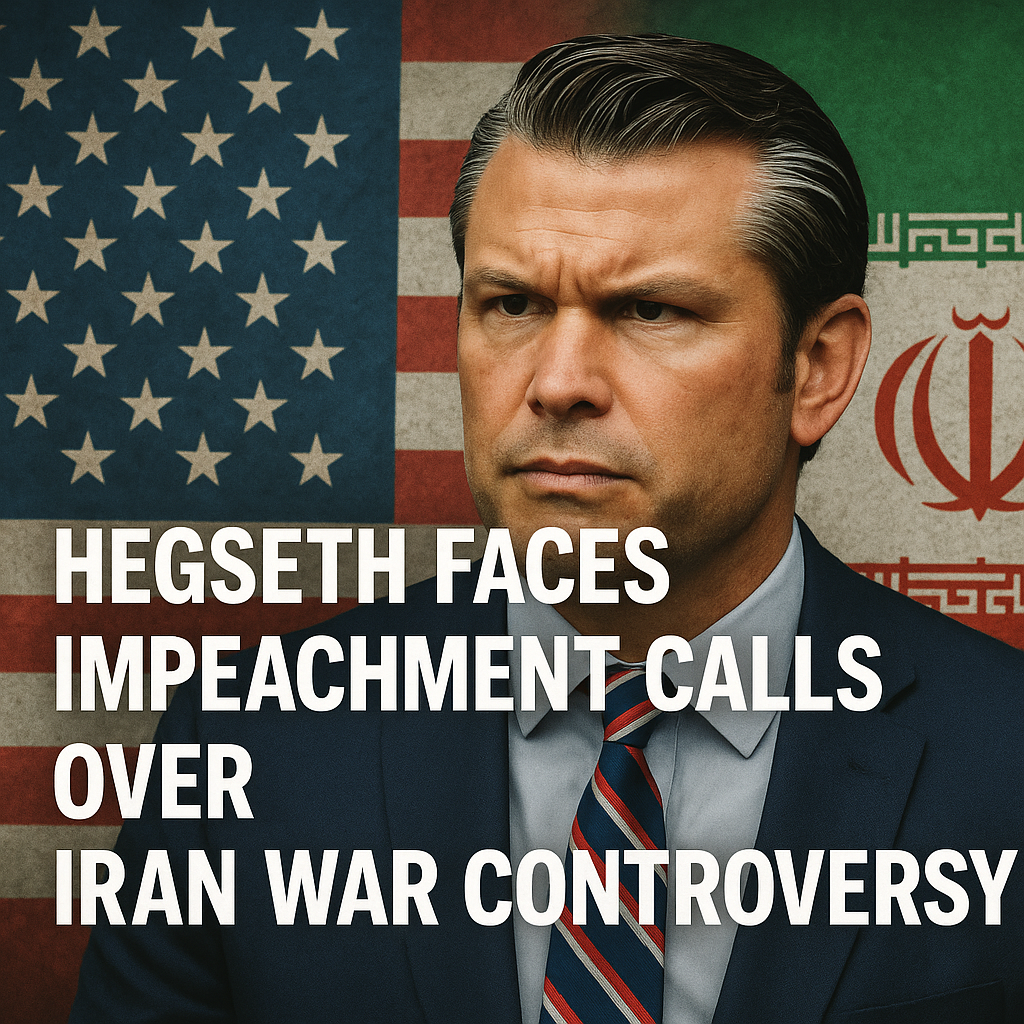
Hegseth Faces Impeachment Calls Over Iran War Controversy

Hegseth Faces Impeachment Calls Over Iran War Controversy
The political landscape in the United States has become increasingly contentious as calls for the impeachment of prominent figures echo through social media and news outlets. In recent days, Fox News correspondent Pete Hegseth has found himself at the center of controversy following his remarks about the potential escalation of U.S. involvement in the Iran conflict.

Background: The Rising Tensions with Iran
As tensions in the Middle East begin to resurface, recent skirmishes and diplomatic failures have prompted heated debates in Congress and among the public. Hegseth’s comments regarding potential military actions against Iran have ignited passionate discussions about U.S. foreign policy and its implications.


According to reports from RT, Hegseth suggested that the U.S. should consider a more aggressive pursuit of its interests in the region, igniting backlash from various critics who argue that any military intervention could lead to disastrous consequences. As the controversy unfolded, some lawmakers expressed their dissatisfaction with Hegseth’s viewpoints, labeling them reckless and potentially leading to war.


Diverging Opinions on Military Action
The situation has drawn varied reactions from political analysts, lawmakers, and the general public. For many, including some Democratic leaders, a robust military approach is seen as an overextension of U.S. power that could entangle the country in another protracted conflict. Al Jazeera reported that critics are warning that history has shown us that military interventions often lead to unintended consequences, destabilizing regions and costing lives.
Conversely, some proponents of a firmer stance against Iran argue that a lack of action could embolden aggressive actions from hostile regimes. They posit that a strong display of military readiness would serve as a deterrent. Hegseth’s supporters claim that the complexities of international relations require hard power and that projecting strength is necessary to protect U.S. interests abroad.
The Impeachment Calls
The rising discontent over Hegseth’s remarks has led to calls for his impeachment from certain factions. Citing concerns about inciting warfare without Congressional approval, they argue that Hegseth’s comments could be interpreted as advocating for military action without transparency to the public or oversight from legislative bodies.
While impeachment is a severe measure often reserved for obvious violations of duty or ethical standards, the discussions surrounding Hegseth indicate a broader concern regarding the role of media figures in shaping public discourse on sensitive topics like military engagement. Critics argue that as influential voices in the media, they hold weighty responsibilities to convey information responsibly.
The Broader Implications
Hegseth’s case is emblematic of the larger debate surrounding U.S. military strategy and the ethical obligations of public figures. As the nation grapples with divisions in political ideology and attitudes towards military intervention, discussions surrounding Hegseth may catalyze broader inquiries into the ethics of warmongering rhetoric among news commentators.
If the public perception shifts towards greater scrutiny of influential media figures, it could prompt more rigorous standards for accountability in journalism. Similarly, a failure to address the concerns raised about Hegseth could embolden other figures in the media to lean into provocative rhetoric for engagement, potentially leading to an escalation of conflict rhetoric.
Conclusion: Navigating the Maze of Military Engagement
The controversies surrounding Pete Hegseth highlight a crucial intersection of media influence, public opinion, and U.S. foreign policy. Whether or not calls for impeachment gain traction, they underscore the complexities inherent in discussing military engagement, especially regarding a region known for its tumultuous history.
In concluding, it remains imperative for all stakeholders—lawmakers, media figures, and the public—to approach discussions of military intervention with a nuanced understanding of both the ramifications of action and inaction. The stakes are undeniably high, and the consequences of these discussions will resonate within and beyond U.S. borders for years to come.















