
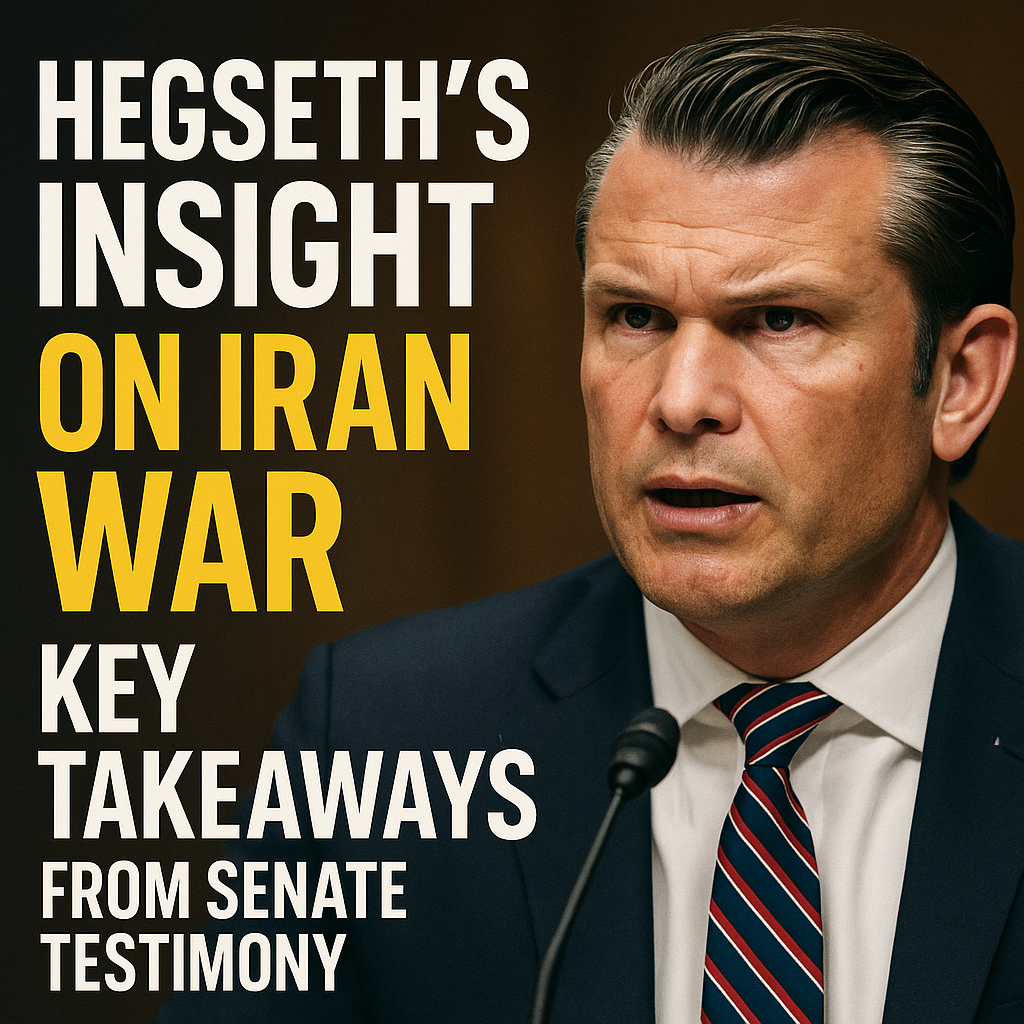
Hegseth’s Insight on Iran War: Key Takeaways from Senate Testimony

Hegseth’s Insight on Iran War: Key Takeaways from Senate Testimony
During a recent Senate testimony, Pete Hegseth provided significant insights regarding the ongoing tensions around the Iran conflict. His perspective, gained from years of military and political experience, has sparked various discussions within the media and political circles. Understanding these insights is crucial as the situation rapidly evolves.

Understanding the Context
Hegseth’s Position and Background
Pete Hegseth, a former Army National Guard officer and a prominent political commentator, has been a vocal advocate on issues pertaining to national security and military engagement. In his testimony before the Senate, Hegseth emphasized the need for a reassessment of U.S. strategies in relation to Iran, citing both military and diplomatic dimensions.


As Iran continues to assert its influence in the region, particularly through proxy forces in Iraq and Syria, Hegseth’s arguments are rooted in a belief that a more direct approach might be necessary. “Engaging Iran from a position of strength,” he stated, “is paramount if we are to avoid another drawn-out conflict.” This sentiment echoed among several political analysts who fear that indecision could lead to further destabilization in the Middle East.


Key Points from the Testimony
Hegseth made several critical points during his Senate appearance:
– Military Strategy: He argued for a more robust military presence in strategic regions to act as a deterrent against Iranian aggression.
– Diplomatic Engagement: While advocating for strength, he also stressed that military action should be paired with diplomatic efforts to minimize conflict.
– Intelligence and Monitoring: Hegseth emphasized the importance of improving intelligence operations to track Iranian movements and intentions, particularly regarding its nuclear program.
These points resonate with a faction of lawmakers and analysts who believe that current measures are insufficient to address Iran’s expanding influence.
Diverse Reactions and Implications
Support for Hegseth’s View
Supporters of Hegseth’s perspective often cite the historical context of U.S.-Iran relations as evidence of the need for a tough stance. For decades, Iran has been a significant player in regional conflicts, and its ambitions, particularly regarding nuclear capabilities, remain a concern. Many argue that previous diplomatic attempts have been undermined by Iran’s continued development of nuclear facilities and support for extremist groups.
A recent article from Al Jazeera emphasized that any hesitance on the part of the U.S. could embolden Iran to escalate its activities both regionally and globally. This aligns with Hegseth’s call for monitoring and readiness, as he argues that demonstrating U.S. capability can deter potential threats.
Criticism of Militaristic Approaches
Conversely, critics caution against a solely militaristic approach, arguing that such strategies may lead to unintended consequences, further entrenching U.S. forces in another protracted conflict. An article from RT provided context on the risks associated with increased military presence, arguing that past interventions have often led to instability rather than resolution.
Critics advocate for a renewed emphasis on diplomacy and dialogue, suggesting that the U.S. should explore negotiations that involve Iran’s neighbors and other global powers. The complexity of the Iranian situation necessitates a multifaceted approach, one that prioritizes long-term stability rather than short-term gains through military force, they argue.
Weighing the Evidence
The contrasting viewpoints surrounding Hegseth’s testimony highlight a broader debate about how best to handle Iranian relations. While many agree on the need for a strong stance, the methods of achieving that strength vary widely.
1. Strength in Military Presence: Advocates believe this will deter Iranian actions.
2. Diplomatic Solutions: Others emphasize that military engagement could lead to further complications, advocating instead for negotiation.
There appears to be no clear consensus on the best route forward. As Hegseth’s insights circulate and provoke dialogue, the importance of balancing military readiness with diplomatic engagement remains paramount.
Conclusion: Moving Forward
Hegseth’s testimony opened a vital conversation about the intricacies of U.S. relations with Iran. With various opinions shaping the direction of policy decisions, stakeholders must consider both military and diplomatic avenues.
The challenges posed by the Iranian regime necessitate thoughtful responses that weigh both immediate and long-term implications. The complexity of this situation ensures that solutions will not be easily achieved, underscoring the need for nuanced and balanced discussions going forward.
As the situation develops, remaining informed and engaged with diverse perspectives—much like those articulated by Hegseth and his critics—will be essential for understanding the implications of U.S. actions in relation to Iran.















