
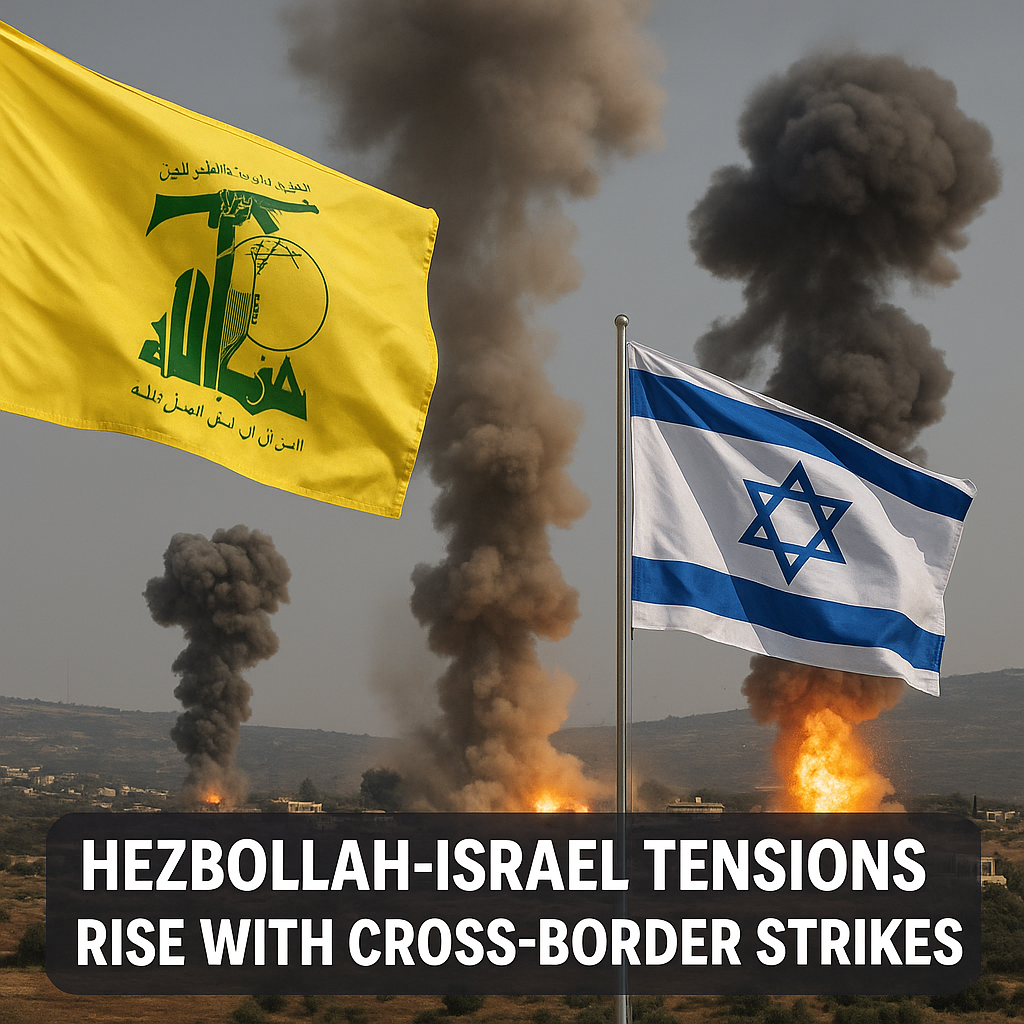
Hezbollah-Israel Tensions Rise with Cross-Border Strikes

Hezbollah-Israel Tensions Rise with Cross-Border Strikes
Recent events along the Lebanon-Israel border have underscored the rising tensions between Hezbollah and Israel, marked by a series of cross-border strikes that have alarmed the international community. The situation is complex, driven by historical animosities, regional politics, and the potential for broader conflict.

The Spark: Escalating Military Engagements
Tensions have intensified significantly in recent weeks, particularly following reports of cross-border attacks between Hezbollah and Israeli forces. According to Al Jazeera, the latest round of hostilities involved Hezbollah launching rockets at Israeli military positions, which prompted retaliatory strikes from Israel targeting Hezbollah’s infrastructure in southern Lebanon. Both sides appear to be demonstrating strength while avoiding full-scale war, which would have devastating consequences for both countries and the region as a whole.


This exchange has reverberated beyond the borders, as multiple regional actors have a vested interest in the outcome. Secretary of State Antony Blinken recently stressed the need for “de-escalation” during his diplomatic meetings, highlighting how the situation’s volatility affects not just Israel and Lebanon but wider geopolitical dynamics, including relations with Iran and other neighboring states.


Diverging Viewpoints: Regional and Global Reactions
The international response to the escalating tensions has been mixed, with different stakeholders weighing in on the issue. Some analysts argue that Hezbollah’s actions are a strategic move to bolster its legitimacy within Lebanon and assert its role as a resistance force against Israeli incursions. RT news cites Hezbollah’s history of resistance and its ongoing campaign to challenge Israeli military actions as formative in their interactions, framing the organization as a defender of Lebanese sovereignty.
Conversely, Israeli officials have depicted these attacks as existential threats, emphasizing their right to defend against what they describe as “provocative” military actions from Hezbollah. Israel’s military responses are often framed within a broader context of national security and deterrence, which seeks to showcase Israel’s military capabilities while aiming to dissuade further aggressions.
The Broader Implications for Stability
The ongoing conflict between Hezbollah and Israel has potential implications that reach far beyond their borders. The situation has significant ramifications for the larger Middle East, with potential ripple effects across regional alliances and tensions. For example, countries like Iran—an ally of Hezbollah—are likely keeping a close watch on this evolving scenario, considering how their involvement might escalate or mitigate tensions.
Furthermore, the humanitarian implications for civilian populations along the border cannot be overstated. An escalation could lead to widespread displacement and suffering, exacerbating an already fragile humanitarian landscape in Lebanon, which is still recovering from other conflicts and economic hardship. As reported by Sky News, any military escalation could close off avenues for much-needed humanitarian aid and worsen an already dire situation for civilians in the region.
Conclusion: Navigating Uncertain Waters
As the situation stands, the interplay between Hezbollah and Israel reflects a long history marked by deep animosities and complex geopolitical stakes. Each side appears resolute, but the question remains: can they navigate these tensions without spiraling into a larger conflict?
Given the lack of consensus on a path forward, it is crucial that diplomatic channels remain open. Continued dialogue offers a glimmer of hope for de-escalation and addresses the underlying issues fueling this long-standing confrontation. As events unfold, the international community must remain vigilant, advocating for restraint and dialogue as the best means to address and potentially resolve this multifaceted conflict.
The complexities involved require a nuanced understanding of not just military posturing but also the broader historical and socio-political contexts at play, reminding us that simplistic solutions are rarely adequate for such entrenched challenges.















