
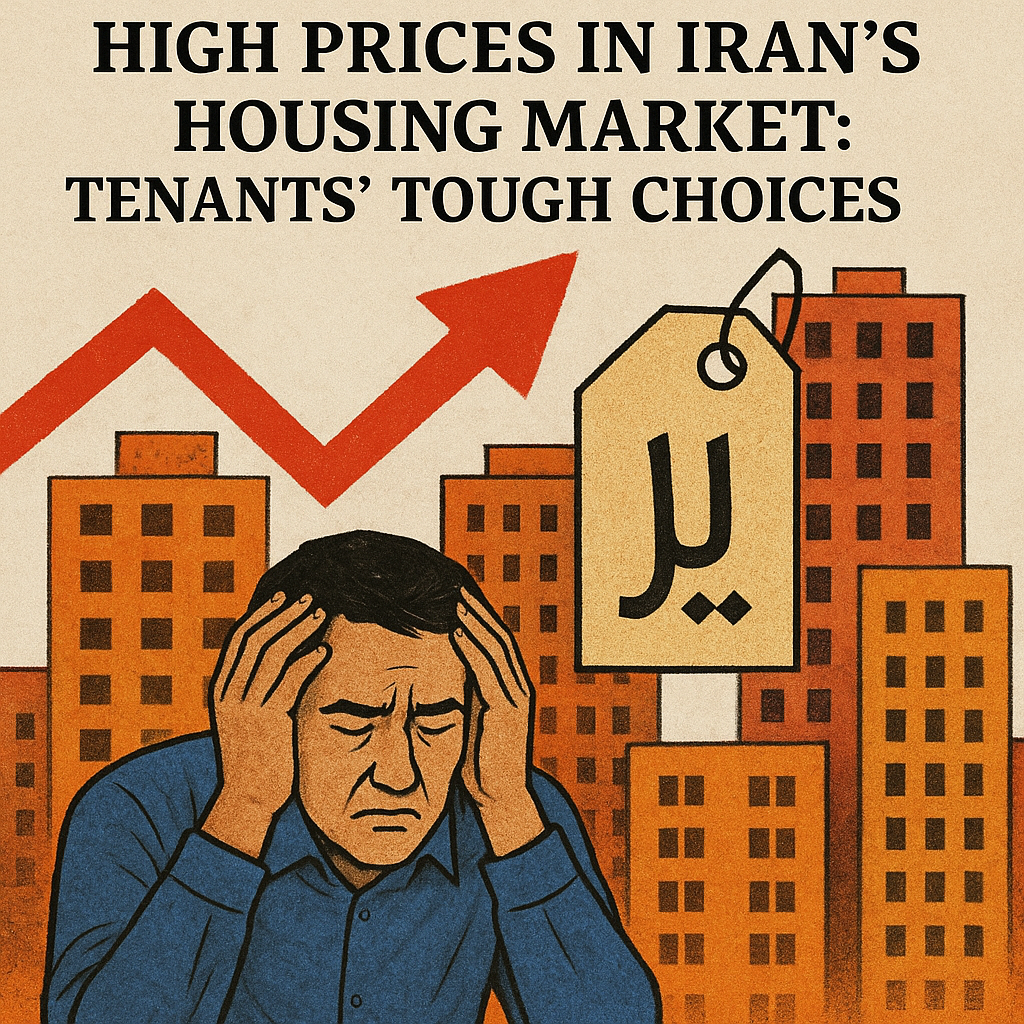
High Prices in Iran’s Housing Market: Tenants’ Tough Choices

High Prices in Iran’s Housing Market: Tenants’ Tough Choices
In recent years, high prices in Iran’s housing market have forced tenants into increasingly difficult decisions. The challenge of securing affordable living spaces has become a pressing issue as inflation rates soar and the cost of living rises, significantly impacting the everyday lives of residents throughout the country.

The Burden of Rising Costs
As reported by Al Jazeera, the Iranian housing market has experienced considerable turmoil, characterized by skyrocketing prices and limited availability. For many tenants, the dream of finding affordable housing has turned into a nightmare of tough choices and sacrifices. With inflation rates exceeding 40% per annum and the devaluation of the national currency, the situation has worsened. Rent prices in major cities like Tehran have surged dramatically, making it nearly impossible for average earners to keep up.


Many families are now forced to choose between paying rent and buying essential goods such as food and clothing. According to recent statistics, a significant portion of urban households is spending over 50% of their income on housing alone. This financial strain has led some tenants to make drastic decisions, including moving to less desirable neighborhoods or living with multiple families under one roof to share the costs.


Government Inaction and Public Discontent
Compounding the issue is the perception of governmental inaction. Critics point to a lack of effective policies in addressing the housing crisis. Reports indicate that instead of implementing sustainable solutions, government actions have often centered around temporary relief measures, such as rent control, which some argue does not address the root causes of the problem.
The public’s frustration is palpable. Many individuals feel that their voices are not being heard in a political system plagued by inefficiency. Protest movements and social media campaigns have begun to emerge, calling for comprehensive housing reforms and increased government intervention to stabilize the market and protect tenants’ rights.
However, the response from authorities has been lukewarm at best. According to various reports, the government has suggested potential future plans but has failed to deliver immediate relief or effective countermeasures to the rising housing costs.
Alternatives and Creative Solutions for Tenants
Given the daunting circumstances, many Iranian tenants are exploring alternatives and creative solutions to their housing dilemmas:
– Co-housing: This model involves multiple families or individuals living together to share costs. By pooling resources, tenants can afford larger homes or better locations without compromising their living conditions.
– Regional Migration: Some urban-dwellers are considering relocating to smaller towns where rents are significantly lower. Although such relocations involve lifestyle changes and adjustments, for many, they present a viable option to escape the high costs of urban living.
– Real Estate Co-operatives: A few communities have started forming real estate co-ops, enabling tenants to collectively own or manage housing units. This model promotes affordability and stability.
– Negotiating Rent: More tenants are learning to negotiate their lease terms, advocating for better conditions and prices. Knowledge of tenant rights is being disseminated more widely, empowering individuals to stand up against exploitative landlords.
Looking Forward: Challenges Ahead
As high prices in Iran’s housing market continue to challenge tenants, the broader implications on social cohesion and economic stability cannot be ignored. There is a delicate balance between addressing immediate housing needs and implementing long-term sustainable solutions. While grassroots movements are advocating for change, the response from those in positions of power remains hesitant and fragmented.
On the horizon, uncertainties loom regarding both the future of the housing market and the overall economic situation in Iran. Without significant reforms and a concerted effort to stabilize the housing market, the plight of tenants may worsen, leading to further socio-economic challenges.
In conclusion, as tenants navigate these tough choices amidst high prices in Iran’s housing market, they remain resilient and resourceful. Whether through collective bargaining, moving to more affordable areas, or advocating for governmental action, the ability of the populace to adapt in the face of adversity will ultimately shape the future of housing in the country.















