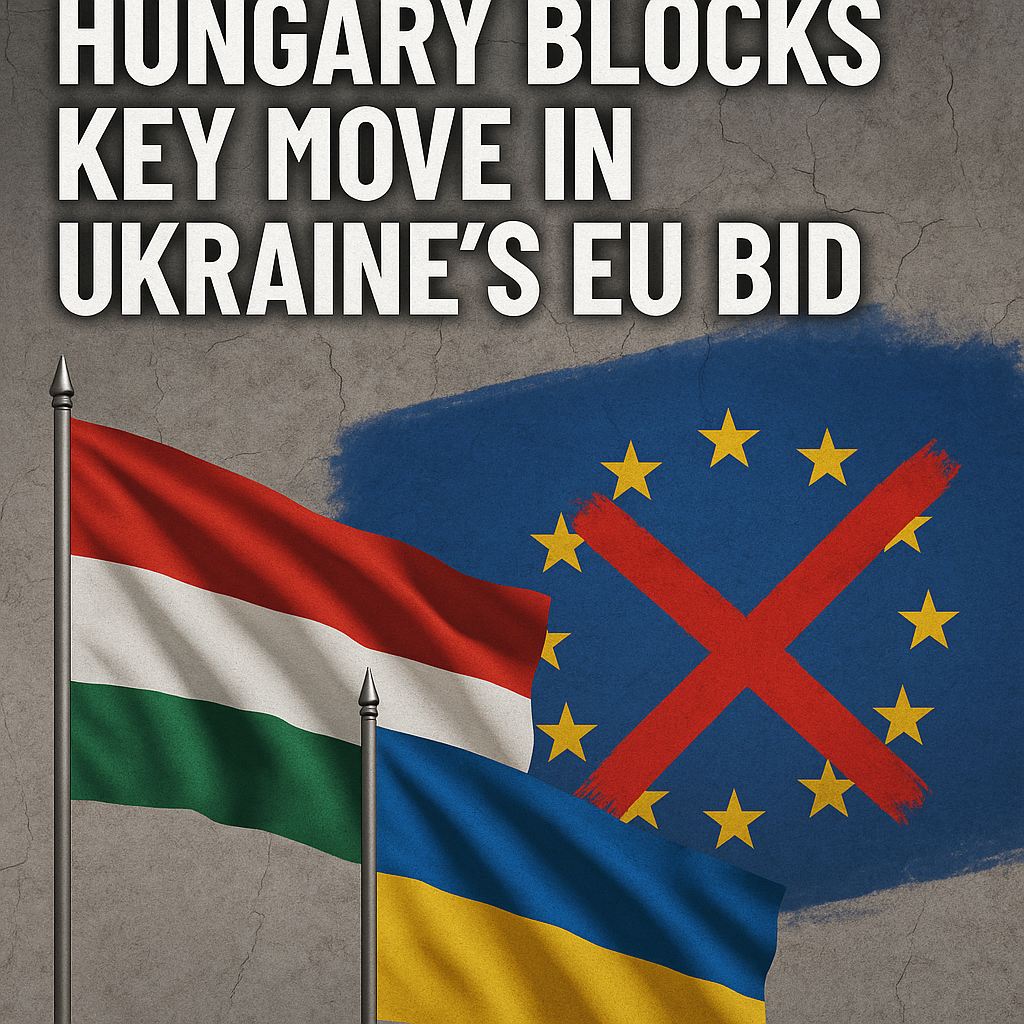
Hungary Blocks Key Move in Ukraine’s EU Bid

Hungary Blocks Key Move in Ukraine’s EU Bid
In a significant diplomatic maneuver, Hungary recently blocked a crucial step in Ukraine’s bid for European Union membership, casting a shadow over the latter’s aspirations for faster accession. This decision has sparked a wave of discussions about the intricacies of EU enlargement policies and the geopolitical dynamics influencing them.

The Context of Hungary’s Decision
Hungary’s stance towards Ukraine’s EU membership isn’t new, as it is rooted in a complex tapestry of historical grievances, contemporary politics, and national interests. The Hungarian government, led by Prime Minister Viktor Orbán, has expressed strong opposition to Ukraine’s policies regarding the Hungarian minority residing in western Ukraine. Reports indicate that Hungary’s discontent primarily stems from alleged discrimination against ethnic Hungarians, particularly in education and language rights. Orbán’s administration has repeatedly called for Ukraine to address these issues before Hungary will support any EU integration efforts.


Furthermore, Hungary’s veto reflects its broader strategy of using its EU membership as leverage in bilateral disputes. The relationship between Hungary and Ukraine has fluctuated, with Hungary often utilizing its power to block decisions it finds unfavorable. This strategy can be viewed as part of Hungary’s broader antagonism towards perceived interference from Brussels, positioning itself as a defender of national sovereignty against what it describes as overreach from EU institutions.


Diverging Perspectives on Ukraine’s Prospects
The response to Hungary’s blockade highlights the divide within the EU on how best to handle Ukraine’s aspirations. On one side, some member states, especially those in Eastern Europe, advocate for a more robust support system for Ukraine, arguing that facilitating Ukraine’s EU accession is a moral imperative, especially given its ongoing conflict with Russia. They perceive Hungary’s veto as a setback to the West’s efforts to integrate Ukraine into European structures and counter Russian aggression.
Conversely, other EU members echo Hungary’s sentiment regarding the need for Ukraine to first solidify its internal governance issues and minority rights before being welcomed into the fold. Critics of this view argue that such preconditions could further delay Ukraine’s accession and undermine the momentum built in support of Ukraine following Russia’s invasion. This faction in the EU emphasizes solidarity with Ukraine but questions whether aligning national interests with EU goals is the right approach moving forward.
Broader Implications for EU Expansion
Hungary’s blockade also brings into sharp focus the challenges facing the EU regarding its enlargement strategy. The EU has long grappled with how to adequately address the aspirations of countries like Ukraine while maintaining internal cohesion. Hungary’s action serves as a reminder that national interests within the EU can often lead to conflicts that may hinder collective goals.
As the EU debates its future regarding enlargement, the challenge lies in finding a balance between maintaining unity and fostering individual member states’ sovereignty. Hungary’s position not only raises questions about the readiness of the EU to embrace new members but also illuminates the underlying complexities of European politics where historical legacies intersect with current political landscapes.
Conclusion
In summary, Hungary’s blockage of Ukraine’s EU bid underscores a critical moment in the broader discussion around European integration and unity. While some EU member states push for a rapid accession process driven by moral obligations and strategic interests, others caution against overextending the Union without ensuring that aspirant countries meet established criteria. The events unfolding will likely shape not only Ukraine’s future but also the future of EU expansion itself, highlighting the intricate interplay between national and collective aspirations within Europe. The ongoing geopolitical dynamics will continue to test not just the resolve of Hungary and Ukraine but the entire fabric of EU governance as it seeks to navigate these challenging waters.