
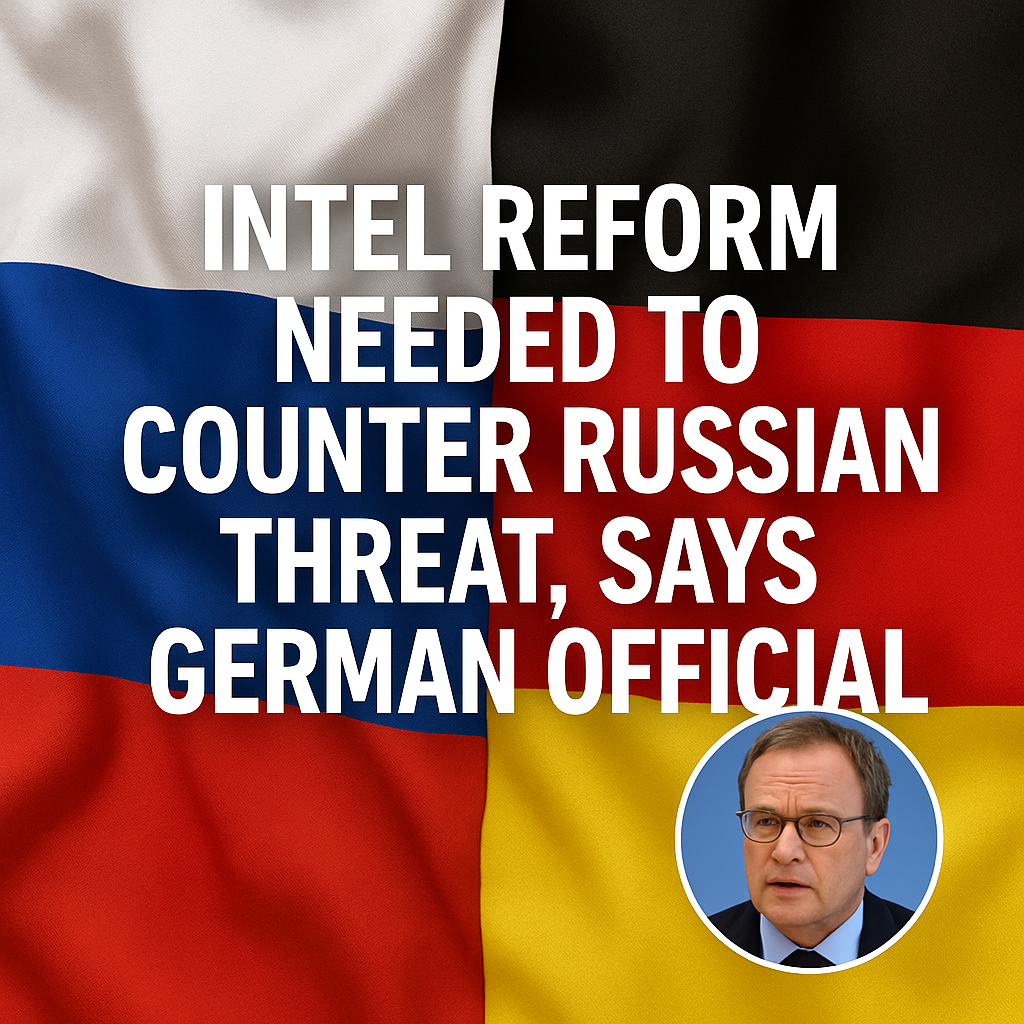
Intel Reform Needed to Counter Russian Threat, Says German Official

Intel Reform Needed to Counter Russian Threat, Says German Official
In recent discussions surrounding national security, the call for intel reform to counter the Russian threat has taken center stage in Germany. Multiple voices within the German government emphasize that enhancing intelligence capabilities is essential to safeguard national interests and respond effectively to geopolitical tensions.

Understanding the Current Landscape
Germany’s security framework has come under scrutiny, particularly in light of growing aggressions from Russia. The Russian invasion of Ukraine and rising cyber threats have highlighted vulnerabilities in European intelligence operations. Alois Karl, a senior German official, articulated the necessity for comprehensive reforms. He emphasized that this initiative is not merely a reactionary measure but a proactive strategy to maintain national security.


Diverse Perspectives on Intel Reform
1. The Argument for Comprehensive Reform: Proponents of reform argue that Germany’s intelligence services must evolve to address modern threats. Reports indicate that current operations may be inadequate in countering sophisticated tactics employed by Russia, including misinformation campaigns and cyberattacks. Advocates point to the need for better coordination among different intelligence agencies, enhancing data-sharing mechanisms, and employing advanced technologies to gather actionable intelligence.


2. Concerns About Overreach and Civil Liberties: On the contrary, some experts warn against the speed of these reforms, emphasizing the importance of civil liberties and privacy rights. Critics argue that in the fervor to bolster national security, there is a risk of overreach by state agencies, which could lead to potential abuses of power. They advocate for a balanced approach that ensures intelligence effectiveness while safeguarding democratic principles.
The concerns over civil liberties are echoed by various civil rights organizations, which argue that intelligence reforms must include transparency measures and oversight to prevent potential misuse.
Weighing Evidence and Sentiments
Both sides of the debate present compelling arguments. The proponents of reform underscore the immediate need to adapt to a rapidly changing geopolitical landscape, which Russian actions have starkly illustrated. They cite numerous instances where lack of timely intelligence has hindered Germany’s response capability. For instance, the escalating cyberattacks attributed to Russian state-sponsored groups illustrate the urgency of the matter.
Conversely, critics remind us of the lessons learned from history. Overreaching intelligence measures in the name of security can lead to erosion of public trust and civil liberties, they argue. As history shows, unchecked surveillance has often incited backlash and weakened societal structures rather than fortified them.
A Path Forward: Balancing Security and Civil Liberties
To forge a path forward, it is essential for German officials to consider a dual approach that integrates reform with respect for civil rights. This may include:
– Creating an Oversight Body: Establishing an independent entity to monitor intelligence activities could enhance accountability, ensuring that civil liberties are respected while security measures are strengthened.
– Engaging Public Discourse: Open dialogues with the public, civil organizations, and experts can create a balanced approach to reform. By collaborating with diverse stakeholders, intelligence agencies can build policies grounded in both security needs and civil rights.
– Investing in Technology and Training: Up-to-date technology and trained personnel can significantly enhance intelligence capabilities. Fostering partnerships with tech firms and academic institutions can provide the necessary innovation to tackle modern security challenges.
Germany stands at a crossroads. The need for reform is clear, but how it is implemented will define the trajectory of the nation’s intelligence capabilities in the face of external threats like Russia. Implementing a balanced approach, upholding democratic values while fortifying security measures, is vital for the future.
As Germany moves forward, the challenge will be to create an intelligence ecosystem that is robust, adaptive, and respectful of the rights of its citizens. The interplay between security needs and civil liberties will require careful navigation, but is essential for maintaining the democratic fabric of society amid evolving global threats.















