
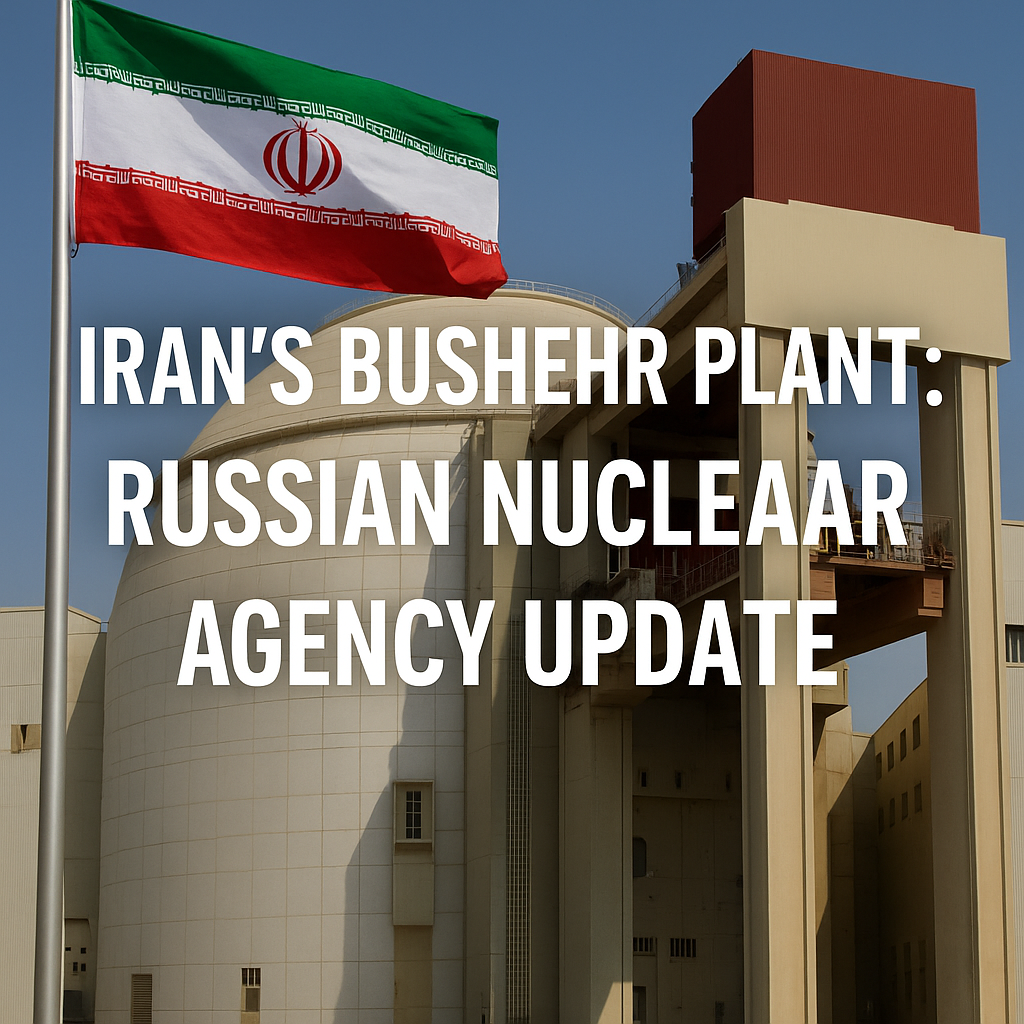
Iran’s Bushehr Plant: Russian Nuclear Agency Update

Update on Iran’s Bushehr Plant: Insights into the Russian Nuclear Partnership
Iran’s Bushehr nuclear plant continues to be a focal point of international nuclear cooperation, particularly involving the Russian nuclear agency, Rosatom. Recent developments from Rosatom have shed light on the future operations and expansion of this significant facility, which has been operational since 2011 and symbolizes both energy ambitions and geopolitical complexities in the region.

The Russian Perspective on Bushehr’s Future
According to a recent announcement by Rosatom, new enhancements at the Bushehr plant are underway that aim to increase the efficiency and output of its operations. This update comes at a time when Iran seeks to bolster its energy independence and navigate through the ongoing sanctions imposed by Western nations. Rosatom’s Director General, Alexey Likhachev, emphasized the commitment to supporting Iran’s nuclear energy program, reaffirming that their collaboration is crucial for advancing technology and ensuring safety standards.


Russia’s investment in the Bushehr facility aligns with its broader strategy to expand influence in the Middle East. As highlighted in reports, the partnership between Tehran and Moscow is mutually beneficial, with Russia keen on showcasing its technological prowess while Iran utilizes the expertise to mitigate its energy gaps. The successful implementation of upgrades at the Bushehr plant is viewed as a step towards solidifying this strategic partnership, which not only serves national interests but also stabilizes the energy dynamics in the region.


Implications and Concerns: International Reactions
While the developments at Bushehr herald positive advancements in energy production, they raise eyebrows internationally. Critics argue that any enhancement of Iran’s nuclear capabilities, even for peaceful purposes, could lead to increased tensions with Western nations. The U.S. and its allies remain apprehensive about the transparency of Iran’s nuclear program, fearing that these advancements could mask ambitions for nuclear weapon development.
In a contrasting viewpoint, supporters of the Iran-Russia partnership argue that such collaborations can pave the way for a more secure regional environment. They assert that international scrutiny is essential, yet it shouldn’t hinder Iran’s right to develop its nuclear technology for peaceful purposes as outlined by the Nuclear Non-Proliferation Treaty. Pushback against unilateral sanctions has led to a rallying cry for fostering energy sovereignty among nations like Iran, especially in light of fluctuating global energy prices.
Despite differing opinions, what remains clear is the complexity of the situation surrounding the Bushehr plant. The interplay of energy needs, geopolitical maneuvering, and international diplomacy will continue to shape discussions around Iran’s nuclear future.
Navigating Through Uncertainties
As Iran and Russia work closely together at the Bushehr plant, uncertainties loom large. Questions concerning the long-term sustainability of such partnerships in the face of shifting alliances and restrictions persist. While Rosatom’s assurances provide a glimpse of optimism for Iran’s energy sector, the global community notes the delicate balance that must be maintained between fostering energy independence and ensuring non-proliferation.
Furthermore, Iran’s enhanced ties with Russia could face challenges, particularly if the geopolitical climate undergoes significant changes. The recent conflicts involving Russia in Eastern Europe add layers of complications, impacting foreign investment and international perception.
In summation, the future of Iran’s Bushehr nuclear plant, bolstered by Russian support, presents a case study in balancing energy independence with global geopolitical realities. The intricate dynamics at play highlight not only the aspirations of nations but also the broader implications for security and diplomacy in an interconnected world. Moving forward, continuous monitoring and dialogue will be essential in navigating this multifaceted issue that resonates well beyond the borders of Iran and Russia.















