
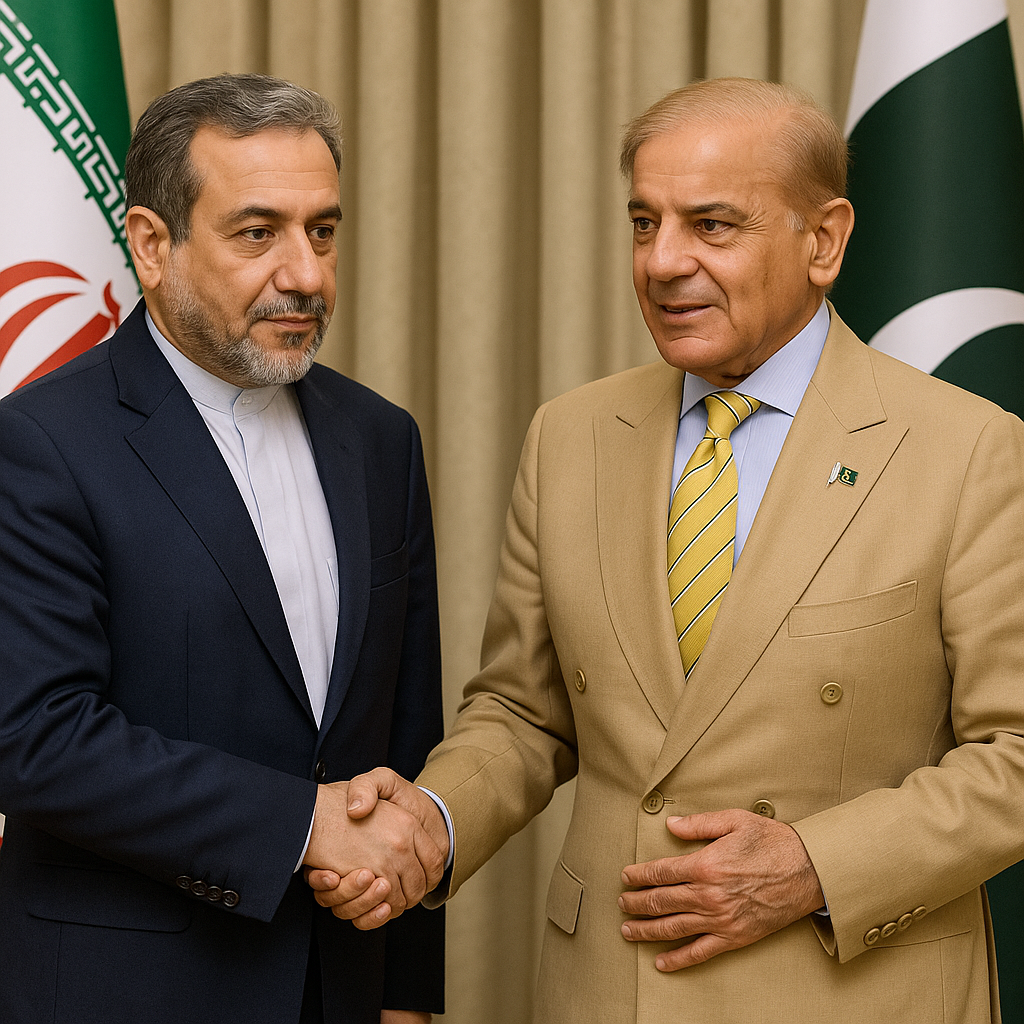
Iran FM Araghchi Meets Pakistan PM Sharif for Key Talks

Key Talks Between Iran’s FM and Pakistan’s PM: A Pathway to Cooperation
Recent discussions between Iran’s Foreign Minister Abbas Araghchi and Pakistan’s Prime Minister Shehbaz Sharif highlight a diplomatic landscape rich with the potential for enhanced cooperation. As neighboring countries with shared interests, their gathering represents not just a mere formality but an important step towards addressing complex regional and bilateral issues.

Context of the Meeting
The meeting comes at a crucial time for both countries, which are navigating economic challenges, security threats, and shifting alliances within the region. The Iranian foreign minister’s visit marks an opportunity for both countries to recalibrate their diplomatic relations amidst geopolitical tensions in South Asia.


Araghchi’s visit signifies Iran’s commitment to fostering closer ties with Pakistan, a sentiment echoed by Sharif during their discussions. “Pakistan and Iran share deep historical ties and must work together to address challenges,” stated the Pakistani PM, emphasizing the value of collaboration in various sectors including trade, security, and counter-terrorism.


Regional Security Concerns
One of the primary topics on the agenda was regional security and counterterrorism strategies. Both nations have been affected by a variety of extremist groups, which pose existential threats not only to their sovereignty but also to regional stability. According to Al Jazeera, Sharif emphasized the need for strengthening intelligence-sharing mechanisms to combat terrorism effectively.
Conversely, Iranian sources suggested that both countries ought to adopt a holistic approach toward handling these issues, underlining the necessity for a secure border management system. Cooperation can be expanded through joint military exercises and intelligence-gathering initiatives, which could serve as a deterrent against extremist elements that threaten both nations.
Economic Ties: An Underexplored Avenue
Despite the pressing security concerns, the economic dimension of Pakistan-Iran relations deserves equal attention. Current trade volumes between the two countries remain modest, especially compared to their potential. Reports indicate that discussions about enhancing trade routes and tariffs were also significant points of dialogue.
The two leaders discussed initiatives like the Iran-Pakistan gas pipeline, which has been stalled for several years due to various geopolitical factors. Improved energy cooperation could lead to increased economic interdependence, as both nations look for sustainable solutions to their energy crises. Furthermore, reestablishing trade routes can offer Pakistan much-needed energy supplies while allowing Iran to circumvent sanctions imposed by Western nations.
Diverse Perspectives on Cooperation
However, viewpoints on this blossoming partnership are not universally optimistic. While some analysts believe that strengthening ties can lead to a more stable Southwest Asia, others caution against potential complications arising from external influences. The relationship between Pakistan and Iran can be impacted by broader geopolitical currents, including their ties with Saudi Arabia and the U.S.
For instance, RT emphasized that Iran’s engagement with Pakistan could entangle the latter in a web of sectarian politics, particularly given their respective alignments in the Shia-Sunni divide. Thus, while the prospects for cooperation are promising, uncertainties loom.
Conclusion: A Step Forward or a Diplomatic Balancing Act?
The meetings between Araghchi and Sharif have indeed opened doors for further dialogue and potential collaboration on various fronts. Moving forward, both nations will need to navigate a complex web of regional dynamics, including their historical ties, shared challenges, and external pressures from international powers.
As the situation develops, it remains crucial for Iran and Pakistan to sustain this diplomatic momentum. Open channels for dialogue can lead to concrete agreements that not only foster bilateral relations but also contribute to a more stable regional landscape. Ultimately, this evolving partnership—if handled adeptly—could serve as a model for collaboration in a frequently turbulent geopolitical context.















