
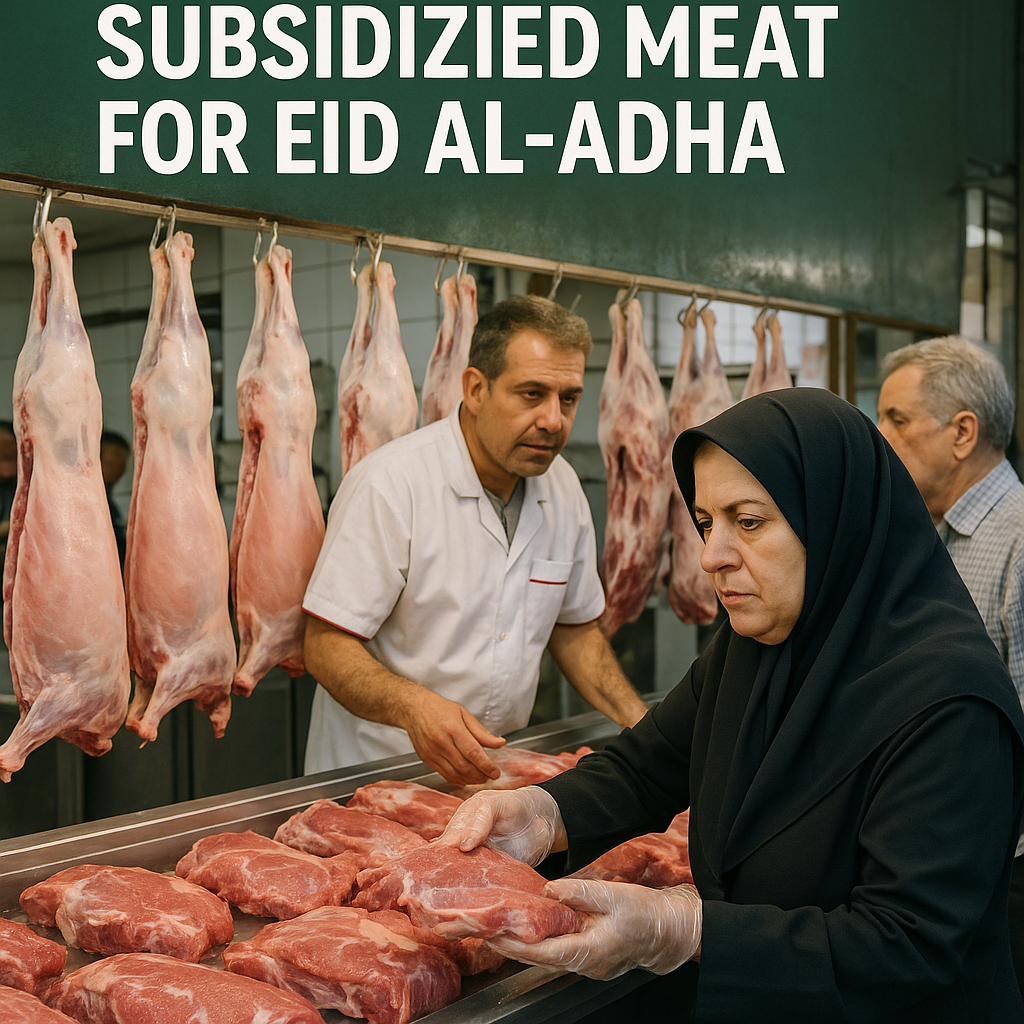
Iran Government Sells Subsidized Meat for Eid al-Adha

In the wake of ongoing economic challenges, the Iranian government has initiated the sale of subsidized meat in preparation for Eid al-Adha, an important Muslim festival celebrated worldwide. This move not only addresses rising meat prices but also reflects the broader socio-economic landscape shaped by sanctions and domestic inflation.

The State of Meat Sales in Iran
Eid al-Adha, known for its emphasis on sacrifice and community sharing, traditionally involves the purchase and distribution of meat. However, in Iran, where economic hardships have plagued many citizens, soaring meat prices have made this custom increasingly difficult to uphold. Amid hyperinflation and economic sanctions, reports indicate that meat prices in Iran have tripled in recent years, prompting the government to step in.


To alleviate the financial burden on families preparing for the holiday, authorities have announced meat sales at significantly reduced prices. For instance, the official price of sheep meat has been capped at around 300,000 rials per kilogram, a measure aimed at making it accessible to more citizens. This initiative not only intends to boost morale but also to reinvigorate social traditions during a time when many are struggling.


Economic Context and Government Response
Iran’s economic situation is complex, driven largely by international sanctions which have limited access to foreign goods, exacerbating inflation and stifling growth. As reported by Al Jazeera, some citizens have expressed skepticism about government interventions, citing concerns that these measures might be insufficient to address deeper systemic issues.
The Iranian government has historically attempted to manage the economy through price controls and subsidies, but the effectiveness of these strategies is often debated. In the current situation, while subsidized sales of meat offer immediate relief, critics argue that such short-term strategies do not address the underlying problems posed by external and self-inflicted pressures on the economy.
The Public Reaction
Public sentiment regarding the government’s subsidized meat sales is mixed. Some citizens view this measure as a necessary step to facilitate traditional celebrations, while others remain doubtful, fearing that the quality of the meat may not meet expectations. Reports of limited availability and long queues have been common, further amplifying frustrations about the practicality of price controls.
Moreover, while some families may benefit from these subsidized sales, the broader issue of food security and the high inflation rate cannot be overlooked. Many citizens continue to struggle with basic needs, leading to a deeper conversation about how the government can effectively implement solutions that extend beyond temporary fixes.
The dual aspects of celebration and economic hardship are clearly at play. As families gear up for Eid al-Adha, the juxtaposition of festivities against economic realities underscores the ongoing struggle for many. The success of these meat sales will be measured not just by immediate sales figures but by their role in enhancing the holiday spirit in a time of adversity.
Conclusion: A Complex Celebration
The government’s subsidized meat sales during Eid al-Adha highlight the complexities of navigating economic challenges while maintaining cultural traditions. On one hand, the initiative is a response to pressing needs, reflecting the government’s intent to support its citizens. On the other hand, it raises questions about sustainability and the effectiveness of such measures in addressing long-term economic stability.
As Eid al-Adha approaches, the focus remains not only on the act of celebration but also on the economic realities that shape the experiences of millions of Iranians. The balance between tradition and necessity will ultimately determine how this Eid unfolds for families across the nation.















