
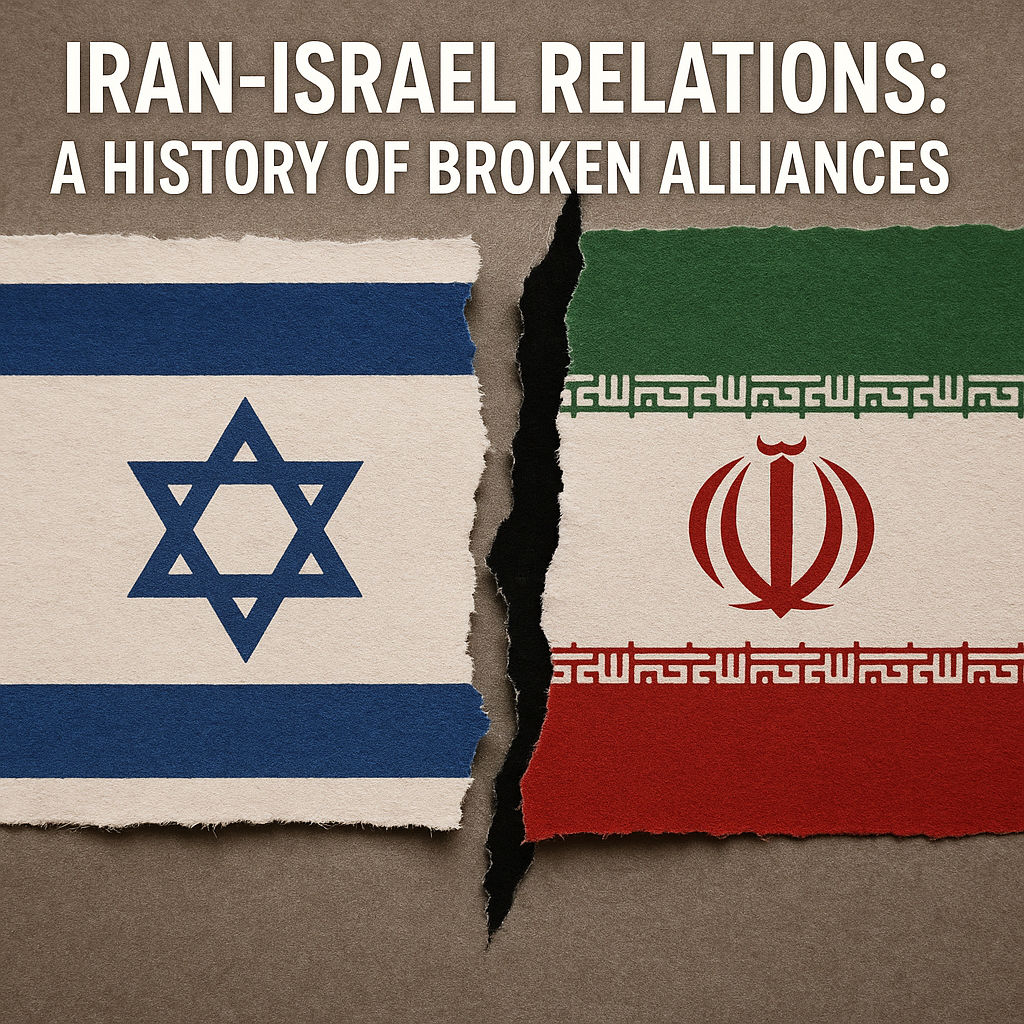
Iran-Israel Relations: A History of Broken Alliances

Iran-Israel Relations: A History of Broken Alliances
Iran and Israel, once allies, now stand on opposite ends of a complex and contentious relationship that has evolved dramatically over the decades. Understanding the history of these interactions reveals much about the geopolitical dynamics of the Middle East, as well as the broader implications for international relations today.

The Early Ties: A Collaboration Rooted in Mutual Interests
In the mid-20th century, Iran and Israel enjoyed a partnership that was driven by common strategic interests. During the reign of Mohammad Reza Shah Pahlavi in Iran, the country developed ties with Israel, largely motivated by shared concerns about Arab nationalism and the influence of the Soviet Union. This partnership took shape in various forms, including economic exchanges, military cooperation, and intelligence sharing.


Al Jazeera’s retrospective on this era emphasizes how both countries viewed each other as bulwarks against regional threats. The Shah’s regime saw Israel not merely as an ally but as a critical asset for modernization efforts, while Israel considered Iran a counterbalance to its Arab neighbors. During this period, both nations benefited from Western support, particularly from the United States.


However, this relationship faced a drastic turn following the Iranian Revolution of 1979. Iran’s shift towards an Islamic Republic spearheaded by Ayatollah Khomeini marked the beginning of a hostile era for Iranian-Israeli relations.
The Post-Revolution Hostility: Ideological Divides
With the establishment of the Islamic Republic, Iran’s foreign policy took a sharp pivot. Khomeini’s regime denounced Israel as an “illegitimate” state and sought to support Palestinian causes instead. This shift was marked by the Islamic Republic’s fervent anti-Zionist rhetoric, portraying Israel as a threat to Muslim communities worldwide.
RT highlights that Iran’s new ideological stance transformed Israel from a former ally to a principal adversary. The country’s support for groups like Hezbollah and Hamas has further entrenched this enmity. Simultaneously, Israel adopted a more aggressive stance towards Tehran, viewing Iran’s nuclear ambitions as an existential threat.
In subsequent years, several conflicts have underscored the worsening relationship. The First and Second Lebanon Wars, incidents of covert operations, and cyber warfare have all illustrated the ongoing tension. Moreover, ideological differences now extend to human rights issues, with both nations criticizing each other’s governance and domestic policies.
Current Dynamics: A Landscape of Intrigue and Complexity
Recent developments have complicated the already fraught relationship between Iran and Israel. As reported by various news sources, events such as the nuclear deal negotiations and regional alliances shifted the balance of power in the Middle East.
While the U.S.-led 2015 nuclear deal represented a potential thaw in U.S.-Iran relations, it was vehemently opposed by Israel. The Israeli government argued that the agreement would not only allow Iran to maintain its nuclear capabilities but also empower its regional proxies. This apprehension has fueled Israel’s strategy of “preemptive strikes,” targeting Iranian assets across the region.
Contrastingly, there are growing economic and political ties among Israel, the Gulf States, and other Arab nations, as seen with the Abraham Accords. These developments have shifted the regional focus from Israel-Palestine tensions to broader concerns about Iran’s influence in the Middle East.
Reports indicate that both Iran and Israel continue to engage in proxy battles across the region. However, while Iran seems committed to sustaining its presence in places like Syria and Lebanon, Israel is focusing on strengthening alliances with Sunni Arab nations. This dichotomy has added layers of complexity to the Iran-Israel dynamic.
The Complicated Road Ahead: Uncertain Future Prospects
As tensions remain high, the path forward for Iran-Israel relations appears uncertain. Both nations maintain their respective stances, yet new variables continue to emerge within the geopolitical landscape.
– Nuclear Ambitions: Iran’s continued development of its nuclear program will likely remain a contentious point for Israel and its allies.
– Proxy Warfare: Ongoing proxy conflicts are expected to persist, fueling tensions and leading to potential miscalculations.
– International Diplomacy: The role of international actors, particularly the United States, will play a critical part in shaping future relations.
Despite their antagonism, it is essential to recognize the complexity underpinning Iran-Israel relations. While ideological divides remain entrenched, the shifting global landscape offers room for both cooperation and confrontation.
In conclusion, the history between Iran and Israel serves as a microcosm of broader Middle Eastern politics. As alliances ebb and flow, the quest for stability in the region remains a formidable challenge, one that will require nuanced understanding and careful diplomacy. Only time will tell how these two nations will navigate their deeply intertwined yet fractured history.















