
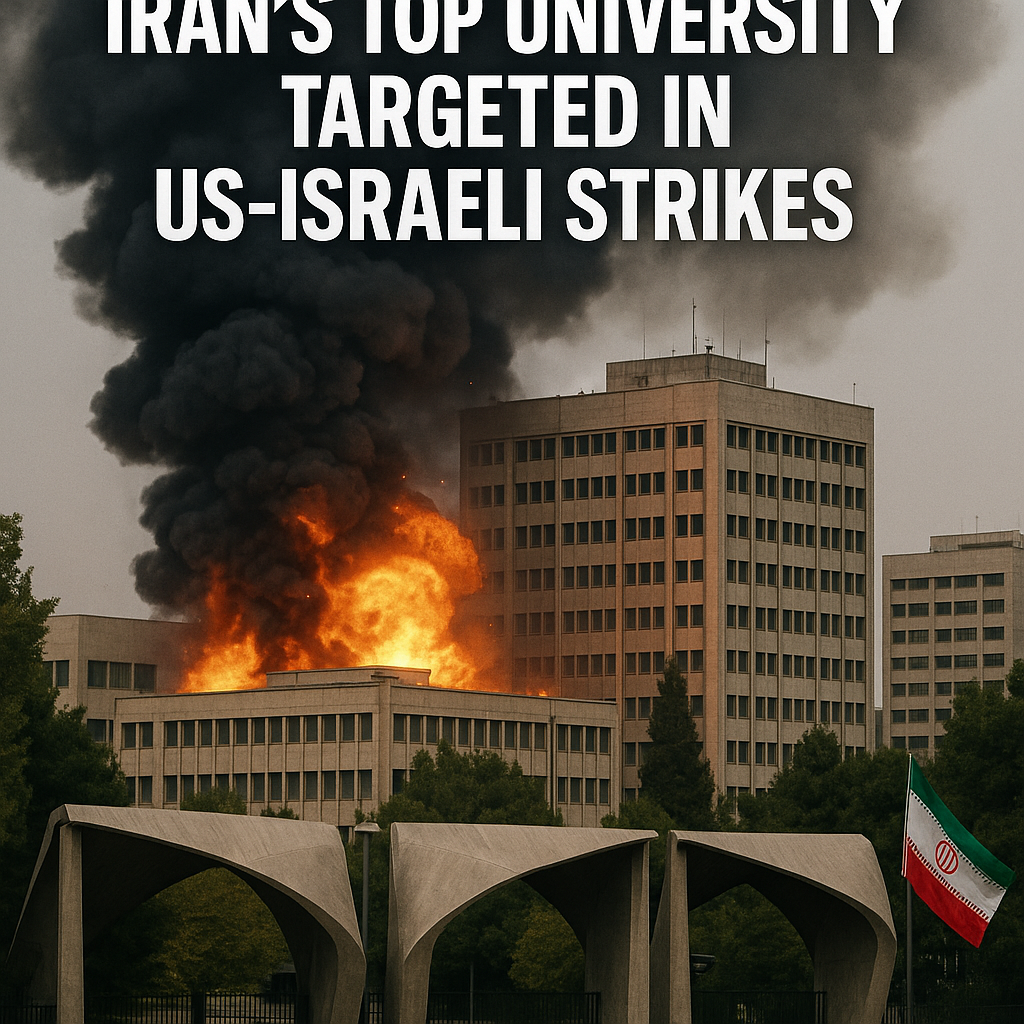
Iran’s Top University Targeted in US-Israeli Strikes

Iran’s Top University Targeted in US-Israeli Strikes: A Complex Response to Regional Tensions
Iran’s top university has become a focal point amid escalating tensions between Iran and Western powers, particularly the United States and Israel. This incident illustrates the intricate web of geopolitical relationships, where academia and military objectives collide, raising questions about the implications for both domestic and international stability.

The Context Behind the Strikes
Recent military action attributed to US-Israeli forces has reportedly targeted a prominent institution in Iran, highlighting the dramatic evolution of conflicts in the region. This strikes at the heart of an escalating narrative where academic institutions are not simply places of learning but also potential hubs of political dissent and military technology development.


According to reports from Al Jazeera and RT, the strikes aimed at dismantling what is perceived to be a link between higher education, technology, and military capabilities. Sources suggest that Iranian universities have increasingly been viewed as incubators for advanced research that could potentially bolster Iran’s defense technologies. For instance, the targeted university has been known for its contributions to engineering and scientific research, including arms technology that could be utilized in regional conflicts.


The US and Israeli agencies seem to justify their actions under the guise of national security concerns. An Al Jazeera report points out that these strikes aim to impede Iran’s potential to advance its military capabilities, especially amid ongoing tensions regarding its nuclear program. This underscores a significant dilemma: how to engage with a nation whose institutions may further its military ambitions.
Reactions from Multiple Perspectives
The university attack has sparked a varied response from different stakeholders. Some analysts, particularly those aligned with Western perspectives, argue that such preemptive strikes are necessary. They believe that weakening Iran’s scientific community may curb its advancements in nuclear technology and give a critical blow to its military ambitions.
Conversely, those aligned with Iran and its allies view the strikes as blatant acts of aggression. RT highlights demonstrations within Iran, where students and faculty members have rallied in support of their university, arguing that these actions reflect a broader attempt to silence dissent and hinder academic freedom. They frame these military decisions within the broader context of Western imperialism, where educational institutions become collateral damage in geopolitical conflicts.
This polarized response illustrates the emotional and ideological stakes surrounding the issue. On one side, there’s a viewpoint centered around military strategy and the need for national security. On the other, a narrative emphasizing the sanctity of educational spaces and the detrimental effect of warfare on civilian institutions and intellect remains strong.
An Uncertain Future
As the dust settles from the strikes, the question remains: what are the long-term implications for Iran, the region, and the world? Analysts note that these military actions could solidify Iran’s resolve and may lead to increased anti-Western sentiment, which could further destabilize the region.
Moreover, educational institutions globally may find themselves in a precarious position, where they not only nurture new ideas but also potentially attract unwanted military attention. The urgency for dialogue and diplomatic avenues has never been more critical. A consensus across various international platforms could be a starting point to mitigate conflict.
While definitive conclusions regarding the efficacy of these strikes remain elusive, it’s clear that the potential for escalation exists. Analysts urge that military solutions rarely address the root causes of conflict, emphasizing the need for diplomatic engagement with Iran rather than provoking further hostility.
Conclusion: Grounded in Complexity
The targeting of Iran’s top university during US-Israeli strikes encapsulates the complexities of modern geopolitical conflicts, where education, militarization, and diplomacy intersect. It reflects a broader narrative that resists easy categorization into good versus evil. Understanding the impact of these actions requires acknowledging diverse perspectives and engaging in a nuanced debate about how best to secure peace.
In navigating these treacherous waters, the balance between maintaining national security and respecting academic freedom holds significant importance. Ultimately, as tensions continue to simmer, dialogues fostering understanding and potential reconciliation may pave the way for more sustainable solutions in this fraught landscape.















