
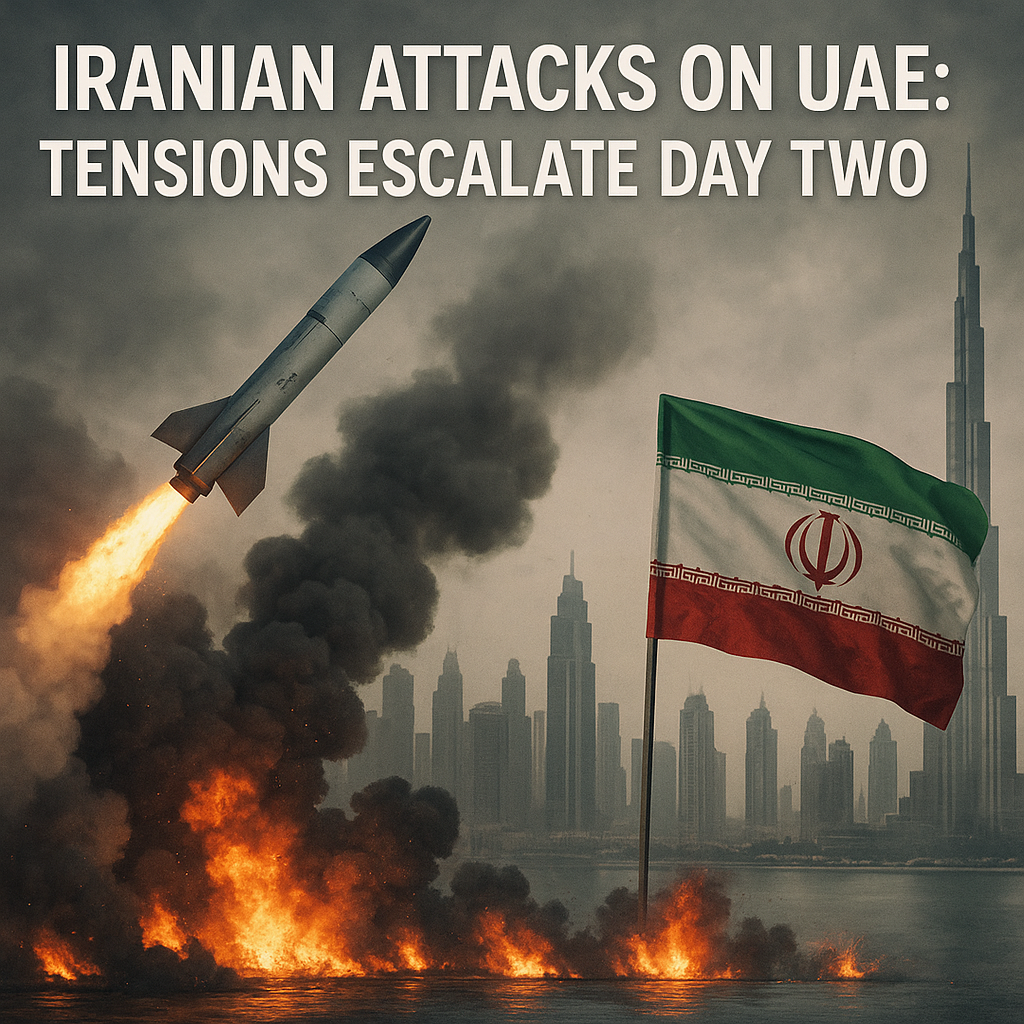
Iranian Attacks on UAE: Tensions Escalate Day Two

Iranian Attacks on UAE: Tensions Escalate Day Two
The ongoing Iranian attacks on the United Arab Emirates (UAE) represent a significant escalation in regional tensions, with implications that stretch beyond immediate military confrontations. In recent days, the UAE has found itself in the crosshairs of missile and drone assaults attributed to Iranian forces, which have prompted a robust defensive response from Emirati military units.

Escalating Military Exchanges
Reports from various sources indicate that for a second consecutive day, the UAE intercepted missiles and drones aimed at its territory. Al Jazeera reports that these nights of conflict have seen a marked increase in hostilities, with the Emirates’ air defenses successfully thwarting multiple aerial attacks. These incidents underscore a troubling trend of Iranian aggression in the region, drawing attention to the delicate balance of security that the UAE must maintain.


Iran’s positioning is rooted in a broader geopolitical context. Analysts highlight that the Iranian military seeks to project power and deterrence in response to perceived encroachments and threats from Western powers and their regional allies. This military posturing has provoked a mix of fear and resolve within the UAE, which values its territorial sovereignty and regional influence.


Responses from the International Community
The international reaction to the Iranian assaults on the UAE has been varied, reflecting differing geopolitical agendas. Western nations, particularly those closely allied with the UAE, have condemned Iran for its provocative actions. The United States has reiterated its support for the Gulf state, emphasizing a commitment to safeguarding its allies against hostile threats.
Conversely, sources from RT emphasize the military might Iran believes it possesses to defend its interests. Iranian leaders have characterized the attacks as necessary measures to deter what they perceive as threats emanating from neighboring countries and foreign adversaries. This dichotomy illustrates a complex geopolitical landscape where narratives of aggression and defense intermingle.
Furthermore, Sky News reports on the potential regional implications of these incidents. The risk of a military escalation remains high, and observers warn that such confrontations could spiral out of control, leading to wider regional conflicts. Many experts advocate for diplomatic solutions and dialogue as essential to de-escalating tensions and fostering peace in the Gulf region.
Humanitarian and Economic Consequences
Beyond the immediate military implications, the ongoing conflict holds significant humanitarian and economic repercussions for the UAE. The interruptions caused by the ongoing missile threats have raised concerns within the business community, which thrives on stability in this bustling metropolis. Trade routes and international investments could be jeopardized if the situation continues to intensify.
The humanitarian aspect cannot be overlooked either. As tensions rise, the safety and well-being of civilians living in affected areas become paramount. Both local authorities and international organizations are likely to face an increased demand for humanitarian support should the conflict escalate further.
In light of these dynamics, the UAE has called for focused diplomacy and international cooperation to address the roots of conflict rather than merely responding with military might. The need for dialogue between Iran and the UAE, potentially mediated by neutral third parties, could serve as a pathway to de-escalation. Yet, as of now, the potential for miscalculations and unintended escalations remains a genuine concern.
Conclusion: A Call for Diplomacy
As the situation unfolds, the imperative for a measured and strategic approach to de-escalation becomes ever clearer. Both nations must recognize the risk that an all-out military confrontation poses, not only to their own interests but to regional stability as a whole. The complexities of the current conflict, with its intertwined narratives of aggression, defense, and diplomacy, indicate that a sustainable resolution will require careful negotiation and a commitment to peace from all parties involved.
With international eyes turned towards the Gulf, the hope remains that diplomatic channels can be reopened to avert further violence and promote a more stable future for the UAE and its neighbors. The world watches closely as the situation continues to evolve, with fingers crossed for calm in a region historically marked by turbulence.















