
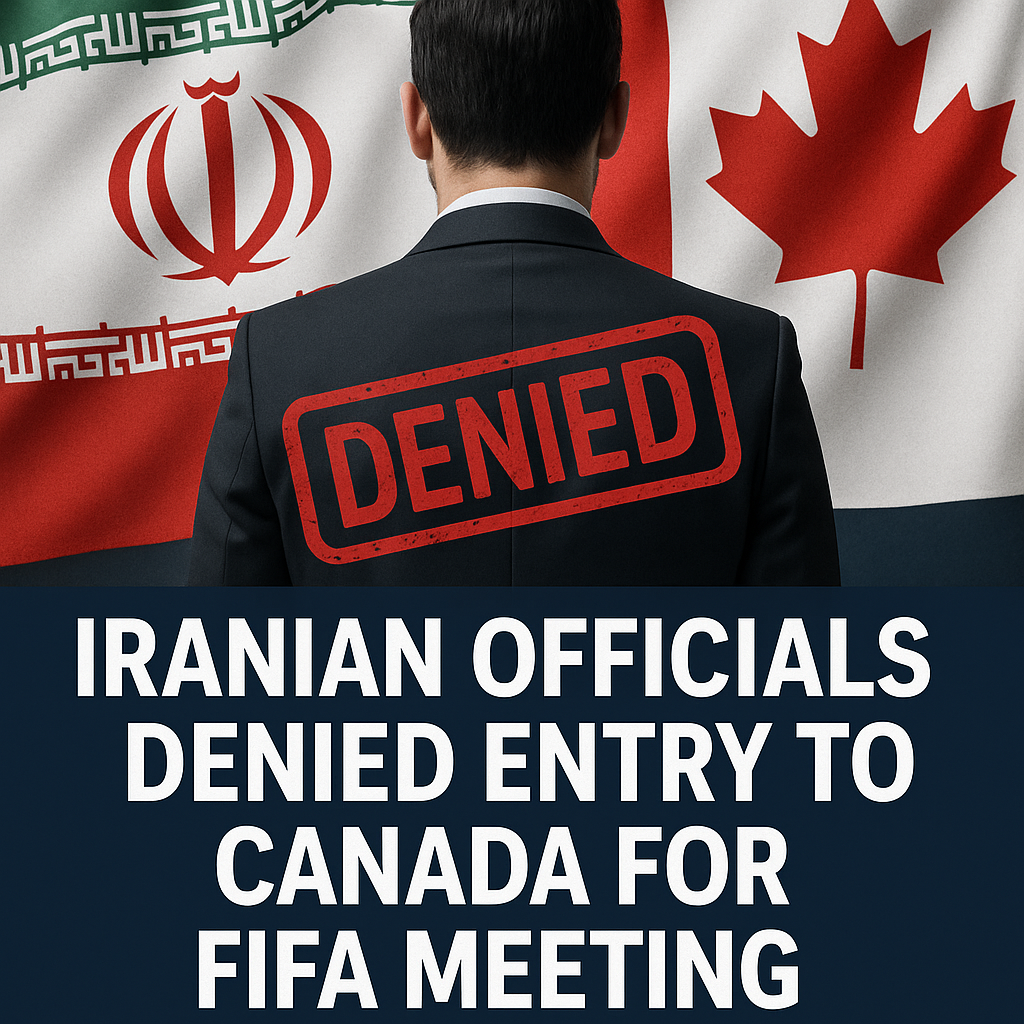
Iranian Officials Denied Entry to Canada for FIFA Meeting

Iranian Officials Denied Entry to Canada for FIFA Meeting
Recent developments have amplified tensions between Canada and Iran, particularly surrounding the impending FIFA World Cup. In a controversial move, Canadian authorities barred Iranian officials from entering the country, citing security concerns as well as potential human rights violations. This decision raises complex questions about international relations and the role of sports in diplomacy.

The Decision’s Context
The incident comes shortly before a pivotal gathering linked to the FIFA World Cup, during which Iranian officials were expected to attend discussions regarding the sports event. Canada has positioned itself as a staunch advocate for human rights, and this decision appears to align with that stance.


According to various reports, including those from Sky News and Al Jazeera, Canadian Minister of Immigration, Refugees and Citizenship Sean Fraser articulated that the entry denial stemmed from responsibilities to uphold the respect for human rights and prevent individuals with troubling pasts from participating in such global events. The Canadian government has faced criticism for its historical relationships with nations criticized for human rights abuses, thereby making this specific ban noteworthy.


However, the Iranian government responded with strong condemnation. Iranian Foreign Ministry spokesperson Nasser Kanaani described the move as a “politically motivated” decision, insisting it was an infringement on international norms, particularly in the context of a global sports event designed to foster unity among nations. The Iranian officials’ argument underscores a significant point: do international sports serve to promote diplomatic engagement, or do they exacerbate existing geopolitical tensions?
Analyzing Divergent Perspectives
Canadian Sentiments: A Stance on Human Rights
Canada’s decision reflects an escalating trend among Western nations to take a firmer stand against Iran, particularly given recent allegations of human rights violations by the Iranian regime. According to experts cited in RT, this isn’t just about a soccer match; it touches on deeper issues regarding Iran’s political actions and regional destabilization efforts.
Critics of Canada’s move argue that it could undermine the spirit of sportsmanship that events like the FIFA World Cup strive to promote. They contend that sports can bridge divides, potentially fostering dialogues that may not occur in a more formal or politically charged setup. The Canadian government, however, presumes that allowing officials from a regime accused of oppression to participate might undermine its moral positions on governance and human rights.
The Iranian Perspective: Principled Opposition
Conversely, Iran’s vehement rejection of the entry denial presents a valid counterpoint. They assert that participation in international events like the FIFA World Cup should transcend politics. In a time where international sports are often seen as a platform for diplomacy, barring officials might both alienate Iran and set a precedent for politically heavy-handed interventions in the realm of sports.
In statements drawn from Al Jazeera, Iranian officials emphasized that their absence from discussions might not only affect their nation but could negatively impact the sporting event’s broader participation from Iranian athletes and fans. By viewing this issue through the lens of diplomatic engagement in sports, one might argue that such restrictions could delay necessary dialogue and exacerbate misunderstandings between the two countries.
The Bigger Picture: Sports and Diplomacy
The controversy surrounding the denial of Iranian officials’ entry reflects a critical intersection of sports, diplomacy, and national identity. Sports events have long been arenas where nations can demonstrate their prowess and foster dialogues that might be unfeasible elsewhere. However, as the stakes of international relations heighten, so too do the implications of participation—or exclusion—from significant global events.
This situation raises additional questions on how far countries should go in using sports as a bargaining chip in political disputes. While Canada’s position champions human rights, the exclusion of Iranian officials could lead to missed opportunities for dialogue and unity that major global events aim to foster.
Moreover, reactions within Iran underscore a mix of nationalism and disappointment, as citizens and athletes may feel the repercussions of their government’s geopolitical strategies. This speaks volumes about the potential impact on the athletes who might be caught between their government’s political actions and their sporting aspirations.
Conclusion: An Ever-Evolving Landscape
In sum, the barring of Iranian officials from entering Canada for the FIFA meeting illustrates a nuanced intersection of international relations, national sovereignty, and human rights advocacy. As the discussions surrounding the FIFA World Cup evolve, so too will the dialogues influenced by the interactions, or lack thereof, between countries. The complexity of such situations reminds us that while sports might offer a platform for unity, they also serve as a battleground for geopolitical tensions. Moving forward, it will be crucial for all stakeholders to navigate this landscape thoughtfully, weighing the importance of human rights against the potential for reconciliation through sport.















