
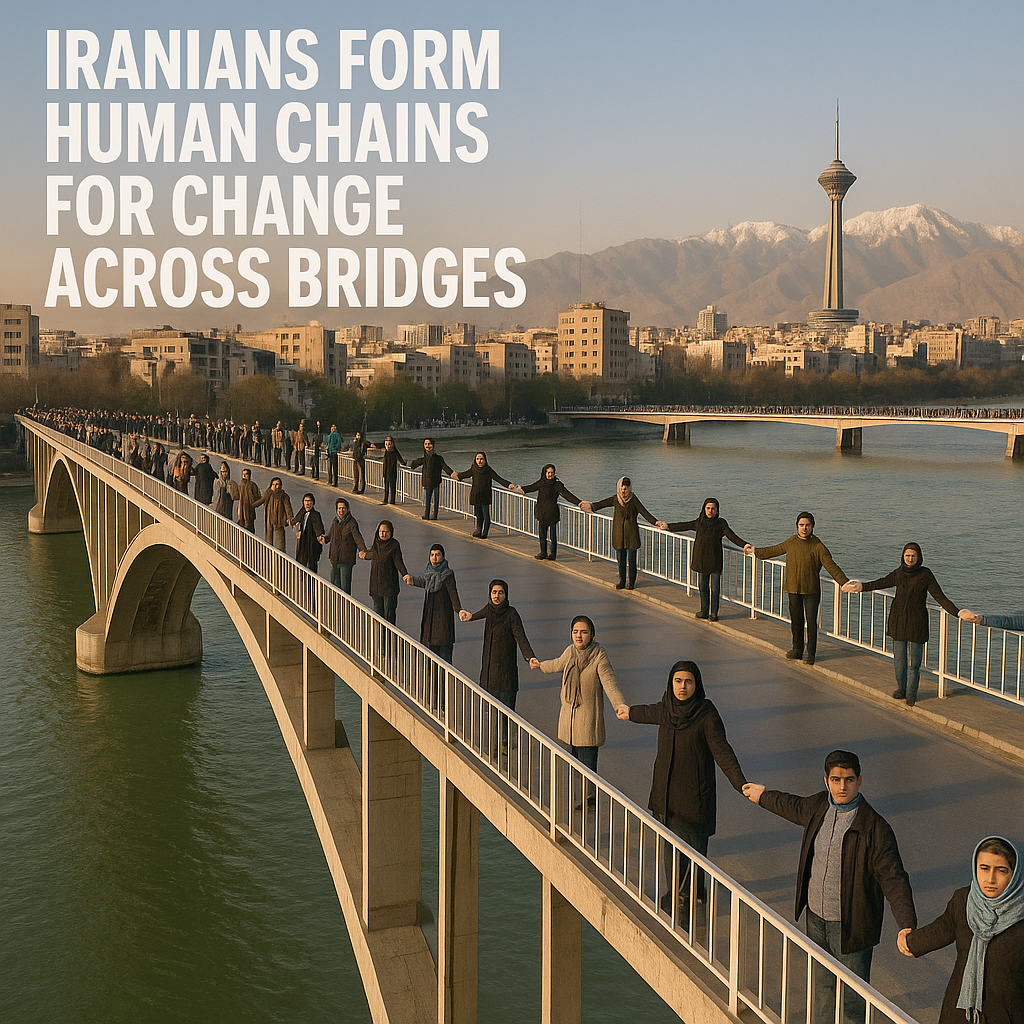
Iranians Form Human Chains for Change Across Bridges

Iranians Form Human Chains for Change Across Bridges
In a remarkable display of solidarity, Iranians have formed human chains across bridges in various cities, signaling a growing demand for change amid ongoing social and political unrest. This powerful act of unity has emerged from the backdrop of widespread discontent, driven by economic struggles, political repression, and the quest for greater freedom and rights.

The Context of Change: Grassroots Movements and Public Sentiment
The human chains, seen in cities like Tehran and Isfahan, reflect significant tensions within Iranian society. Many citizens are expressing their frustration over the deteriorating economic conditions exacerbated by international sanctions and government policies. A report from Al Jazeera highlights that demonstrators are seeking not just economic relief but also comprehensive reforms in governance to foster greater civil liberties.


This public action is reminiscent of previous movements in the region, where citizens have taken to the streets in symbolic acts of defiance. The juxtaposition of physical barriers, represented by bridges, against the invisible barriers of oppression showcases the resilience and determination of Iranians to push for positive change.


Diverse Perspectives on the Movement
While the call for reform resonates across diverse sectors of society, opinions on the efficacy and direction of these demonstrations vary significantly.
– Supporters of the Movement: Many activists view the formation of human chains as a vital step towards civic engagement. They believe that such collective actions raise awareness both domestically and internationally, potentially pressuring the government to respond to the people’s needs. For instance, an article from RT underscores that these protests, while peaceful, are increasingly sophisticated in their organization and messaging. They emphasize the importance of continuous civil participation as a means to highlight grievances.
– Critics and Skeptics: On the other hand, some critics argue that public demonstrations in Iran often face significant crackdowns. They caution that, while symbolic, such actions may fail to yield substantive change if the authorities respond with repression rather than dialogue. A source from Sky News points out that despite the courageous efforts of protesters, the Iranian government has been known to silence dissenting voices, raising concerns about the longevity and impact of such movements.
Potential Outcomes: Hopes vs. Realities
As Iranians form these human chains, observers globally are analyzing the potential ramifications. The hope among many is that these collective efforts may inspire other forms of protest that challenge the status quo. The symbolism of human chains evokes feelings of unity and shared purpose, which are vital in times when the social fabric is strained.
However, the harsh realities of Iran’s political landscape cannot be overlooked. Statements from Iranian officials indicate a readiness to counteract what they perceive as destabilizing forces. The risk of escalated government crackdowns hangs over the movement like a cloud, leading to questions about safety and efficacy for those involved.
The Role of International Awareness
International attention plays a crucial role in amplifying the voices of the Iranian people. Global media coverage of the human chains has introduced their plight to a wider audience, which might serve to shield activists from potential repression through increased scrutiny.
However, there remains a complexity in how external influences might reshape internal dynamics. While international support can foster hope, it can also provide the government with a pretext to tighten its grip on power, framing dissent as a result of foreign interference. As noted in various reports, the balancing act of garnering international support while remaining a self-sufficient movement is one that Iranian activists must navigate carefully.
Conclusion: A Faced Political Crossroad
The formation of human chains in Iran stands as a profound statement of unity amid strife. As the population expresses its desire for change, the future remains uncertain. Will these symbolic gestures translate into meaningful reforms, or will they be met with resistance? The complexity of the political landscape suggests that answers are neither simple nor immediate.
Advocates for change within Iran continue to face formidable challenges. Nonetheless, their courageous efforts signal a steadfast commitment to seeking a better future. Ultimately, the world watches as Iranians navigate this critical moment, hoping that solidarity can pave the way toward a more just and equitable society. The outcome may not be clear, but the call for change is unmistakably real.















