
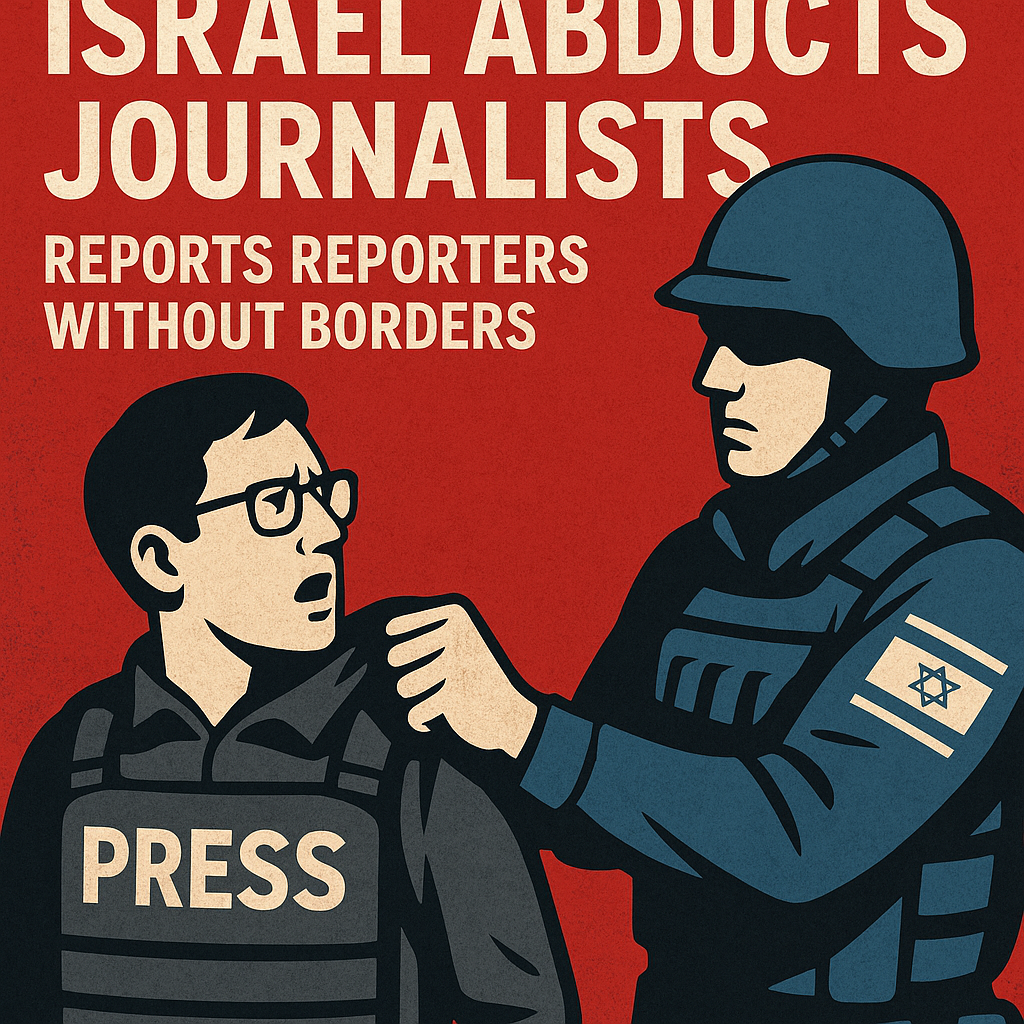
Israel Abducts Journalists, Reports Reporters Without Borders

Israel Abducts Journalists: An Ongoing Concern for Press Freedom
The alarming reports from Reporters Without Borders about Israel’s abduction of journalists highlight the grave concerns surrounding press freedom in conflict zones. This issue encapsulates not just the actions of a single nation, but the broader implications for journalism and human rights around the world.

The Context of Journalistic Safety in Conflict Zones
Israel’s recent actions, as reported by various sources including Reporters Without Borders, indicate a troubling trend where journalists are being targeted under the guise of national security. In conflict zones, the ability to report freely is often compromised by government actions aimed at controlling narratives.


What Reports Are Saying
1. Reporters Without Borders (RSF) indicates that Israel has intensified its crackdown on journalists, particularly in Gaza. Their reports describe multiple instances where reporters have been detained or abducted while attempting to cover the conflict. The organization emphasizes that such actions not only infringe on the rights of the journalists but also hinder the free flow of information to the public.


2. Al Jazeera presents a broader picture of the challenges journalists face in the region. While acknowledging that Israel has legitimate security concerns, it stresses the importance of safeguarding journalistic endeavors as a fundamental democratic principle. Their coverage discusses cases of specific journalists who have faced harassment or detention, contributing to a climate of fear that discourages comprehensive reporting.
3. RT News adds layers to this narrative by discussing international reactions to these abductions. Many human rights organizations are calling for accountability and an urgent reassessment of the laws governing wartime journalism. They argue that the erosion of press freedom in Israel and Palestine is a troubling sign for democratic values worldwide, creating a dangerous precedent where surrounding nations might imitate such tactics.
Diverse Reactions to the Situation
The reactions to these reports from various stakeholders illustrate the complexity of the issue:
– Supporters of Israel argue that in times of conflict, especially given the threats from militant groups, ensuring national security often necessitates stringent measures. They believe these actions are oriented towards protecting citizens and maintaining order. However, critics argue that this viewpoint can too easily justify the curbing of essential rights.
– Human rights advocates have voiced strong opposition, emphasizing the crucial role of journalists in documenting events and offering transparency during conflicts. They assert that the safety of journalists should never be compromised for political ends and that the international community must advocate for their protection.
The Implications for Journalism and Democracy
The abduction of journalists by Israel raises significant questions about the state of democracy and freedom of speech in conflict situations:
– Press Freedom Under Threat: As highlighted by the RSF, the standard for press freedom is already precarious in many regions. The targeting of journalists not only stifles reporting but also leaves the populace uninformed about critical issues affecting their lives.
– The Role of Technology: The rise of digital journalism presents opportunities for increased coverage, but it also introduces new vulnerabilities. Journalists in conflict zones rely on technology for communication and report dissemination, making them economic and strategic targets for oppressive regimes.
– International Responsibility: There is a growing expectation that international bodies must intervene to address human rights abuses. The targeting of journalists should prompt global discussions about ethical reporting and the responsibilities of states in upholding press freedom.
Conclusion: Toward a More Comprehensive Response
The situation described by Reporters Without Borders and reflected in various diverging viewpoints urges a more nuanced understanding of the challenges journalists face in conflict zones. While security concerns are paramount, they should not come at the expense of fundamental rights. Emphasizing the need for protections and clear protocols around the actions involving journalists could serve as an essential step to ensuring that the press can operate freely and fairly, even in the midst of chaos.
As this dialogue continues, it is crucial for the international community, media organizations, and civil society to advocate for a balanced approach that respects both security and freedom of expression. Without such efforts, the ongoing struggles for press freedom may become even more grim, leading to an uninformed public and, ultimately, a faltering democracy.















