
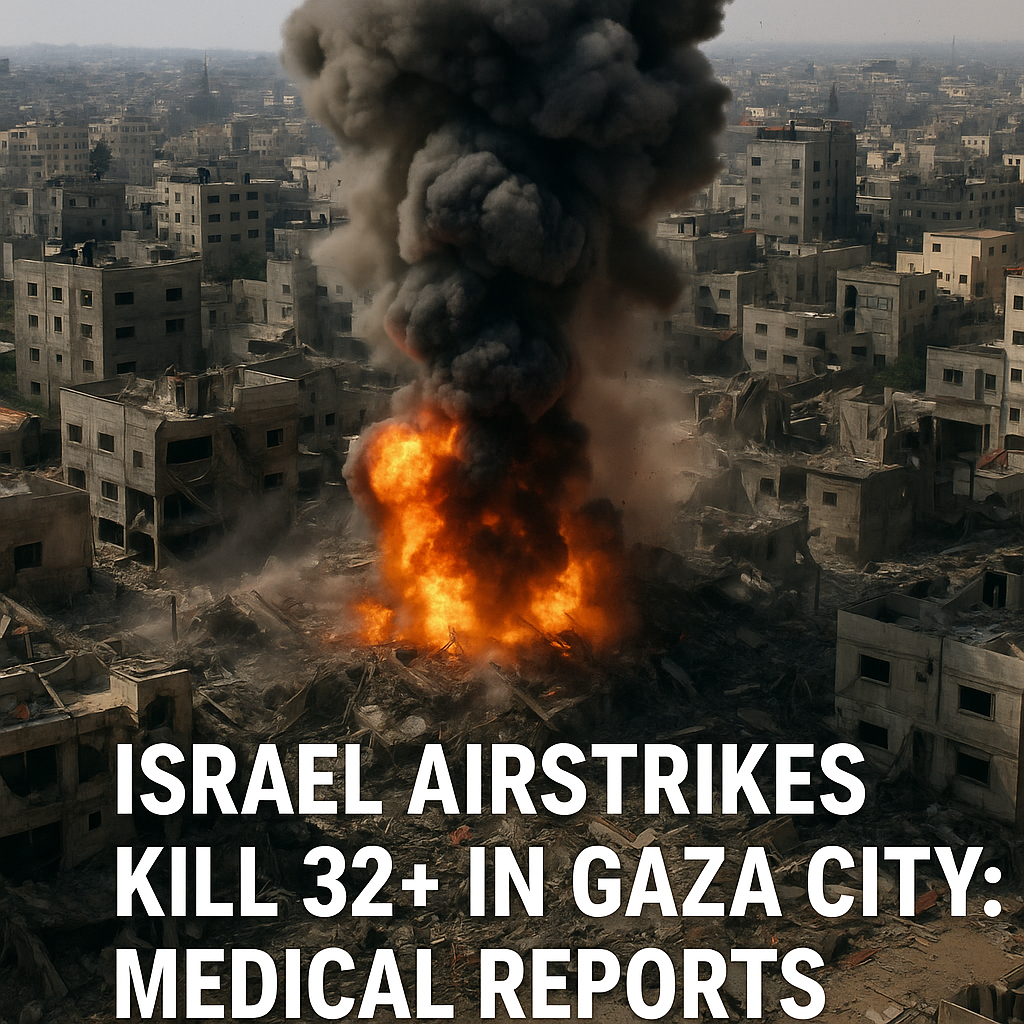
Israel Airstrikes Kill 32+ in Gaza City: Medical Reports

Israel Airstrikes Kill 32+ in Gaza City: Medical Reports
Recent airstrikes in Gaza City have resulted in the tragic deaths of over 32 individuals, as per updates from medical personnel. The continuous conflict has drawn increasing international attention, prompting discussions about the humanitarian impact of military actions in the region.

Escalation of Violence: A Complex Picture
The ongoing conflict between Israel and Hamas has seen a marked escalation in violence, with the recent airstrikes being one of the deadliest episodes in recent weeks. According to reports from various news outlets, including Sky News and Al Jazeera, the airstrikes targeted what Israeli officials categorized as militant sites. However, civilian casualties, including women and children, have raised serious concerns about the proportionality and necessity of such military actions.


Civilian Impact and Humanitarian Concerns
Medical reports from the Al-Quds Hospital in Gaza indicate that a significant number of the deceased were civilians. The health sector in Gaza, already strained by years of blockade and resource limitations, is facing an escalating crisis as it grapples with the influx of casualties. “The hospitals are overwhelmed, unable to accommodate the growing number of wounded,” said a medical official from the region, underscoring the dire conditions health professionals are confronted with in the aftermath of these attacks.


Critics of the airstrikes argue that such actions exacerbate the humanitarian crisis in Gaza, where basic services are already faltering. In contrast, Israeli officials justify their military actions as a necessary response to ongoing threats posed by Hamas, which they claim uses civilian areas to launch attacks. This justification reflects a longstanding strategic dilemma: how to balance military objectives against the imperative to protect civilian lives.
Diverging Perspectives on the Conflict
The international community remains divided on how to interpret these events. Some, like the United Nations and various human rights organizations, have condemned the airstrikes for their civilian impact. The U.N. has repeatedly called for restraint from both sides, emphasizing that strikes leading to widespread civilian casualties undermine efforts for long-term peace.
Conversely, Israeli authorities maintain steadfast support from segments of their population and some international allies, advocating the view that their actions are defensive in nature. This dichotomy in perspectives highlights the complexities of the situation. While one side frames certain actions as a response to terrorism, the other emphasizes the humanitarian consequences of military engagements.
The Need for Dialogue and De-escalation
In the face of escalating violence, the need for dialogue becomes increasingly urgent. A sustainable resolution cannot emerge from continued airstrikes and retaliatory measures alone. Much depends on whether both sides can engage in meaningful conversations that consider civilian safety and humanitarian needs as central components.
Public sentiment is shifting, however. Organized protests advocating for a ceasefire and greater international intervention for humanitarian aid are growing in cities across the globe. Grassroots movements are pushing for policymakers to take a strong stance in favor of diplomacy rather than military solutions.
The Future: Uncertain and Fragile
As this situation unfolds, uncertainties loom. The reality on the ground remains fluid, with the potential for further escalation. While some analysts expect a continuation of military engagements, others are hopeful that increased international scrutiny may prompt both sides to explore routes to de-escalation.
In conclusion, while the recent Israeli airstrikes in Gaza City have resulted in significant loss of life, the broader implications of these actions require careful consideration. The intersection of military strategy and humanitarian concerns presents a challenging landscape that necessitates a balanced approach focused on minimizing civilian casualties and fostering dialogue. As the world watches, the hope for peace and stability hangs precariously in the balance.















