
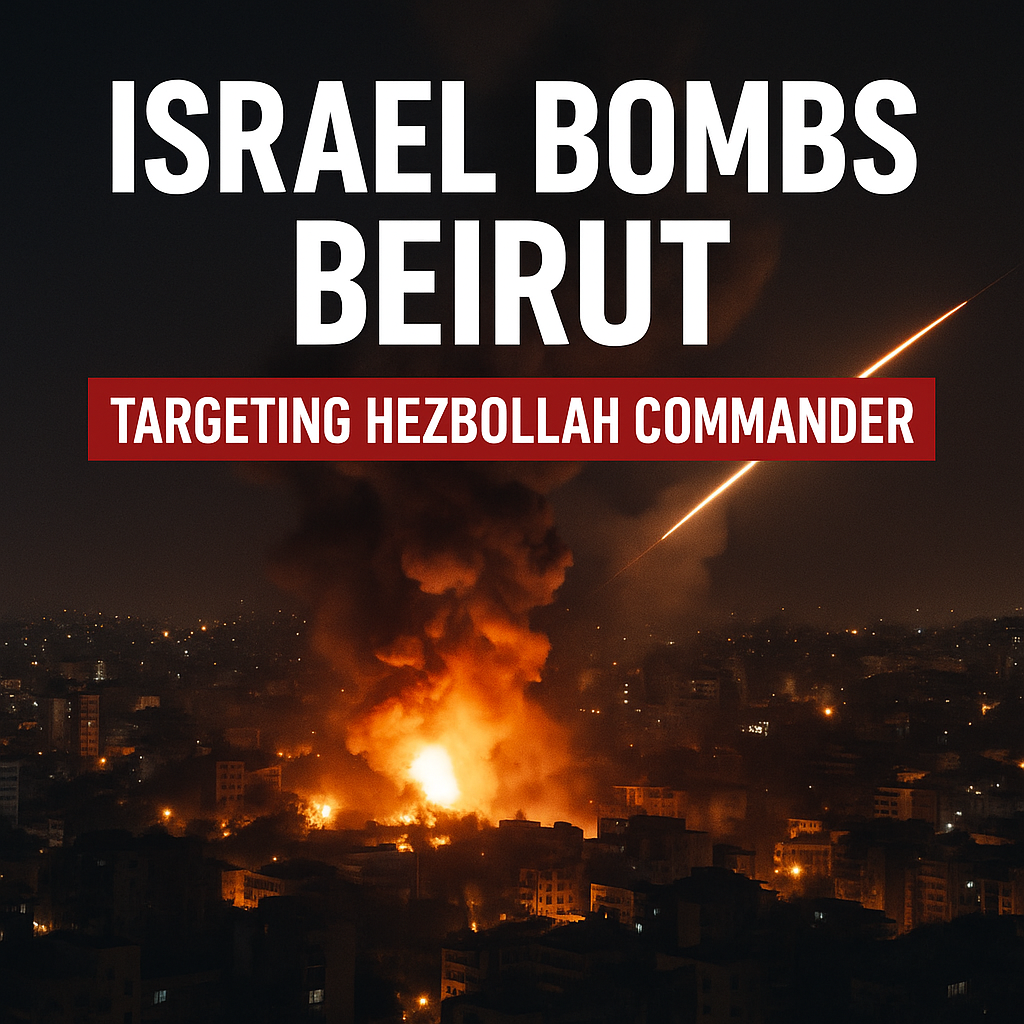
Israel Bombs Beirut: Targeting Hezbollah Commander

Israel Bombs Beirut: Targeting Hezbollah Commander
In a significant escalation of tensions in the Middle East, Israeli forces recently bombed areas in southern Beirut, reportedly aimed at taking out a Hezbollah commander. This operation underscores the ongoing complexities of regional politics and military strategies, driving a wedge deeper into the conflict between Israel and Hezbollah—a paramilitary group based in Lebanon.

Context of the Bombing
The targeted bombings were directed at a specific individual within Hezbollah’s command structure, identified as essential for conducting hostile operations against Israel. Such precision strikes are part of Israel’s long-standing policy of preemptive action aimed at thwarting perceived threats from Hezbollah, especially as tensions have been mounting along Israel’s northern borders.


Reports from various news outlets indicate that the bombings resulted in extensive collateral damage, affecting nearby civilian infrastructure. Al Jazeera reported that the strikes hit a residential area, raising concerns among local and international observers about the implications of targeting military leaders in urban environments. Critics argue that this strategy risks civilian casualties and further destabilizes the region.


On the other hand, Israeli officials maintain that such operations are critical for national security. They argue that the targeted removal of high-ranking military figures is necessary to disrupt Hezbollah’s operations and deter future attacks. According to Israeli defense sources, “not acting would invite further provocations,” a sentiment that reflects a hardline stance prevalent among military and political leaders in Israel.
The Response: Regional and International Reactions
The immediate aftermath of the bombing has elicited a strong response from various quarters. Hezbollah, for its part, has vowed retaliation, labeling the actions as a declaration of war. The group’s leader, Hassan Nasrallah, emphasized that Israel’s actions would not go unanswered and that the conflict would escalate if necessary.
On the international stage, reactions have varied. Some countries and organizations have condemned the bombings for their potential humanitarian repercussions and the risk of escalating violence in an already volatile region. Critics from both human rights organizations and political leaders have highlighted the need for dialogue and de-escalation instead of military action.
Conversely, some observers argue that Israel is simply exercising its right to self-defense in an environment characterized by persistent threats from militant groups like Hezbollah. Supporters of this view contend that the Lebanese government has been ineffective in curbing Hezbollah’s influence, thereby necessitating Israeli intervention.
The Bigger Picture: Geopolitical Implications
The bombing in Beirut must also be understood against the backdrop of broader geopolitical dynamics in the Middle East. The increasing footprint of Iran in Lebanon—supporting Hezbollah in military and financial capacities—continues to pose challenges for Israel and its allies. The Iranian connection is often seen as a significant factor that complicates any efforts toward stability in the region.
Moreover, the recent incident highlights the fracturing relationships between Middle Eastern nations. The normalization of ties between some Arab states and Israel has created rifts in regional alliances, with Hezbollah positioning itself as a counterweight to what it perceives as an encroachment by Israeli and Western interests.
Conclusion: A Stalemate with Uncertain Outcomes
In the light of the tensions surrounding the Israeli bombing of Beirut, it remains uncertain what the longer-term consequences will be. The bombing represents not merely a tactical military decision but also a reflection of a more profound ideological struggle in the region. While Israel aims to secure its borders against what it regards as imminent threats, the potential for retaliatory actions by Hezbollah, along with increasing civilian casualties, raises significant ethical and diplomatic questions.
The complexity of the situation calls for nuanced understanding and a cautious approach from all involved parties. The cycle of retribution may perpetrate further violence, overshadowing the hope for a peaceful resolution. As the situation evolves, the international community’s role in mediating and seeking diplomatic solutions becomes ever more critical amidst the backdrop of ongoing military confrontations.















