
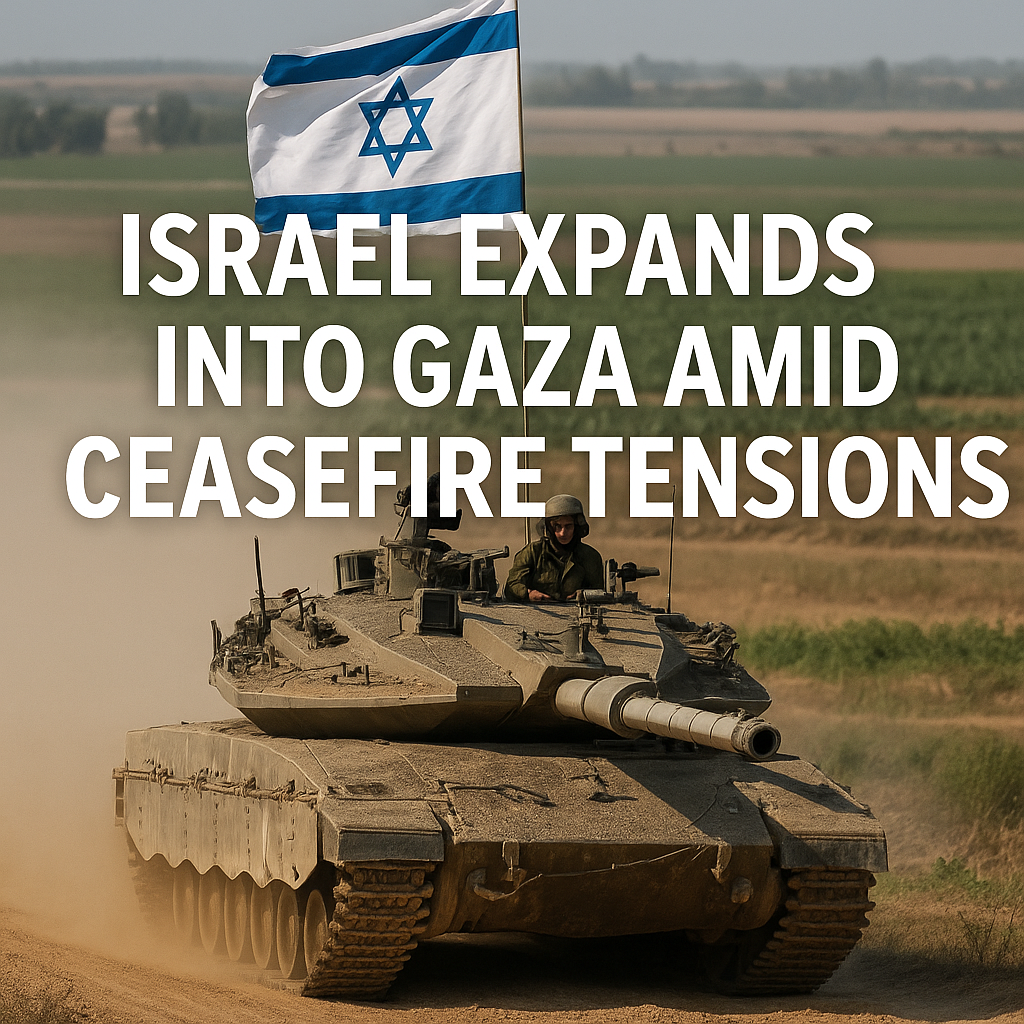
Israel Expands into Gaza Amid Ceasefire Tensions

Israel Expands into Gaza Amid Ceasefire Tensions
The ongoing tensions and complex dynamics in the Israeli-Palestinian conflict continue to draw international attention. Recent developments indicate an unsettling trend as Israel appears to expand its presence in Gaza, raising questions about the implications for the fragile ceasefire that has been in place.

A Landscape of Uncertainty
The situation in Gaza remains tense, with reports suggesting that despite an ongoing ceasefire, Israel is enhancing its military footprint in the region. Al Jazeera’s analysis indicates that this expansion could be viewed as a defiance of diplomatic efforts aimed at peace. The outlet noted that community leaders and humanitarian organizations are alarmed, expressing concerns over the potential escalation of violence. Locals fear that the military build-up undermines the very ceasefire meant to provide a reprieve from hostilities.


Conversely, Russian media outlets present a different perspective, asserting that Israel’s military operations are defensive in nature, aimed at ensuring national security. They argue that the Israeli government perceives these actions as a necessary response to perceived threats from militant groups in Gaza. The RT network suggests that this military presence is framed as a protective measure for citizens in nearby Israeli towns who have suffered from frequent rocket fire in the past.


The Human Cost of Military Actions
The humanitarian implications of this military expansion are profound. Reports from various human rights organizations highlight escalating concerns regarding civilian casualties and the destruction of infrastructure in Gaza. With a history of strained relations and cycles of violence, any further military actions could lead to significant humanitarian crises. Aid groups warn that the influx of military forces may hinder relief efforts, exacerbating an already dire situation for civilians trapped in a conflicted zone.
On the other hand, Israeli officials maintain that their military strategies seek to deter terrorist activities, arguing that a strong military presence is vital to protect innocent lives. This dichotomy marks the crux of ongoing debates: is the expansion in Gaza a strategic necessity or a perilous provocation?
Diverging Perspectives: Analyzing the Ceasefire Dynamics
The notion of a ceasefire, while ostensibly aimed at peace, appears fraught with complications. The Israeli government asserts that any military actions taken are consistent with its right to defense, especially when facing ongoing threats from groups based in Gaza. However, this perspective is met with sharp criticism from Palestinian advocates and international monitors, who emphasize that militaristic posturing threatens to derail any ongoing dialogue for peace.
Reports suggest that international stakeholders are increasingly concerned about the implications of Israel’s actions for regional stability. Analysts argue that if the present strategies lead to civilian casualties, the resultant backlash could reignite tensions not only in Gaza but across the wider Middle East. Some experts warn that extending military operations undermines international diplomacy efforts that encourage a two-state solution—one widely regarded as the key to long-term peace.
Possible Outcomes: The Path Forward
As Israel navigates these complex waters, the question remains: what happens next? The ongoing military expansion into Gaza poses numerous risks and potential outcomes. On one hand, if Israel successfully deters attacks, it may view this military action as justified; on the other, it may risk alienating the very international community it relies on for support.
The broader implications for peace efforts in the region cannot be understated. Many experts posit that a renewed focus on conflict resolution, rather than military expansion, may yield better long-term outcomes. Countries like Egypt and Qatar have historically played mediatory roles and may need to re-engage to facilitate dialogue and restore a sense of peace in the area.
In conclusion, as Israel expands its operations in Gaza amid ongoing ceasefire tensions, the complexities inherent in this situation demand careful consideration. The divergent perspectives surrounding the rationale for this military build-up underline the challenge of achieving lasting peace. It is clear that the path forward must prioritize diplomacy, humanitarian efforts, and an earnest commitment to dialogue to prevent a cycle of violence that has persisted for too long. Without collective action towards understanding and resolution, hope for lasting peace may remain an elusive goal.















