
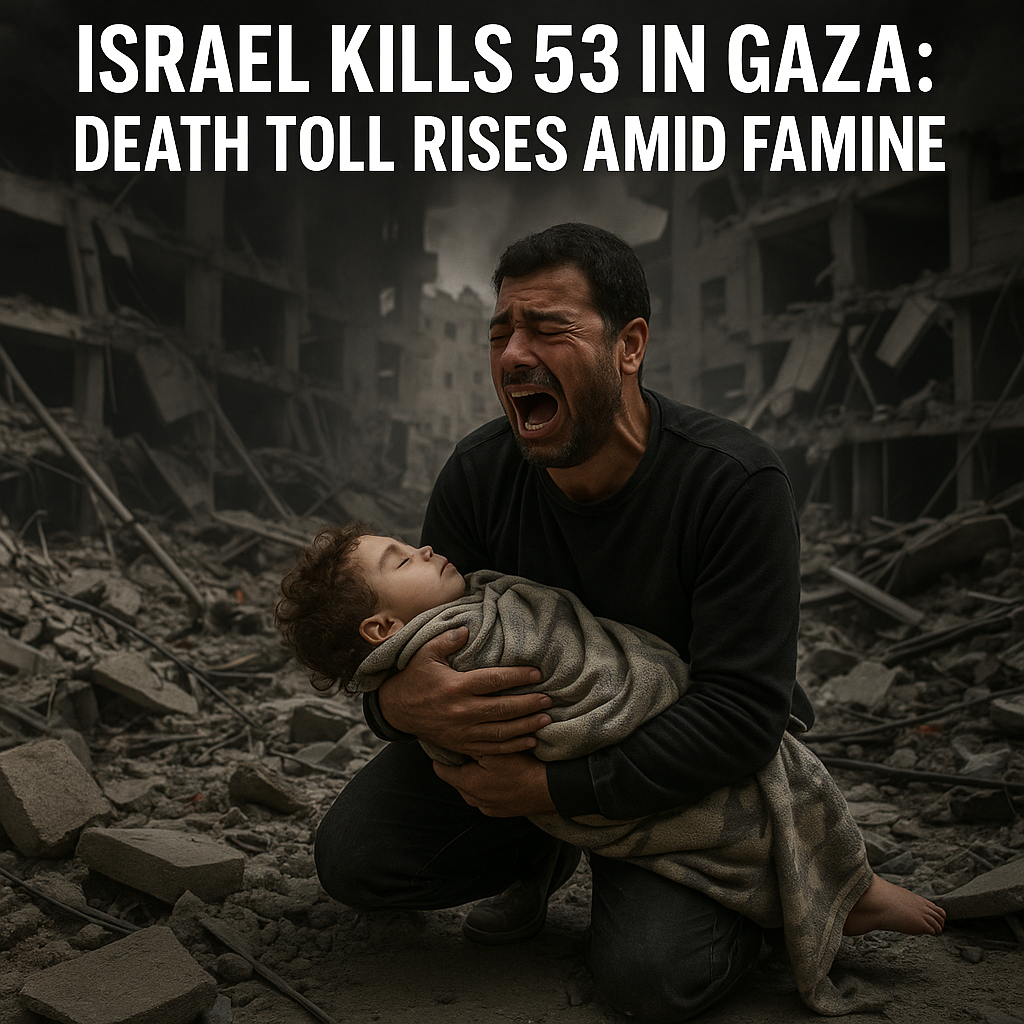
Israel Kills 53 in Gaza: Death Toll Rises Amid Famine

Israel Kills 53 in Gaza: Death Toll Rises Amid Famine
In the ongoing Israel-Gaza conflict, recent airstrikes have resulted in the death of 53 individuals, further exacerbating an already dire humanitarian crisis marked by famine conditions in the region. A stark overview of the situation reveals complex layers of geopolitical tensions, local impacts, and international responses.

The Humanitarian Crisis in Gaza
Reports indicate that the airstrikes, conducted as part of Israel’s military operations, have targeted various locations across Gaza, leading to widespread destruction. According to Al Jazeera, many of the civilian casualties include women and children, raising serious concerns about the nature and scale of these operations. The articles suggest that this latest round of strikes is part of Israel’s aggressive stance following rocket fire and increasing tensions from the conditions in Gaza.


The Impact of Famine
Simultaneously, fateful reports from various sources indicate that Gaza is facing worsening food shortages, dramatically affecting the civilian population. Sky News emphasizes that the combination of military bombardments and a crippling blockade has critically diminished food supplies, leaving many on the brink of starvation. As a response, humanitarian organizations are raising alarms about the potential for famine. “Without immediate assistance, we may witness a catastrophic loss of life,” a representative from a local aid group stated.


The delicate fabric of Gaza’s social and economic structure has been ripped apart, leaving families struggling to find basic necessities such as food, water, and medical care. This dual assault—military strikes coupled with dire famine—has led to a dire humanitarian situation that calls for urgent international intervention.
Diverse Reactions: Conflict and Resolution
As with any prolonged conflict, reactions are multi-faceted and polarized. From the Israeli perspective, military actions are justified by security needs aimed at neutralizing threats from militant groups. The Israeli government maintains that these operations target terror infrastructures. Conversely, critics highlight the overwhelming civilian toll and call for a reevaluation of military strategies that disproportionately affect non-combatants.
RT provides a contrasting viewpoint by reflecting on the global ramifications of the conflict, particularly regarding U.S. foreign policy. Many argue that the American support of Israel contributes to sustaining conflicts. Critics assert that this support often overlooks humanitarian concerns, arguing for a more balanced approach that factors in the human cost of military operations.
International reactions have ranged from calls for ceasefires to demands for accountability regarding civilian casualties. The United Nations has urged all parties to seek de-escalation and prioritize the protection of civilians. Yet, the prospects for peace appear tenuous at best, as peace negotiations have historically faltered amid cycles of violence.
The Path Forward: Dialogue and Accountability
As the humanitarian crisis unfolds amid escalating violence, the need for dialogue remains critical. There is an emerging consensus among many humanitarian organizations that any long-term solution will involve addressing the structural issues underlying the conflict, including economic stability, political representation, and justice for affected civilians.
Some analysts argue that international pressure must be placed on both sides to return to negotiations. However, achieving a diplomatic breakthrough is complicated by entrenched positions, mutual distrust, and the urgency of addressing immediate humanitarian needs.
Conclusion
The conflict in Gaza exemplifies a complex interplay between military action and humanitarian consequences. The recent killing of 53 civilians amid worsening famine symbolizes the urgent need for a recalibration of tactics that prioritize human life and dignity. As global awareness increases, the hope lies in fostering dialogue, ensuring accountability, and ultimately striving for peace. Only through concerted efforts, rooted in a fair understanding of the perspectives of all parties involved, can a pathway to resolution be illuminated.















