
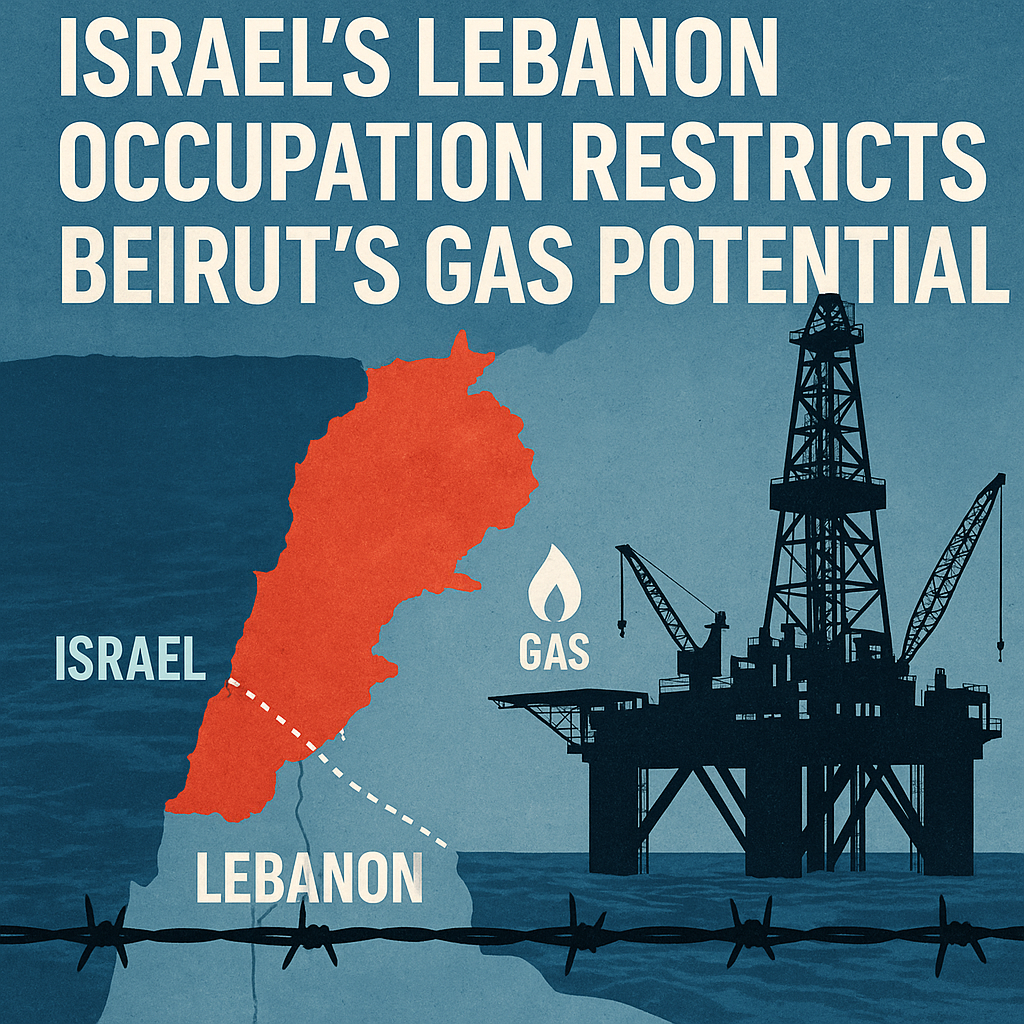
Israel’s Lebanon Occupation Restricts Beirut’s Gas Potential

Israel’s Lebanon Occupation Limits Beirut’s Gas Potential
The ongoing geopolitical tensions surrounding Israel’s occupation of Lebanese territories have significant implications for Lebanon’s energy sector. Recently, newfound interest in natural gas resources in the Eastern Mediterranean has placed Beirut’s potential gas wealth under scrutiny, overshadowed by Israeli military maneuvers and territorial claims.

The Stakes of the Eastern Mediterranean Gas Discovery
In recent years, gas discoveries in the Eastern Mediterranean have captured global attention. However, these findings are shadowed by complex political tensions, particularly between Israel and Lebanon. Both countries possess claims to rich gas fields, but an enduring standoff has paralyzed any collaborative efforts to explore and develop these resources.


Experts indicate that Lebanon’s gas potential could significantly bolster its struggling economy. As noted in recent articles from various news sources, Lebanon holds sizable natural gas reserves in its offshore fields. According to Al Jazeera, these fields could prove critical not just for national energy independence but also for economic recovery, particularly a country facing severe financial strife.


Contrast this with insights from RT, where it was highlighted that Israeli military actions and territorial claims have created an environment of intimidation that hampers Lebanon’s oil and gas exploration efforts. The Israeli government has consistently emphasized its right to safeguard what it considers its territorial waters, which overlap with potential Lebanese gas reserves.
Understanding the Broader Implications
The significance of these developments extends beyond mere economics. Not only do energy resources hold the key to national prosperity, but they also play a pivotal role in regional stability. The potential for conflict over gas fields is exacerbated by far-reaching geopolitical dynamics involving Iran, Syria, and various non-state actors.
For example, as RT discusses, Iran’s backing of Hezbollah poses a challenge to Israel’s security in the region. The intertwining of military and economic interests makes the situation even more precarious. Both Israel and Lebanon are wary of any moves that could be interpreted as encroachment, whether from a military or resource-extraction standpoint.
Further complicating matters, as Al Jazeera reports, the global energy landscape is shifting. With Europe seeking alternatives to its energy dependence on Russia, Lebanon’s gas reserves could emerge as a focal point for international investment and support—if only it can navigate the treacherous waters created by Israeli military maneuvers.
A Call for Diplomatic Solutions
Given the stakes involved, it is crucial for both countries to consider diplomatic avenues for resolving their territorial disputes. Several experts advocate for joint exploration agreements that could pave the way for equitable resource-sharing. This would not only benefit both economies but could also foster a degree of cooperation that is sorely needed in a historically fraught relationship.
However, achieving such cooperation is fraught with challenges. The current political climate, characterized by mutual distrust and military posturing, doesn’t favor dialogue. Lebanon’s leaders face immense internal pressures and public skepticism toward any potential dealings with Israel. Meanwhile, the Israeli government must contend with its own security concerns, particularly regarding Iranian influence in the region.
The absence of a clear consensus on how to manage these resources, amid ongoing hostilities, leaves much uncertainty. As highlighted in discussions across multiple platforms, stakeholders from both sides acknowledge that a failure to cooperate may yield not only missed economic opportunities but also heightened tensions—a recipe for further conflict.
Conclusion: Bridging the Divide
While Lebanon possesses vast gas potential that could significantly improve its economic landscape, Israeli military actions and the ongoing occupation of Lebanese territories serve as formidable barriers. The time for action is now; diplomatic channels must open to explore the possibility of joint ventures in gas extraction. Failure to do so risks prolonging a cycle of confrontation that serves to impede both nations’ prospects.
As the geopolitical tides continue to shift, it is vital for both Israel and Lebanon to navigate their complex relationship with a focus on mutual benefit rather than conflict. Only through dialogue and cooperation can they unlock the resources that lie beneath their waters and work toward a more stable and prosperous future.















