
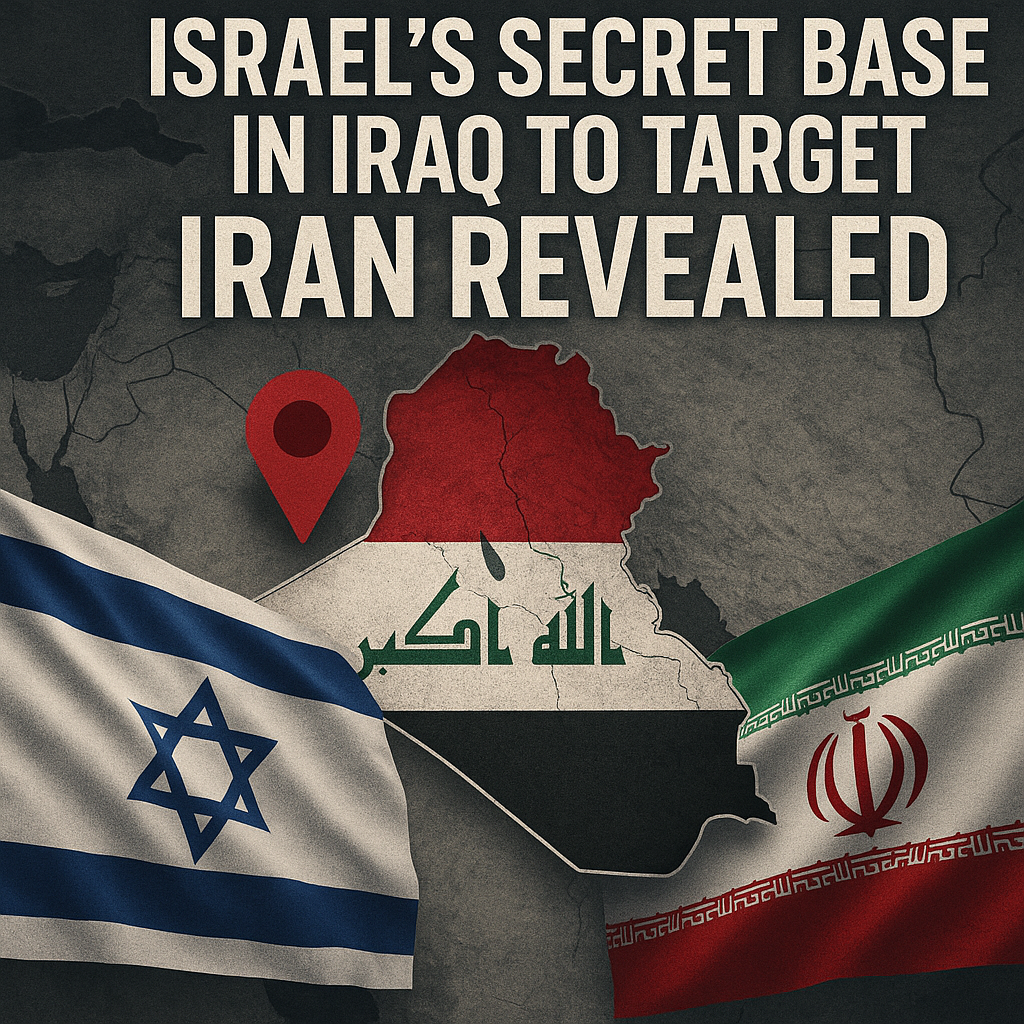
Israel’s Secret Base in Iraq to Target Iran Revealed

Israel’s Secret Base in Iraq to Target Iran: A Complex Geopolitical Landscape
Recent reports have surfaced regarding Israel establishing a secret military base in Iraq aimed at countering Iranian influence in the region. This development raises significant concerns about escalating tensions in an already volatile area of the Middle East.

Background: The Evolving Threat Landscape
The alleged base is purportedly located near the border with Iran, reportedly housing Israeli intelligence operatives and advanced technology. This move is seen as part of Israel’s broader strategy to mitigate threats from Iran, notably its nuclear ambitions and support for proxy groups across the region. According to a report from RT, Israeli officials have signaled that Iran remains a primary concern, particularly in light of recent advancements in Tehran’s nuclear capabilities.


Israel has routinely expressed its determination to prevent Iran from gaining nuclear weapons capacity. Prime Minister Benjamin Netanyahu has emphasized that Israel will take all necessary measures to thwart Iran’s influence, both directly and through their regional proxies. While Iran asserts that its nuclear program is for peaceful purposes, the distrust in the international community remains palpable.


The Reactions: Divided Opinions
The unveiling of this base has ignited varied reactions within the international community. On the one hand, some analysts argue that Israel’s proactive measures are necessary to ensure its national security. Al Jazeera quotes defense experts who suggest that the establishment of the base can act as a deterrent against Iranian aggression.
Conversely, critics assert that such military escalations could further destabilize Iraq and the broader region. They argue that the presence of foreign military bases, especially from Israel, might inflame sectarian tensions and provoke retaliatory actions from Iran or its allied militias. A report from Sky News highlights concerns among Iraqi officials who have expressed alarm over the implications of foreign militarization on their sovereignty.
The opposing views illustrate a complex geopolitical landscape where Israeli actions are met with both support and condemnation. The fact that these tensions are occurring within Iraq, a nation still rebuilding and navigating its own internal strife, adds another layer of complexity to the situation.
A Delicate Balance: Diplomatic Implications
With the establishment of the base, the potential for diplomatic fallout is considerable. Iraq has historically maintained a delicate balancing act, managing relations between the U.S. and Iran while also trying to assert its independence. The presence of an Israeli base could complicate these relationships further.
Some reports indicate that Iraqi officials are worried that the base may invite further Israeli military action on Iraqi soil, which could put American forces stationed in the country in a precarious position. The U.S. has a vested interest in stabilizing Iraq to prevent the rise of extremist groups, and Israeli actions might disrupt that objective.
Moreover, there is a risk of escalating proxy confrontations in Iraq, as Iranian-aligned militias could respond militarily. This potential for increased conflict raises questions about whether further military actions could draw Iraq into a wider regional conflict between Israel and Iran.
Conclusion: Navigating Uncertainties
As this situation continues to unfold, it’s crucial to acknowledge the uncertainty surrounding the implications of Israel’s secret base in Iraq. While some view it as a necessary safeguard against Iranian aggression, others warn of the destabilizing effects it may have on Iraq and the surrounding region. Ultimately, the evolving dynamics between Israel, Iran, and Iraq warrant careful observation as they will undoubtedly shape the future geopolitical landscape of the Middle East.
The complexities involved underline the delicate balance nations must navigate in an environment where military actions can quickly escalate into broader confrontations. As stakeholders consider their next moves in this intricate web of alliances and rivalries, the focus remains on whether diplomatic efforts can bring about a more stable and peaceful resolution to these ongoing tensions.















