
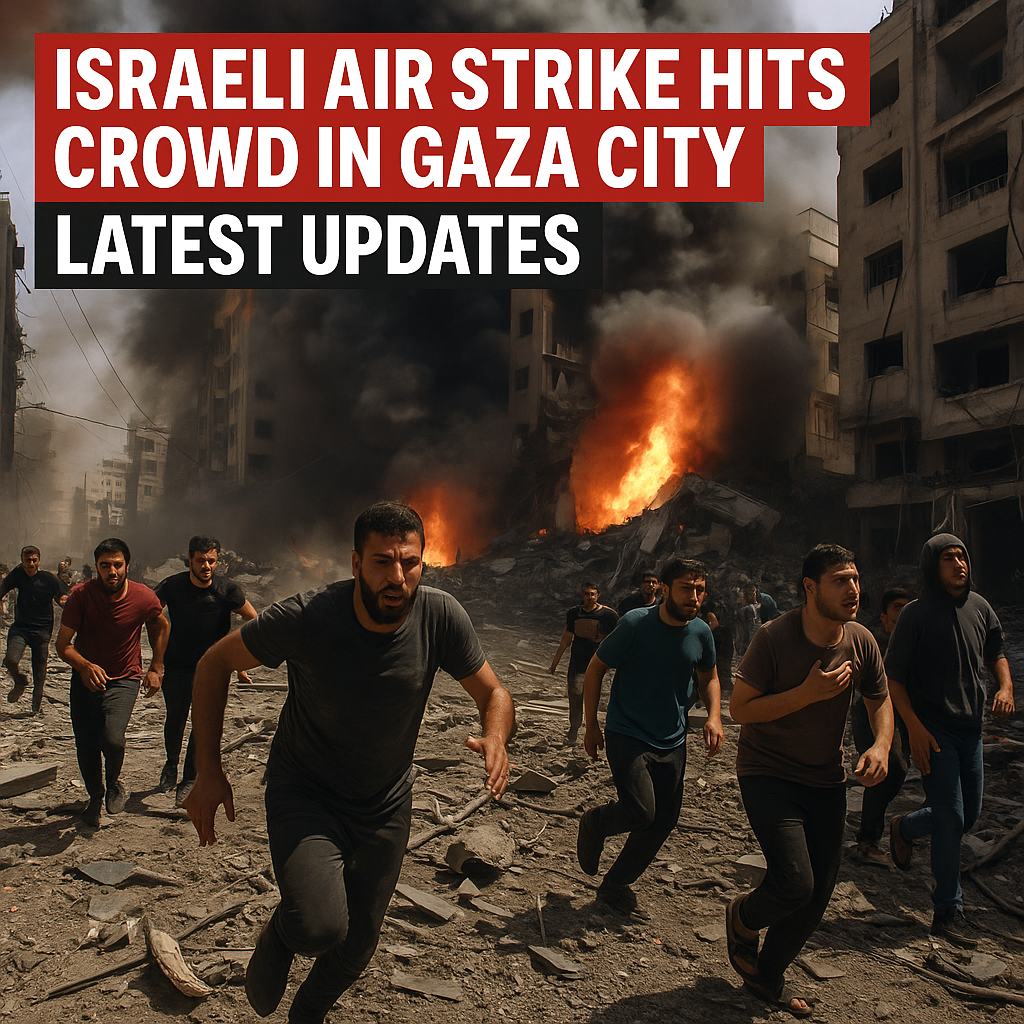
Israeli Air Strike Hits Crowd in Gaza City: Latest Updates

Israeli Air Strike Hits Crowd in Gaza City: Implications and Reactions
The recent Israeli air strike that targeted a crowd in Gaza City has sparked widespread outrage and renewed discussions around the ongoing Israeli-Palestinian conflict. This incident not only highlights the complexities of military operations in densely populated areas but also raises ethical questions regarding the sanctity of civilian life amidst warfare.

Context of the Incident
Reports indicate that the air strike occurred during a time of escalated tension in the region, with both sides engaged in what has been described as a vicious cycle of retaliation. According to accounts from Al Jazeera, the attack specifically aimed at a group of individuals gathered in an area known for its civilian presence. Eyewitnesses have described chaotic scenes as the strike hit, resulting in numerous casualties, including women and children.


In contrast, RT News has proposed that the Israeli military justified the attack by claiming it was targeting militant operatives who were allegedly planning imminent attacks. This rationale, however, has been met with skepticism. Critics argue that even if militants were present, the decision to conduct air strikes in populated civilian areas raises significant moral and legal questions under international humanitarian law.


Framing the Reaction
As news of the strike spread, reactions poured in from various corners of the globe. Sky News reported vehement condemnation from leaders in the Arab world, who labeled the strike as an act of aggression. Social media has also overflowed with calls for accountability, as activists have mobilized online to draw attention to the humanitarian implications of such military tactics.
Conversely, there are voices in Israel who contend that the military operations are necessary for national security. They emphasize that the military takes precautions to minimize civilian casualties, although such assertions are met with disbelief by many international observers. The ongoing conflict’s cyclical nature means that each attack seems to perpetuate suffering on both sides.
Assessing Civilians’ Safety and Military Objectives
The ethical considerations surrounding military actions in conflict zones are increasingly important. The notion of proportionality in warfare holds that the response to a threat must not result in excessive civilian harm compared to the military advantage gained. Yet, reports indicate that civilian casualties in Gaza often far exceed the military objectives outlined by Israel.
This incident, like many others in the region, highlights the complex interplay between military necessity and humanitarian concerns. The Geneva Conventions articulate the responsibilities of a state to protect civilian lives, yet the reality on the ground often reveals a troubling discrepancy between these principles and military practice.
The Future of Israeli-Palestinian Relations
The ramifications of this air strike are likely to be felt long after the immediate aftermath. Community dynamics within Gaza, strained by repeated cycles of violence, will face further disruption. There is also the potential for heightened tensions between Israel and neighboring countries, as calls for intervention from international bodies intensify.
Moreover, it remains unclear how this incident will influence peace talks or the broader strategies employed by both Israeli and Palestinian leaders. Some analysts posit that continued violence might lead to hardening positions on both sides, making dialogue increasingly difficult. Others argue that it could catalyze renewed international pressure for accountability.
This air strike and the ensuing fallout will likely serve as a critical juncture for both civil and military leaders, as they must navigate a complex landscape of opinions and potential repercussions.
Conclusion: The Challenge of Achieving Consensus
In the wake of yet another tragic event in the ongoing Israeli-Palestinian conflict, the quest for understanding and resolution becomes ever more complicated. With multiple narratives emerging from various sources, observers are left with the challenge of discerning fact from propaganda amidst an emotionally charged environment.
While the motivations behind military actions are often rooted in national security concerns, the civilian toll cannot be overlooked. As stakeholders, both local and international, seek pathways toward peace, a critical appraisal of such incidents will be essential in shaping future strategies. In a conflict riddled with history and trauma, each air strike and each casualty is not merely a statistic but a part of a broader human story that demands attention, empathy, and a commitment to dialogue.















