
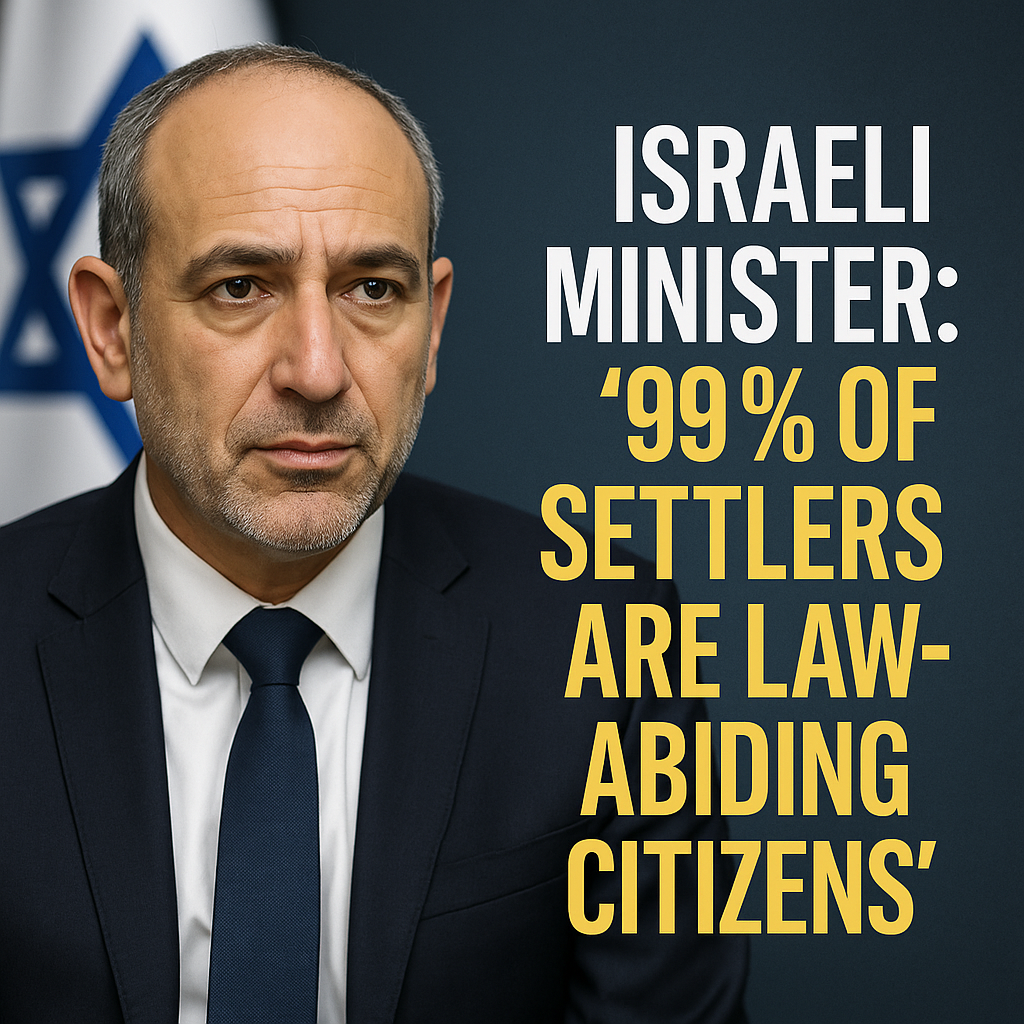
Israeli Minister: ‘99% of Settlers are Law-Abiding Citizens’

Israeli Minister Claims ‘99% of Settlers are Law-Abiding Citizens’
In a recent statement, an Israeli minister asserted that “99% of settlers are law-abiding citizens.” This claim has stirred diverse reactions and highlights the ongoing debates surrounding Israeli settlements and their implications for both Jewish and Palestinian communities.

The Context of Settler Communities
Settlements in the West Bank, a territory claimed by both Israelis and Palestinians, have been a focal point of tension for decades. According to various news sources, including Al Jazeera and RT, Israeli settlers reside in these communities often with governmental backing, which complicates the already tumultuous landscape of Israeli-Palestinian relations.


The minister’s assertion comes amid heightened scrutiny of settlement activities, particularly in light of international sentiments that often view these settlements as illegal under international law. The conflicting narratives around settlers’ behavior—whether they’re viewed primarily as law-abiding citizens or as participants in a broader system of occupation—add layers to understanding this contentious issue.


Analyzing the Claim: A Law-Abiding Majority?
While the Israeli minister’s statement aims to depict the settler population in a favorable light, it raises questions about the metrics used to define “law-abiding.” For many, adherence to local laws does not necessarily equate to ethical behavior, especially in a context marked by displacement and conflict.
Some proponents argue that the vast majority of settlers do follow legal regulations, citing low crime rates within these communities compared to major urban centers in Israel. However, detractors point out that systematic issues, including violent incidents against Palestinians, often go unpunished. Reports indicate that while many settlers may adhere to Israeli law, their actions sometimes violate Palestinian rights, which complicates the characterization of the community as wholly law-abiding.
Voices from the Ground: Diverse Perspectives
Opinions regarding the minister’s claims are sharply divided among various stakeholders:
– Supportive Viewpoints: Some Israeli officials and settlers see the statement as a necessary counter-narrative to the broader international view of settlements as illegitimate. Supporters argue that the emphasis on law-abiding behavior serves to humanize settlers and addresses misconceptions about violence associated with some of the more extreme factions within the settler community.
– Critiques and Concerns: Others vehemently disagree, emphasizing that while many settlers may engage in lawful behavior, the larger implications of settlement activities often contribute to a state of oppression for Palestinian people. Critics contend that any portrayal of settlers should not dismiss the systemic violence and legal complexities affecting Palestinian communities. Human rights organizations frequently cite instances where actions by settlers lead directly to violence or harassment against Palestinians.
– International Reactions: The recent statement from the Israeli minister was met with skepticism in international circles, particularly among those advocating for Palestinian rights. Various reports underline that the international community continues to regard most Israeli settlements as obstacles to peace, complicating efforts at dialogue and resolution.
The Complexity of the Settlement Debate
Understanding the Israeli minister’s comment requires a nuanced examination of the broader context. In debates about legality, morality, and ethics, the landscape becomes murkier than a simple count of law-abiding citizens versus offenders. It necessitates discussing policies that enable settlers to live in disputed territories while highlighting the impact of those policies on Palestinian communities.
The catalyst driving much of this discourse ties back to the notion of equality and justice. Settler communities often thrive under protective measures, while Palestinians experience restrictions, evictions, and violence. This contradictory reality complicates any unilateral claims of lawfulness within the settler population.
Conclusion: No Clear Consensus
The assertion that “99% of settlers are law-abiding citizens” encapsulates the complexity and contentious nature of the Israeli-Palestinian narrative. As with many such debates, defining this issue solely through statistics or personal testimonies inevitably leaves out essential facets of historical grievance, justice, and policy impacts.
A lack of consensus on the subject further complicates the landscape. The dialogue must extend beyond simplistic characterizations into an inclusive discussion that considers the perspectives of both settlers and Palestinians. Ultimately, fostering a deeper understanding may be essential in facilitating dialogue, promoting reconciliation, and working toward a sustainable, just solution for all involved.















