
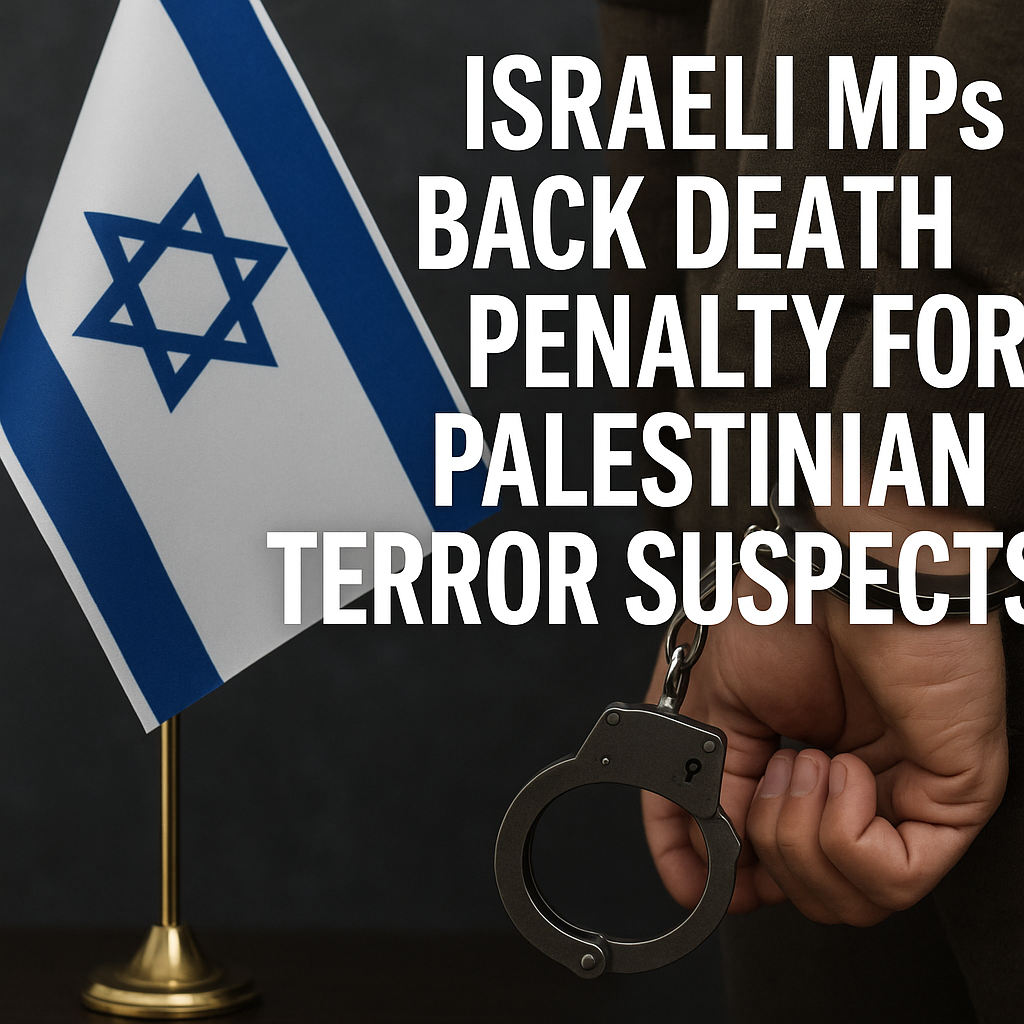
Israeli MPs Back Death Penalty for Palestinian Terror Suspects

Examining the Debate: Israeli MPs Back Death Penalty for Palestinian Terror Suspects
The recent backing of the death penalty for Palestinian terror suspects by Israeli lawmakers has ignited a heated discourse, highlighting divergent views within Israel and the broader international community. This move, supported by right-wing factions, is framed within the context of escalating violence and security concerns, yet it raises significant ethical and legal questions that demand thorough examination.

The Legislative Push for Capital Punishment
In a significant legislative shift, Israeli parliament members have voted in favor of introducing the death penalty for individuals convicted of terrorism against civilians. The proposed law reflects a robust response to a string of violent attacks attributed to Palestinian militant groups, generating strong support among right-leaning political circles in Israel. Proponents argue that this measure is necessary for deterrence, aiming to curb the rise in violence and provide justice to victims and their families.


The law’s proponents emphasize that existing punitive measures fall short of effectively addressing the threat posed by terrorism. They claim that the capital punishment will instill fear among potential attackers and ultimately contribute to national security. However, inherent challenges and moral objections accompany this push. Critics argue that capital punishment does not serve as a proven deterrent and that the judicial system, especially in conflict zones, is often plagued by biases and inefficiencies.


International Response and Human Rights Concerns
The endorsement of capital punishment has garnered significant backlash from various international organizations and human rights advocates who view it as a violation of human rights. Numerous UN bodies and NGOs have expressed their concerns, asserting that the death penalty undermines the principles of justice, particularly in a region marked by ongoing conflict and political instability.
Opponents raise alarm over the implications of implementing such a law in a context where due process can often be compromised. They highlight the risk that the death penalty could be applied disproportionately, particularly against marginalized groups, and lead to wrongful convictions. As Human Rights Watch points out, the notion of fairness in legal proceedings is crucial, and any deviation from this principle poses a considerable threat to justice.
Consequently, the international community is faced with a complex challenge—balancing national security interests with adherence to human rights norms. Countries and organizations must grapple with the implications of supporting or condemning Israel’s legislative decision while also considering the broader ramifications for peace in the region.
Analyzing the Domestic Debate
Within Israel, opinions on the death penalty’s implementation are notably divided, cutting across political lines. While politicians from right-wing parties herald this law as a necessary step toward ensuring national safety, many center-left and liberal lawmakers argue that it contradicts the values of democracy and human rights that Israel purports to uphold.
A significant concern is that such legislation could further entrench cycles of violence and retaliation. Many citizens fear that introducing the death penalty could provoke escalation, igniting retaliatory measures from Palestinian groups and increasing tensions in an already volatile environment. The prospect of capital punishment might lead to an atmosphere of fear and mistrust, ultimately hindering peace efforts and reconciliation between groups.
Moreover, internal debates reflect broader societal divisions regarding the security and ethical dilemmas posed by the ongoing Israeli-Palestinian conflict. Some believe that responding to terrorist acts through extreme measures could overshadow the quest for a sustainable resolution to the conflict, further displacing dialogues centered around peace initiatives.
Conclusion: A Complex and Contentious Path Ahead
As the legislative process unfolds, Israel stands at a crossroads where the implications of the death penalty for Palestinian terror suspects extend far beyond domestic law. The varying viewpoints within Israel, coupled with international condemnation, reflect the intricate web of ethical, political, and social factors at play.
The decision to endorse capital punishment represents not only a legal choice but a profound moral consideration amidst a backdrop of violence and suffering. As debates continue, it is crucial to foster dialogue that prioritizes both justice and the pursuit of lasting peace. The human cost of conflict underscores the need for solutions that transcend punishment and embrace deeper understanding, reconciliation, and the potential for coexistence between Israelis and Palestinians.
In navigating this contentious issue, all parties involved must tread carefully, balancing the immediate necessity of security with the broader imperatives of justice and human rights.















