
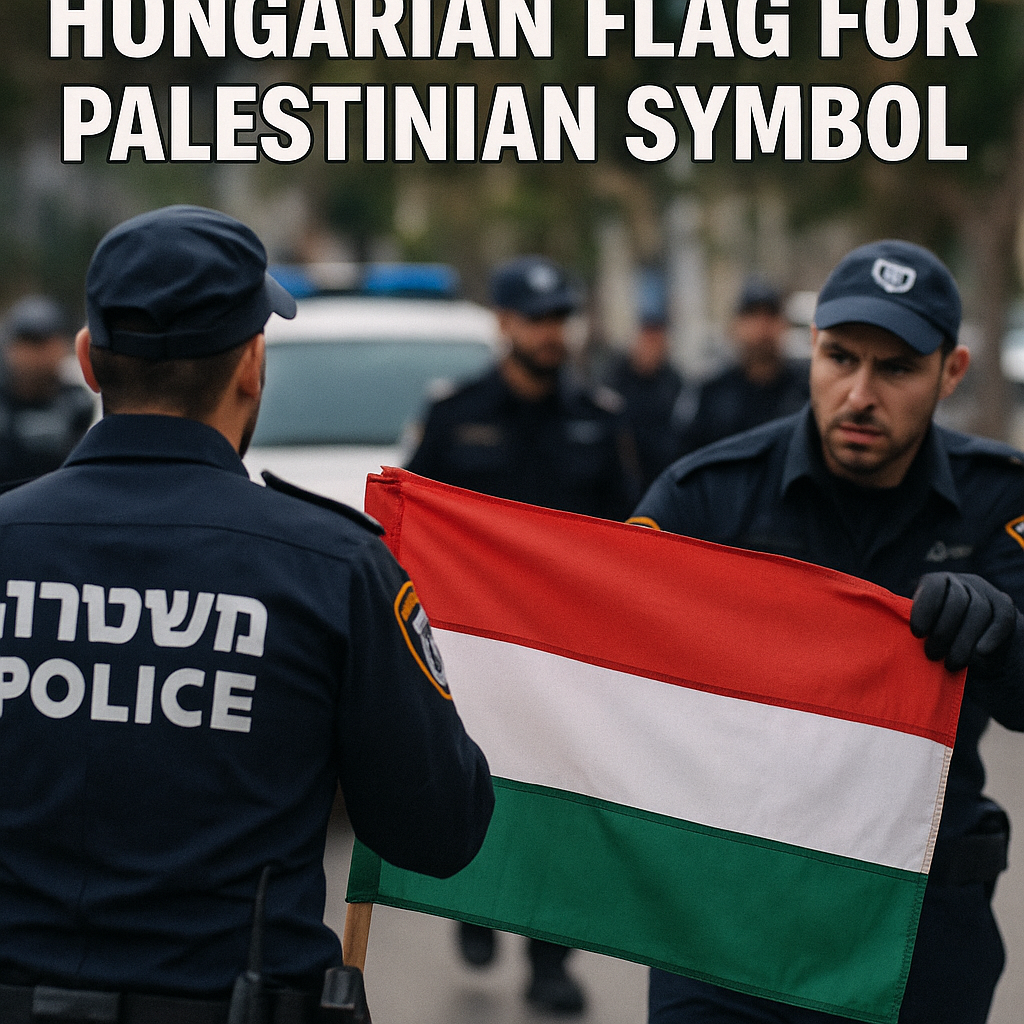
Israeli Police Mistake Hungarian Flag for Palestinian Symbol

Israeli Police Mistake Hungarian Flag for Palestinian Symbol
In a peculiar incident that caught international attention, Israeli police recently seized a Hungarian flag, mistakenly believing it to symbolize support for Palestine. This misidentification has sparked discussions around national symbols, cultural misunderstandings, and the broader sociopolitical implications of such occurrences.

The Incident: Context and Reactions
The incident occurred during a demonstration in Israel where participants were expressing various political sentiments. According to reports by RT, officers took action upon seeing the Hungarian flag, interpreting it as an anti-Israel symbol. The police later acknowledged the mistake, which has since raised eyebrows among political commentators and citizens alike.


Distinct Perspectives on National Symbols
The misunderstanding highlights a broader issue regarding the significance of flags as symbols. To some, flags encapsulate national identity and pride. In this case, the Hungarian flag was flown to promote cultural heritage, particularly among members of the Hungarian diaspora. Critics argue that it is troubling for a police force to mistake such symbols, questioning the competency of officers trained to differentiate between cultural expressions and political protests.


Conversely, others see the incident as a symptom of the heightened sensitivities surrounding Palestine and Israel’s ongoing conflict. Al Jazeera noted that in environments fraught with tension, even benign elements can be perceived through a political lens. The implications of mistakenly associating a cultural flag with a controversial political stance are profound, affecting how communities view policing and free expression.
Implications and Broader Concerns
Cultural Misunderstanding
The incident raises crucial questions regarding cultural understanding within policing practices. Given the diverse fabric of Israeli society, the ability of law enforcement to accurately interpret symbols from various cultures becomes vital in maintaining community trust. Misinterpretation can lead not only to legal repercussions but also to a sense of alienation among minority groups.
– The Role of Education: Advocates suggest that increasing cultural competency training for police could prevent such misunderstandings. Education on the significance of various flags and symbols might enable officers to navigate protests and cultural events more effectively.
The Political Landscape
The political context surrounding the Israeli-Palestinian conflict cannot be ignored. As Al Jazeera points out, symbols hold considerable weight in this ongoing dispute. The association of any flag with either side can have unexpected ramifications, influencing public sentiment and fueling existing tensions.
– Protests and Sentiments: Demonstrations often utilize flags and symbols as shorthand for broader movements. Misinterpreting these symbols not only distorts communication between communities and law enforcement but can also escalate conflicts that are already sensitive.
Despite the acknowledgment of the mistake by police, the event has broader implications for dialogue and interaction between diverse communities in Israel. As the nation navigates its complex identity, events like this serve as reminders for both authorities and citizens to pursue understanding over assumption.
Navigating the Future: Towards Understanding
This incident points to a need for renewed efforts in fostering intercultural understanding within Israel. Open dialogues about national identity, flags, and their meanings can be instrumental in bridging divides and nurturing a more cohesive society.
– Conclusion: While the police may have rectified their error, it opens the floor for critical discussions. Instances of misinterpretation are often learning opportunities that can pave the way for better mutual understanding in diverse societies. As seen by this unique circumstance, both the past and future of cultural symbolism hold significant influence in shaping societal interactions.
In summary, the misidentification of the Hungarian flag demonstrates how easily symbols can be misconceived in a politically charged environment. It serves as a reminder of the delicate balance between freedom of expression and the necessity for cultural competency within law enforcement. Moving forward, a concerted effort towards understanding can prevent missteps of this kind and foster a more inclusive national dialogue.















