
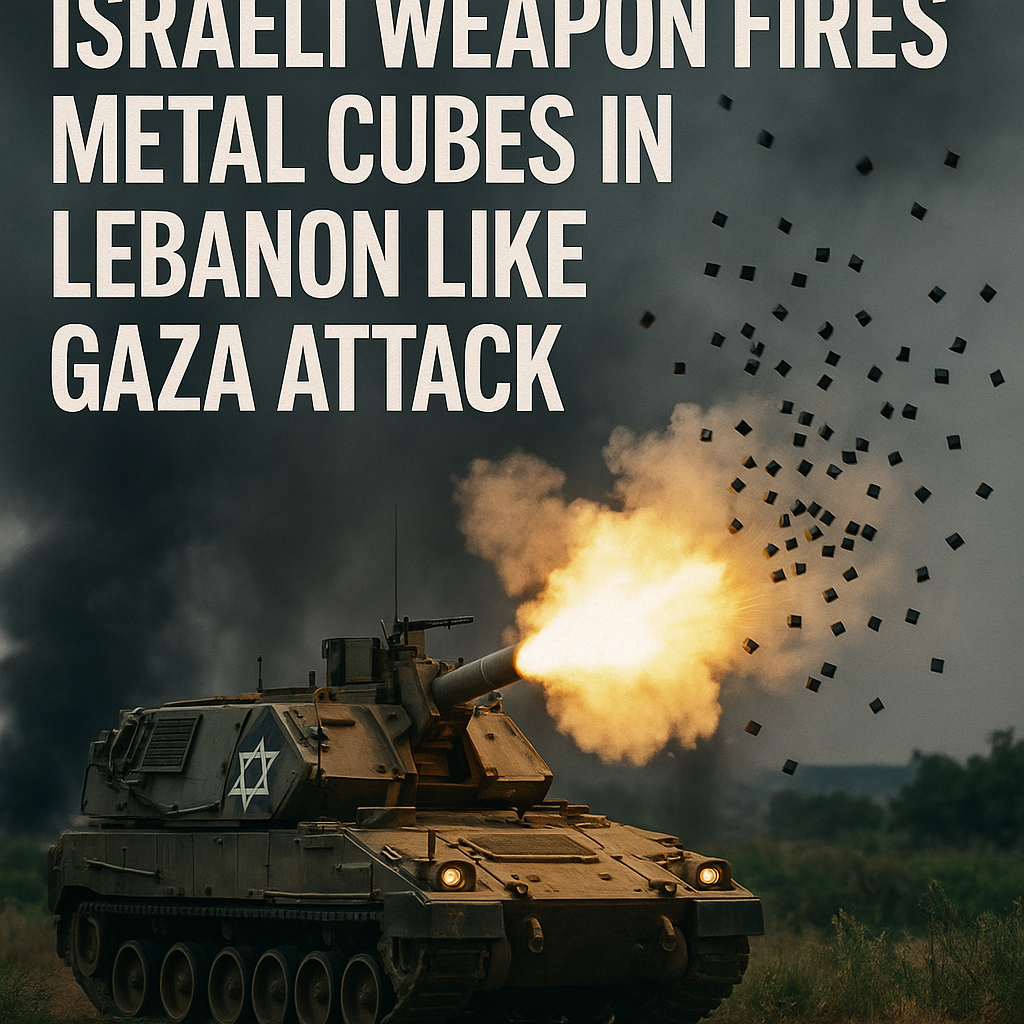
Israeli Weapon Fires Metal Cubes in Lebanon Like Gaza Attack

Understanding the Use of Metal Cubes in Israeli Military Operations
The recent deployment of an unconventional weapon by Israeli forces, which reportedly fires tiny metal cubes into targeted locations in Lebanon, has drawn parallels to similar tactics employed during the Gaza conflict. This action raises questions about military ethics, potential for civilian casualties, and the innovative yet controversial strategies increasingly adopted in modern warfare.

The Nature of the Weapon
The weapon in question, described by various sources, launches small, dense metal cubes at high velocity. This approach mimics the use of cluster munitions but with a different design and operational goal. In a recent video report by Al Jazeera, the destructive potential of these cubes can cause severe injuries, underscoring the concerns regarding their use in populated areas.


Military analysts have speculated that such weapons could be used for two primary reasons: to maximize impact on enemy personnel and to minimize collateral damage in urban settings. The high-density projectiles are designed to penetrate cover and inflict maximum harm, akin to shrapnel from traditional explosives. However, the implications of their deployment stretch far beyond tactical advantages.


Ethical Considerations and Civilian Impact
The deployment of these metal cubes has ignited a debate around the ethics of their use, especially in civilian-populated areas of Lebanon. Multinational human rights organizations have voiced their concerns, highlighting that the indiscriminate nature of such weapons could lead to significant civilian casualties. Lebanese officials have condemned Israel’s actions, labeling them as flagrant violations of international humanitarian law and raising alarms about potential war crimes.
On the other hand, supporters of Israel argue that these military actions are necessary for national security, especially in the context of ongoing tensions with Hezbollah. They claim that the targeted use of such innovative weaponry aims to neutralize specific threats without compromising broader strategic objectives. This justification brings forth a challenging moral dilemma: how to balance military effectiveness with the imperative to protect civilian lives.
Diverging Views on Military Strategy
Responses to the metal cube weapon strategy reveal a complex landscape of military ethics and public sentiment. Al Jazeera reported widespread condemnation from various factions, while RT offered a more supportive narrative that framed the actions as a necessary component of Israel’s defense mechanisms. This divergence in coverage highlights the deeply polarized views on both the Israeli military strategy and the ongoing regional conflict.
Some military experts point out that the introduction of advanced munitions is part of a larger trend among armed forces worldwide: increasing reliance on precision weaponry and advanced technology in warfare. Yet, this innovation prompts further scrutiny regarding accountability and regulation. As these weapons become more prevalent, the lack of established protocols for their use may exacerbate conflicts and increase the risk of violations.
Moreover, the international community faces challenges in creating frameworks that address the realities of modern warfare. Efforts to regulate weapons that target civilians have often lagged behind technological advancements. This gap allows for the unregulated use of new military technologies with potentially devastating humanitarian consequences.
Conclusion: A Complex Path Forward
The situation surrounding the use of metal cubes in military operations underscores the evolving nature of conflict and the ethical dilemmas that arise from it. While Israel may defend its actions as necessary for security, the potential for significant civilian casualties calls into question the proportionality of its response and the humanity of military strategies employed.
As the discourse evolves, it becomes essential for stakeholders to advocate for stricter guidelines and accountability in the application of such weaponry. Emphasizing the importance of balancing military objectives with humanitarian obligations is vital in preventing further loss of life and ensuring that innovations in warfare do not come at the expense of innocent civilians. This complex landscape demands careful consideration and proactive engagement from the global community, ensuring that the pursuit of security does not overshadow the fundamental principles of human rights.















