
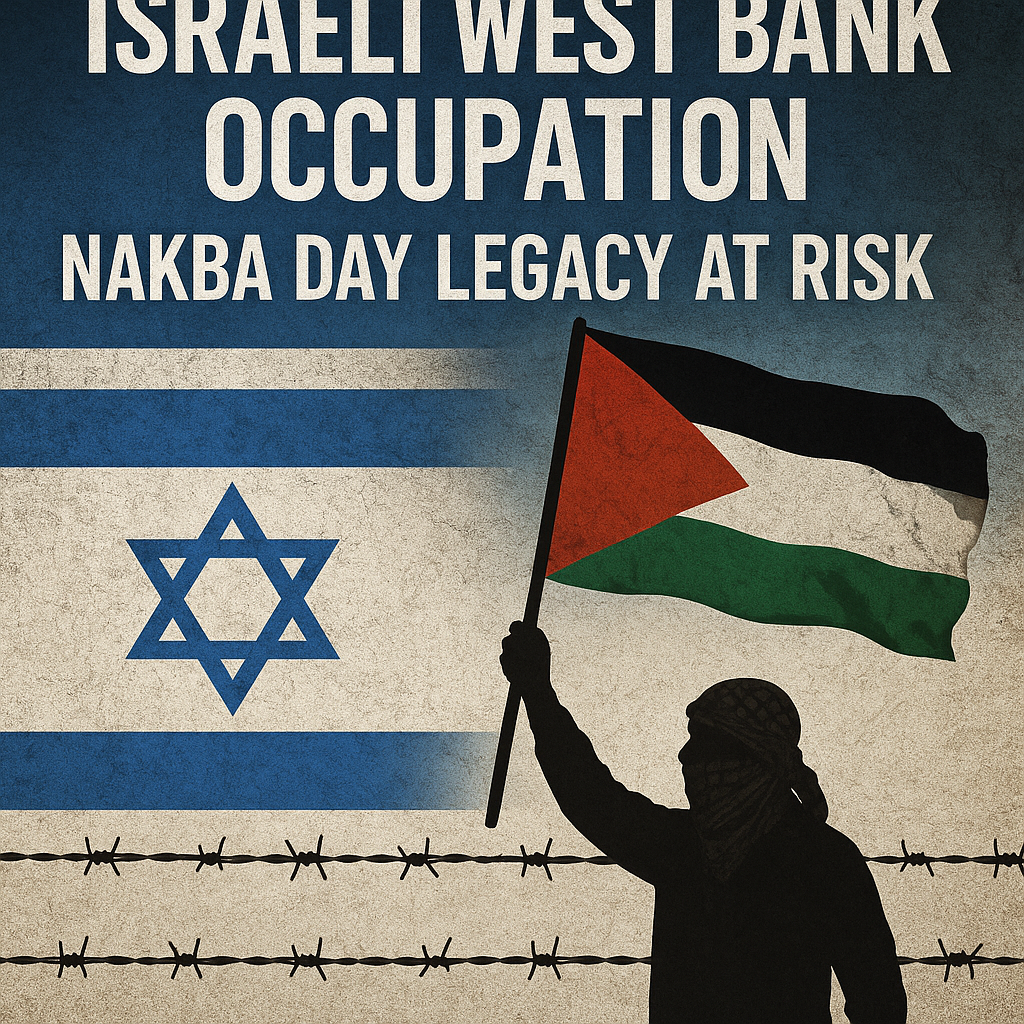
Israeli West Bank Occupation: Nakba Day Legacy at Risk

Israeli West Bank Occupation: Nakba Day Legacy at Risk
The Israeli occupation of the West Bank stands at a critical junction, particularly in the shadow of Nakba Day, a commemoration of the Palestinian exodus during the 1948 Arab-Israeli War. Each year, this day not only marks historical grievances but also highlights ongoing tensions and struggles between Israelis and Palestinians. As political dynamics shift both locally and internationally, the legacy of Nakba Day and its significance in the context of the occupation face new challenges and risks.

Understanding Nakba Day
Nakba Day, observed every May 15th, signifies the mass displacement of Palestinians from their homes and lands, an event that remains central to their collective memory and identity. Reports emphasize that both activism and political consciousness surrounding Nakba Day have been growing among various factions of Palestinian society. This day serves as an important reminder of historical struggles and fuels the hopes for future statehood and recognition on a global platform.


The commemorations often spotlight the hardships faced by Palestinians under ongoing Israeli occupation in the West Bank. According to a recent article from RT News, thousands of Palestinians participate in marches and demonstrations to assert their rights and demand justice. However, these gatherings frequently lead to confrontations with Israeli security forces, illustrating the precariousness of life in the occupied territories.


Despite the robust public sentiment and ongoing demonstrations, some observers argue that the day has increasingly become a symbolic gesture rather than a catalyst for political change. As highlighted by Al Jazeera, the international community’s response tends to be tepid and fragmented, often falling short of decisive action or intervention. This perception of inaction can lead to frustration among Palestinians, who yearn for meaningful engagement regarding their plight and rights.
The Impact of Occupation on Palestinian Identity
The intersection of Nakba Day and the Israeli occupation cannot be understated. The continued expansion of Israeli settlements within the West Bank complicates the historical narrative of Nakba, as Palestinians face daily realities that challenge their identity and rights. Since the occupation began, many have expressed concerns about the implications of such policies on their heritage, culture, and the very notion of statehood.
The settlements, considered unlawful under international law, create physical and psychological barriers between Palestinians and their heritage. These encroachments result in heightened tensions, and reports indicate that many Palestinians feel overshadowed not just by their occupation but also by the narratives that seek to delegitimize their historical claims. While some Israeli officials purport that the settlements are a means of security, critics argue they are methods of disenfranchisement and dispossession.
Furthermore, as conversations evolve about potential peace agreements and recognition, the significance of Nakba Day might face dilution. The celebration of injustice is now being debated in terms of timing and relevance, with some activists voicing concerns that the memory is being harnessed for short-term political gains instead of fostering a robust dialogue about long-term solutions.
The Global Response and Its Implications
The international community remains a mixed player in shaping the narrative surrounding Nakba Day and the Israeli Occupation. While several countries and organizations have expressed solidarity with Palestinian rights and called for an end to the occupation, many responses lack a unified approach. Reports indicate that amidst rising global attention to human rights, there exists a dichotomy in how Western nations engage with the Palestinian discourse compared to other human rights campaigns.
This inconsistency fuels a perception of neglect among Palestinian activists who view their plight as equally deserving of global advocacy. The potential for Nakba Day to evolve from a day of remembrance into a platform for change hinges significantly on international engagement and accountability.
Thus, as Nakba Day approaches each year, it poses not just a historical reflection of the past but also raises critical questions about the future of Palestinian identity and rights under the shadow of occupation. The ongoing complexity of these relationships suggests a need for renewed dialogue, introspection, and a reassessment of strategies from all stakeholders involved.
In light of escalating tensions, the legacy of Nakba Day teeters precariously on the edge of loss—caught between historical grievances and evolving geopolitical realities. A balanced examination of these dynamics reveals the intricate challenges that Palestinians face in their quest for recognition and peace. As the narrative unfolds, the importance of thoughtful engagement, awareness, and action from the global community remains crucial in preserving the meaningful legacy of Nakba Day amidst the ongoing occupation.















