
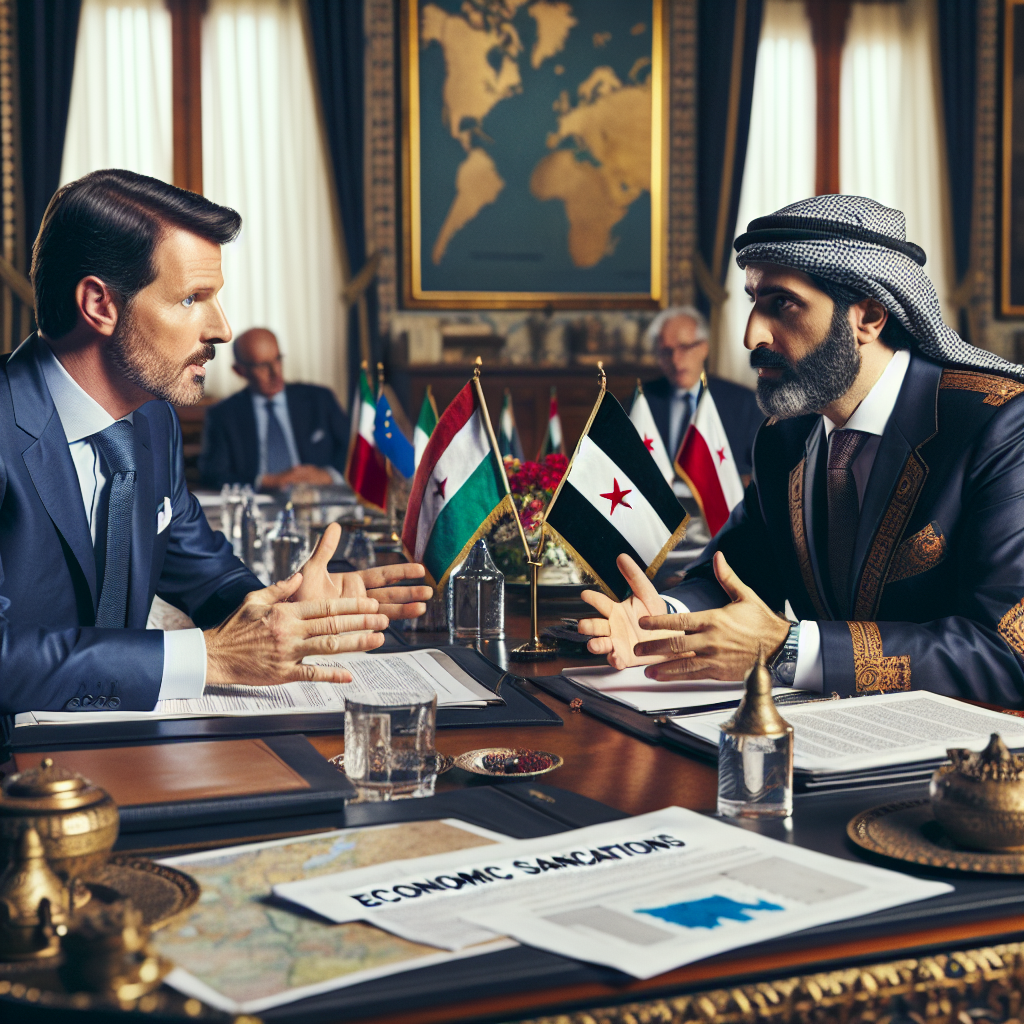
Italy’s Foreign Minister Engages with Syria’s New Leadership, Urges Sanctions Dialogue

Italy’s Foreign Minister Engages with Syria’s New Leadership
Introduction
Italy’s Foreign Minister has taken a significant diplomatic step by engaging with Syria’s new leadership. This move marks a potential shift in international relations and highlights Italy’s proactive approach to addressing ongoing geopolitical challenges.

Key Objectives of the Engagement
- Dialogue on Sanctions: Italy aims to initiate a conversation about the current sanctions imposed on Syria, seeking a balanced approach that considers humanitarian needs.
- Strengthening Bilateral Relations: The engagement is part of Italy’s broader strategy to strengthen ties with Middle Eastern countries.
- Regional Stability: Italy is keen on promoting stability in the region, recognizing Syria’s pivotal role in Middle Eastern geopolitics.
Implications for International Relations
This diplomatic engagement could have far-reaching implications for international relations, particularly in the context of European Union policies towards Syria. Italy’s initiative may encourage other EU nations to reconsider their stance on Syrian sanctions and foster a more unified approach.


Challenges and Considerations
- Balancing Humanitarian Concerns: Italy must navigate the complex landscape of addressing humanitarian issues while maintaining pressure on Syria’s leadership for political reforms.
- EU Cohesion: Ensuring that Italy’s actions align with broader EU policies and do not create divisions within the union.
- Response from Other Nations: Monitoring reactions from key global players, including the United States and Russia, who have vested interests in Syria.
Conclusion
Italy’s engagement with Syria’s new leadership represents a strategic move to foster dialogue and potentially reshape the sanctions landscape. By prioritizing humanitarian concerns and regional stability, Italy is positioning itself as a key player in Middle Eastern diplomacy. The outcome of this engagement could influence broader international policies and set a precedent for future diplomatic efforts.

















