
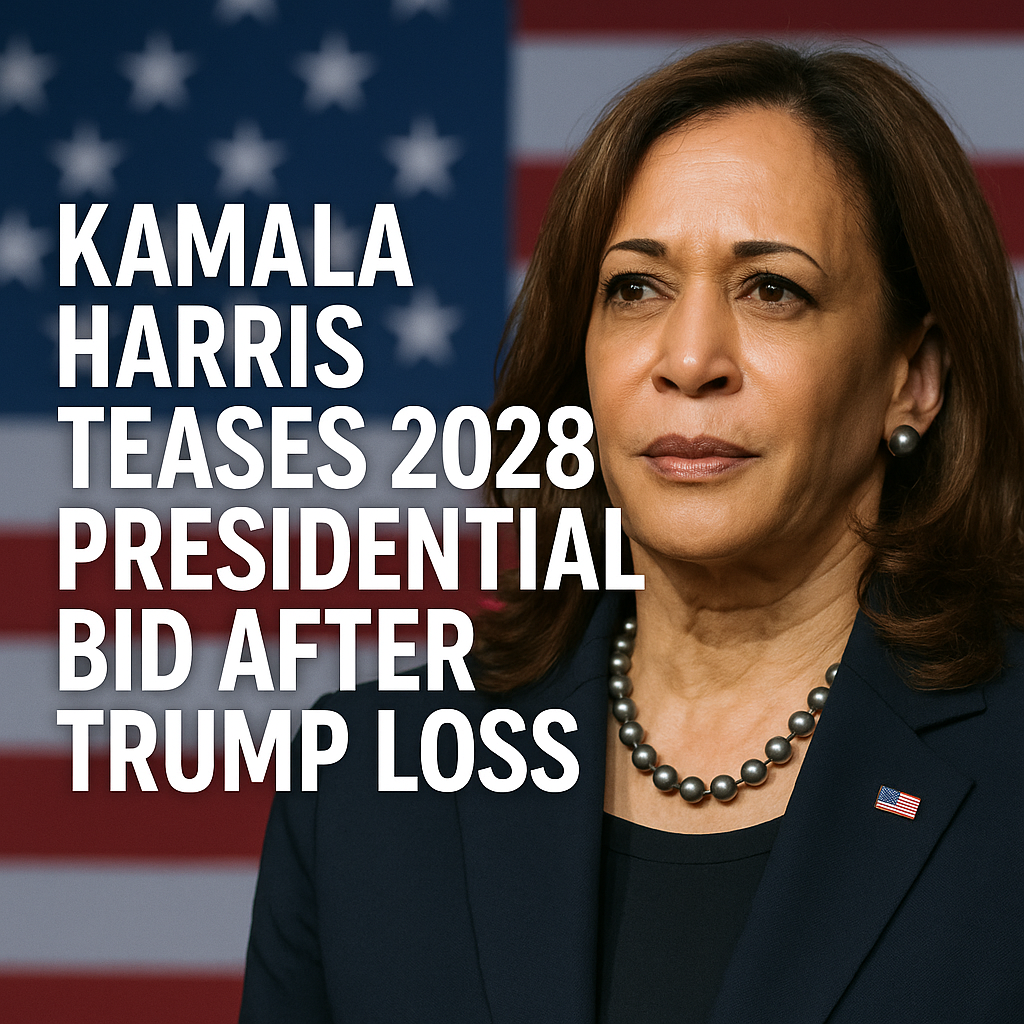
Kamala Harris Teases 2028 Presidential Bid After Trump Loss

Kamala Harris Teases 2028 Presidential Bid After Trump Loss
The conversation surrounding Kamala Harris’s potential bid for the presidency in 2028 has gained momentum in the wake of former President Trump’s defeat. As the political landscape continues to evolve, Harris’s burgeoning aspirations evoke a spectrum of reactions from voters and analysts alike.

The Political Climate Post-Trump
The aftermath of Trump’s presidency has significantly reshaped American politics, especially for the Democratic Party. Many believe that Harris, as the sitting Vice President, stands in a unique position to capitalize on this shifting landscape. According to Al Jazeera, Harris hinted at her ambitions during a recent speaking engagement, suggesting that her experiences navigating the complexities of federal leadership have prepared her for a presidential run.


Harris’s tenure has been marked by significant policy challenges, including immigration reform, healthcare, and economic recovery amidst the ongoing impacts of the COVID-19 pandemic. These issues have consistently surfaced in her speeches, reflecting a deep understanding of the nation’s needs. Her potential bid could align well with the Democratic Party’s call for progressive reforms that many voters advocate for, particularly among younger demographics.


Conversely, some political commentators express caution. Post-Trump America is still rife with division, and Harris faces scrutiny from both the right and left flanks of the political spectrum. RT News highlighted a sentiment that while Harris might have the credentials and the spotlight, her previous policies and administrative actions could be rallied against by opponents aiming to leverage the party’s internal dissent.
Harris’s Unique Position
As the first female Vice President and the highest-ranking female official in U.S. history, Kamala Harris embodies a groundbreaking shift in a primarily male-dominated political arena. This role affords her visibility and a foundational platform as she considers a presidential run. However, transitioning from being Vice President to a presidential candidate involves navigating intricate intra-party dynamics.
Harris’s ability to appeal to various voter bases could be key to her success. Reports suggest that she enjoys considerable support among African American voters and women, two crucial demographics for the Democratic Party. The effectiveness of her campaign strategies will hinge on her capacity to unite these groups while expanding her reach to moderate voters who might still be skeptical of a progressive platform.
However, some sources, including Sky News, caution against overestimating her popularity. They remind us that her approval ratings have fluctuated, with some polls showcasing a dip in favorability. This volatility illustrates that while Harris has a history of resilience and adaptability, her forthcoming campaign also runs the risk of igniting backlash from both sides of the political aisle.
Weighing Evidence and Perspectives
The intersectionality of Harris’s identity as a woman of color could play a dual role in her potential candidacy. On one hand, it allows her to connect with a diverse voter base that the Democrats desperately need; on the other hand, it may subject her to heightened scrutiny. Throughout political history, female candidates often face different standards compared to their male counterparts, a dynamic that deserves careful consideration in Harris’s approach.
Both supporters and critics agree on one key point: Harris’s time in office has illuminated the complexities of modern governance. The multifaceted societal issues she has tackled are likely to resonate with voters who are looking for pragmatism blended with idealism. However, some believe that past missteps could weigh heavily on her as she prepares for a competitive primary season.
As 2028 nears, Democrats may need to rally behind a candidate who can not only appeal to the traditional base but also attract independents and disillusioned voters from both parties. Harris’s narrative, steeped in experience and advocacy, places her as a compelling candidate, yet it also raises questions about her ability to unify a fractured party. The nuances of her policy positions could ultimately define her candidacy.
Conclusion: A Cautious Path Forward
Kamala Harris’s potential bid for the 2028 presidency invites an extensive conversation about the future of the Democratic Party, challenges of governance, and the role of diversity in leadership. While indicators suggest that she is thoughtfully considering a run, the path ahead is complex, characterized by both opportunity and obstacles. As observers of American politics, it will be crucial to monitor how her narrative develops and how it resonates with an electorate eager for change yet wary of past frustrations.
Ultimately, as 2028 approaches, Harris’s journey could exemplify the intricacies of ambition in politics—a testament to not just one individual’s aspirations, but also the collective hopes of a nation at a crossroads. Whether she can galvanize sufficient support to mount a successful campaign remains an open question, but her teasing of a bid signifies a renewed chapter in the ongoing dialogue about leadership in America.















