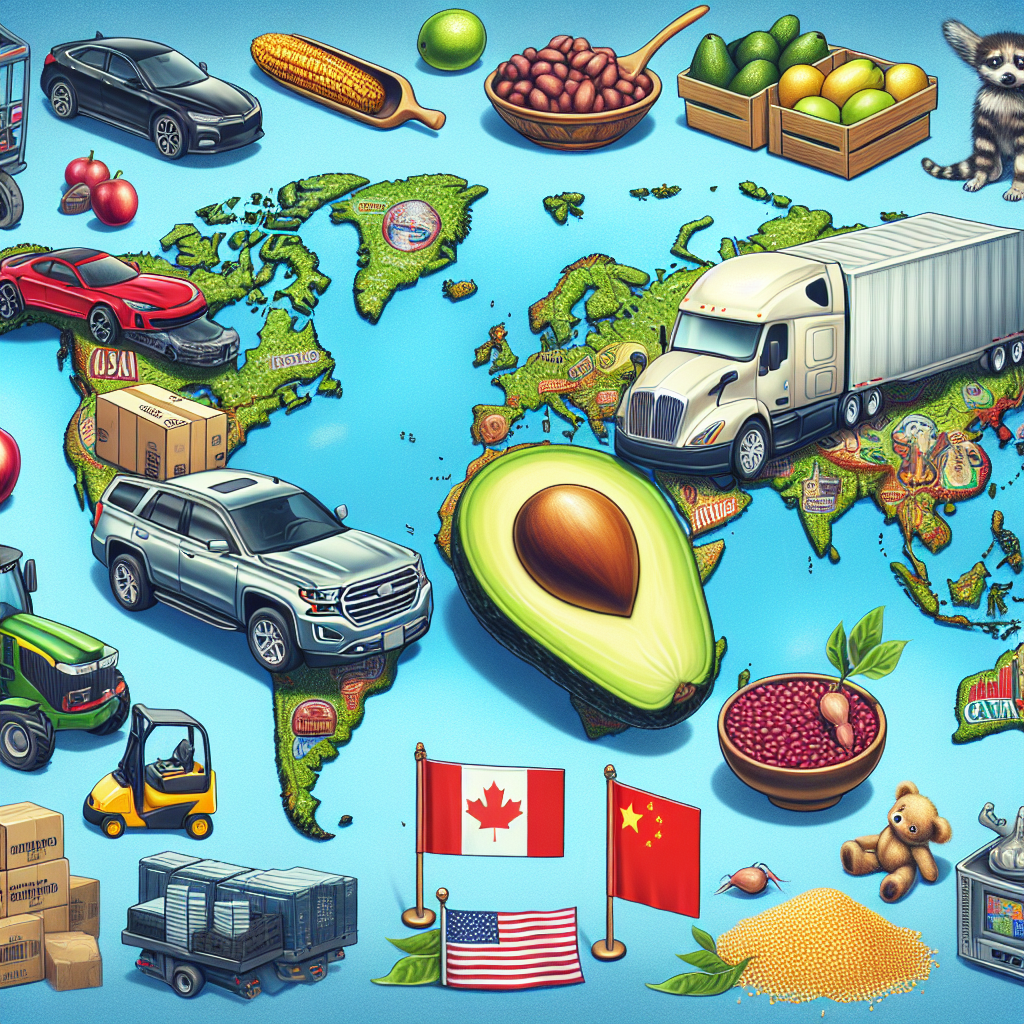
Key Products Targeted by Trump’s Tariffs on Mexico, Canada, and China

Key Products Targeted by Trump’s Tariffs on Mexico, Canada, and China
Introduction
In a strategic move to address trade imbalances and protect domestic industries, the Trump administration imposed tariffs on a range of products from Mexico, Canada, and China. These tariffs aimed to pressure these countries into renegotiating trade agreements more favorable to the United States.

Targeted Products from Mexico
The tariffs on Mexican goods were designed to address concerns over trade deficits and immigration issues. Key products affected include:


- Automobiles and auto parts
- Agricultural products such as avocados and tomatoes
- Electronics and machinery
Impact on Canadian Imports
Canada, a close trading partner, also faced tariffs, primarily targeting its robust industrial sector. The main products included:


- Steel and aluminum
- Wood and paper products
- Dairy products
China’s Trade Challenges
The tariffs on Chinese goods were part of a broader strategy to counteract what the U.S. perceived as unfair trade practices. The focus was on high-tech and consumer goods, such as:
- Electronics, including smartphones and laptops
- Textiles and apparel
- Industrial machinery
Conclusion
The tariffs imposed by the Trump administration on Mexico, Canada, and China were a significant component of its trade policy, aimed at reducing trade deficits and encouraging fairer trade practices. While these measures were intended to protect U.S. industries, they also sparked debates on their long-term economic impact and the potential for retaliatory actions from affected countries.