
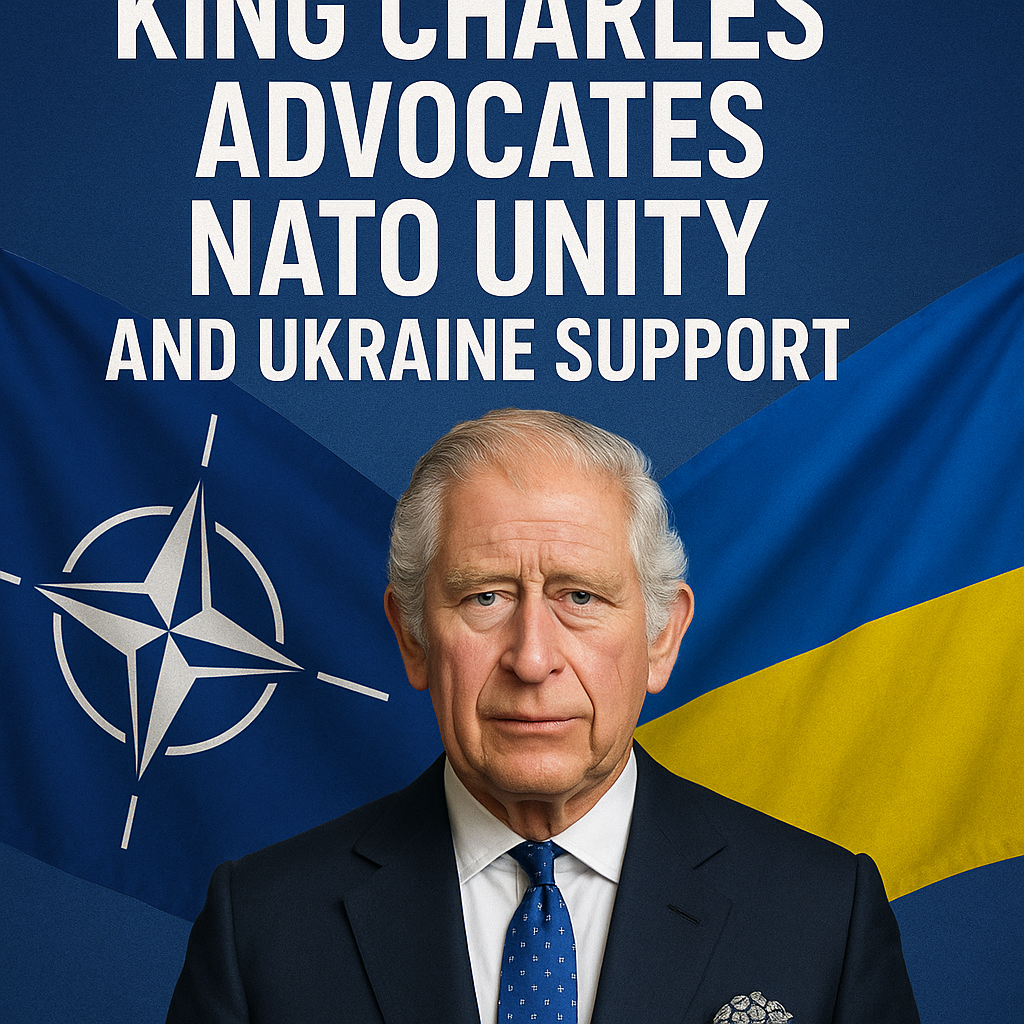
King Charles Advocates NATO Unity and Ukraine Support

King Charles Advocates NATO Unity and Ukraine Support
King Charles has recently raised his voice in favor of NATO unity and continuous support for Ukraine, emphasizing the importance of collaboration among allied nations. His appeal, made during a speech in the U.S. Congress, reflects a broader desire for solidarity in the face of ongoing global challenges.

A Call for Solidarity Among Allies
During the address, King Charles highlighted the necessity of NATO’s collective strength, particularly in the context of Russia’s aggression towards Ukraine. He stated, “Ukraine’s struggle is the world’s struggle, and we must stand united in support.” This statement echoes sentiments shared by many leaders who view the current geopolitical crisis as a test of democratic values and alliances.


The Importance of NATO
The North Atlantic Treaty Organization (NATO), initially established to counter the Soviet threat during the Cold War, has evolved into a critical military and political alliance. Recent events in Eastern Europe have reignited discussions on its relevance. In his speech, Charles reinforced the idea that NATO is vital not just for European security but for global stability.


While King Charles’s remarks suggest a strong commitment to Ukraine, opinions vary regarding the extent and nature of continued support. Some analysts argue that unwavering military and humanitarian assistance is essential, while others caution against potential escalations that could lead to a more extensive conflict.
Divergent Perspectives on Support for Ukraine
Advocates for Continued Aid
Many leaders and analysts endorse King Charles’s view of steadfast support for Ukraine. For them, providing military aid, economic resources, and humanitarian assistance is necessary to ensure Ukraine’s sovereignty. The rationale is clear: failure to support Ukraine may embolden aggressors elsewhere, undermining the principles of freedom and democracy. Reports from Al Jazeera reflect these concerns, illustrating how military aid has bolstered Ukraine’s ability to resist, with the nation receiving billions in resources from NATO countries.
Concerns About Escalation
Conversely, there are voices of caution. While the distressing situation in Ukraine merits a robust response, some experts argue that the current approach may lead to unintended consequences. Articles from outlets like RT have explored the complexities of NATO’s involvement, suggesting that increased military support could provoke a stronger reaction from Russia.
There’s also a school of thought that calls for a diplomatic route rather than a militaristic one. Critics urge that maintaining open channels for negotiation is vital, positing that a constructive dialogue might lead the way to a resolution that avoids further bloodshed. Thus, the debate often pivots on striking a balance between support for Ukraine and avoiding escalation into a larger conflict.
Conclusion: Navigating a Complex Landscape
King Charles’s advocacy for NATO unity and support for Ukraine undoubtedly resonates with many, particularly those see Ukraine’s fight as emblematic of a larger struggle for democracy. However, the discourse surrounding this issue continues to evolve, reflecting a myriad of perspectives and complex geopolitical realities.
As nations deliberate their next steps, the challenge will lie in ensuring that the chosen approach not only supports the essential instincts of collective defense but also paves the way toward lasting peace. Balancing engagement with caution remains vital. The path forward will not only define the future of NATO and Ukraine but also the global landscape in years to come.
In a world where alliances are crucial, King Charles’s call serves as both a reminder of solidarity and an invitation for deeper reflection on how to best navigate these pivotal times. The stakes have never been higher, and the direction taken will shape the international order and, ultimately, the fate of millions.















