
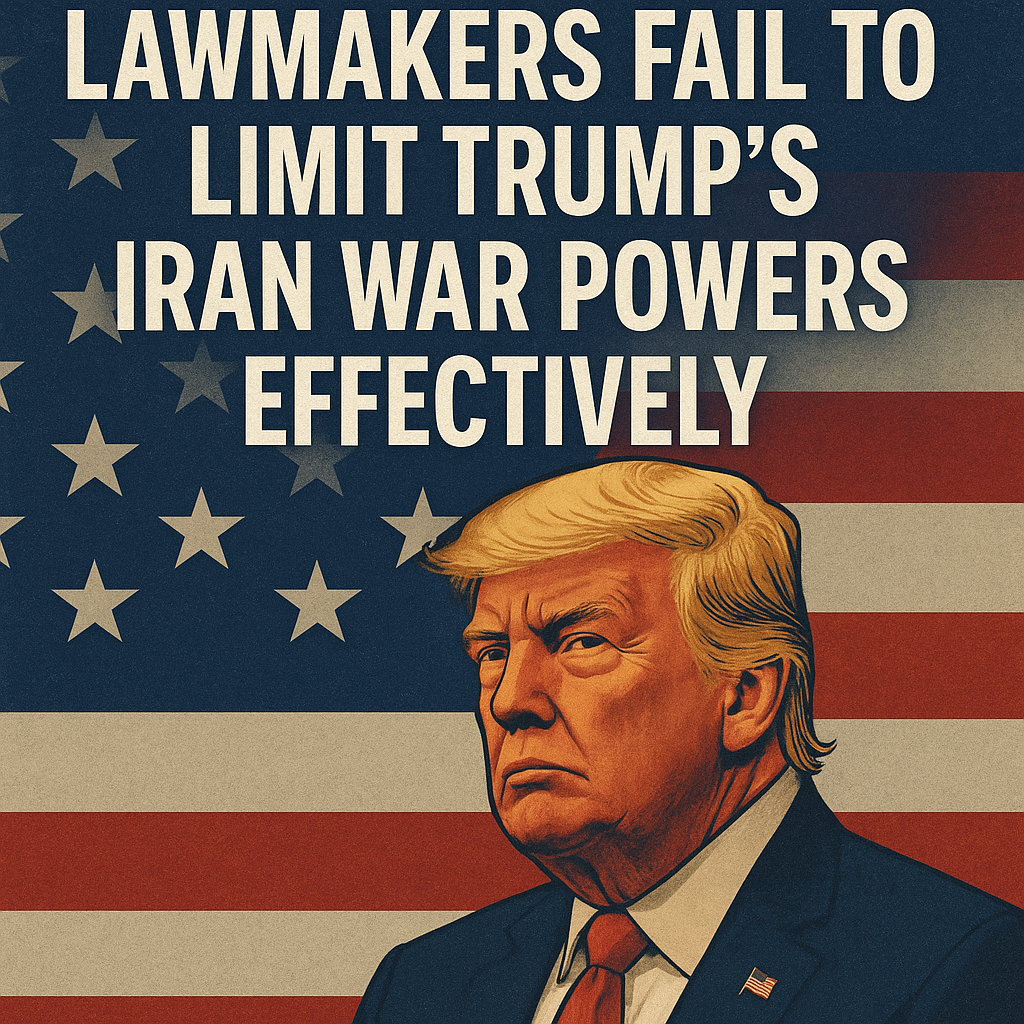
Lawmakers Fail to Limit Trump’s Iran War Powers Effectively

Lawmakers Fail to Limit Trump’s Iran War Powers Effectively
Amidst escalating geopolitical tensions, lawmakers recently found themselves grappling with the complexities of war powers, particularly concerning President Trump’s authority to engage in military actions against Iran. Despite attempts to impose stricter checks on executive power, the legislative branch struggled to reach a consensus.

Legislative Maneuvers and Setbacks
The debate around Trump’s war powers regarding Iran has gained renewed urgency in light of several recent events, including increased military activities in the region. According to reports from RT, the House of Representatives faced significant challenges in passing measures aimed at curtailing the President’s authority to wage war without congressional approval. Despite bipartisan concerns about unilateral military action, the efforts to limit Trump’s powers ultimately failed to materialize.


Al Jazeera highlights a stark division among lawmakers. On one side stand those advocating for a more robust congressional role, emphasizing checks and balances as paramount in a democratic system. On the opposite end, some lawmakers argue that the President requires flexibility to respond swiftly to national security threats without the encumbrance of prolonged legislative processes.


Factors Influencing the Debate
Several factors contribute to the complexities surrounding Trump’s war powers.
1. Partisan Politics: The clash between parties often complicates consensus-building. While Democrats have generally pushed for tighter restrictions on executive action, many Republicans argue that the President requires leeway in the face of imminent threats, fearing perceptions of weakness.
2. Global Perceptions: The international landscape plays a crucial role. Analysts discuss how proactive military engagement—or the lack thereof—could influence the United States’ standing on the global stage. A senior analyst noted that “how Congress approaches this issue could have far-reaching implications for international relations”.
3. Public Opinion: Amid mounting tensions, public sentiment regarding military engagements has shifted. A majority of Americans express skepticism over military interventions, leading some lawmakers to advocate for caution and increased legislative input.
The Shifting Power Dynamics
Despite lawmakers’ efforts, prevailing sentiment suggests that the executive branch retains substantial leeway in matters of military action. As reported by Sky News, the existing War Powers Act establishes a framework allowing the President to act swiftly when national security is at risk. However, critics argue that this act has been historically interpreted too broadly, undermining congressional authority.
The reluctance of lawmakers to challenge Trump’s war powers directly may stem from fears of appearing unpatriotic or hindering national security efforts. Proponents of greater legislative authority maintain that a balanced approach is essential for accountability and that decisions about war ought to engage the electorate’s voice more directly.
Complications Ahead
The complexities of the situation extend beyond immediate legislative hurdles. As geopolitical dynamics evolve, lawmakers continually find themselves re-evaluating their approaches to foreign policy. While there may be a desire for greater checks on executive powers, the intricacies of international relations and national security necessitate a nuanced understanding of global interdependencies.
In summary, while the recent failure to limit Trump’s war powers concerning Iran reflects significant divisions within Congress, it also underscores the broader debates about democracy, accountability, and the balance of power in the United States. Lawmakers appear to remain at an impasse, grappling with the challenges of crafting policies that reflect both national interests and the principles of democratic governance.
As uncertainties linger regarding the effectiveness of congressional oversight in matters of war, the dialogue surrounding this issue will undoubtedly continue to evolve amidst an ever-changing geopolitical landscape.















