
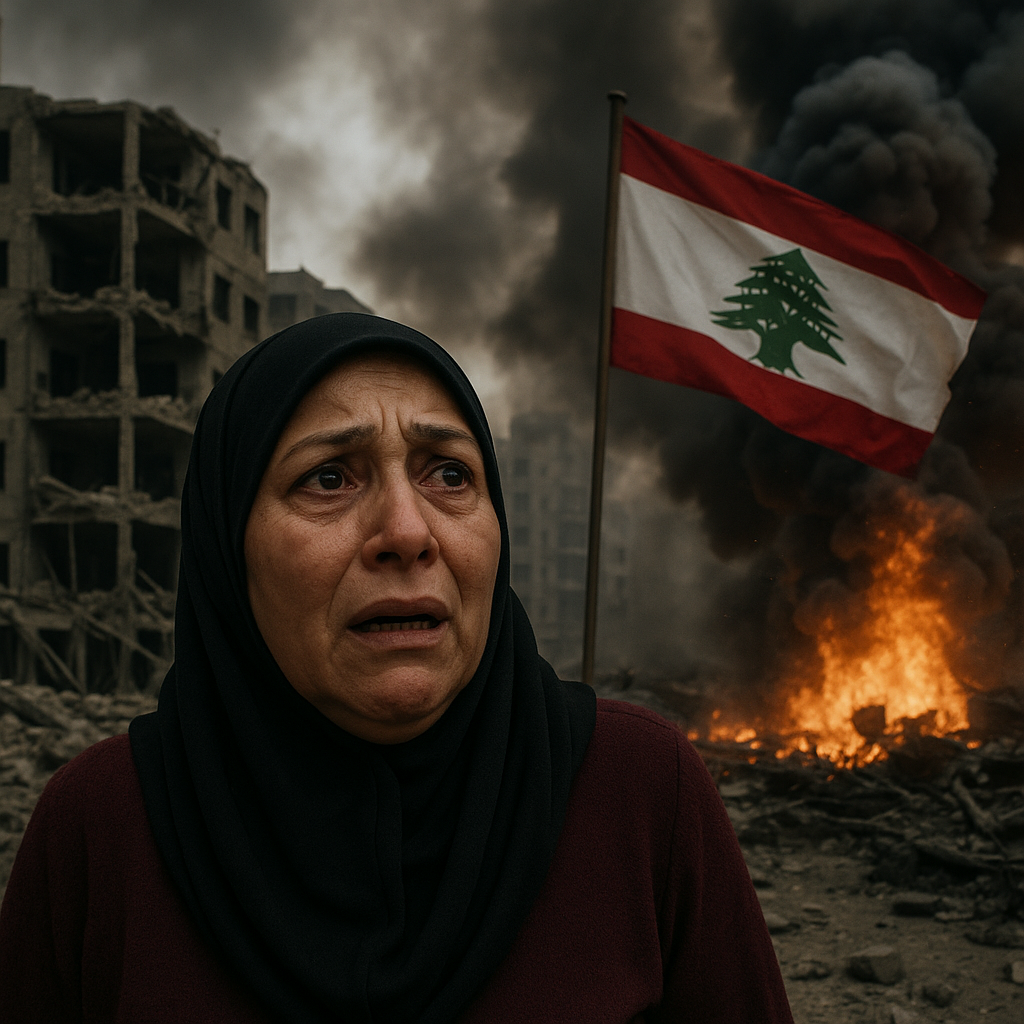
Lebanese Fear Grows Amid Israel’s Devastating Attacks

Lebanese Fear Grows Amid Israel’s Devastating Attacks
The recent escalations in the Israel-Lebanon conflict have instigated a growing climate of fear among the Lebanese population. Following a series of devastating attacks by Israeli forces, both civilians and officials express deep concern over the ongoing instability in their region. This article synthesizes views from diverse news sources to highlight the complexities surrounding this volatile situation.

The Human Cost of Conflict
Lebanon has long been a region marked by its ethnic and political complexities, with the Israeli-Lebanese relationship fraught with tension. Reports indicate that the latest Israeli strikes have not only targeted military positions but also inflicted civilian casualties, leading to widespread panic among Lebanon’s populace. An article from Al Jazeera highlighted the harrowing experiences of families in Southern Lebanon who fear being caught in the crossfire. Residents described their nights filled with anxiety, as airstrikes and rockets can disrupt their daily lives at any moment.


This rising fear is compounded by longstanding historical grievances. While many citizens acknowledge the challenges posed by militant groups like Hezbollah, there is an overwhelming consensus that civilian life should not be endangered in the ongoing conflict. “People are afraid; they don’t want to go out,” a resident was quoted as saying. This reflects a broader sentiment within communities, emphasizing a desire for peace over further escalation.


Mixed Reactions from Officials
In the political sphere, reactions to Israel’s actions are diverse and, at times, conflicting. Some Lebanese officials have condemned the Israeli strikes as disproportionate and provocative, arguing that they threaten the fragile stability in the region. They emphasize the need for a unified response to ensure citizens’ safety and dignity.
Conversely, external commentators note that Lebanese officials face a delicate balancing act. On one hand, they must address their own citizens’ fears and call for protection; on the other, they need to navigate international alliances and the ever-present influence of Hezbollah. This duality complicates their responses to incidents of military aggression, reflecting the intricate interplay of local politics and foreign policy.
The Broader Impact of Escalations
The recent surge in violence has triggered a wider discussion about the implications for regional stability. Safety concerns extend beyond Lebanon’s borders and influence geopolitical dynamics throughout the Middle East. The potential for heightened conflict poses questions about humanitarian assistance, as local resources become strained under the pressure of ongoing threats.
Both Al Jazeera and RT have reported concerns about the humanitarian situation exacerbated by these military actions. Media coverage reveals fears that such attacks may lead to increased displacement within Lebanon, with families forced to flee conflict zones seeking safer havens. This worry reverberates through communities already grappling with the challenges of recovery from past conflicts and economic hardship.
Focus on Peaceful Solutions
Despite an alarming situation, there remains a glimmer of hope for peace. Many community leaders and organizations are advocating for dialogue as a pathway to resolution. They argue that sustained engagement—whether through international mediation or local discussions—could pave the way for more effective conflict de-escalation.
Voices from civil society in Lebanon stress the necessity for peace-building efforts that involve all key stakeholders, including governmental bodies, grassroots organizations, and international partners. Such initiatives have the potential to address the core issues fueling conflict, including border disputes and sectarian tensions.
An engaged civil society can serve as a bridge for dialogue, fostering understanding amid fear and uncertainty. Addressing the community’s grievances could lead to tangible steps toward peace.
Conclusion: Navigating Uncertain Waters
The fear that is currently gripping Lebanon amid Israel’s devastating attacks highlights the urgent need for sustained dialogue and international involvement. Striking a balance between military responses and humanitarian considerations is crucial for addressing the widespread anxiety among Lebanese citizens.
As tensions continue to rise, open conversations about peace-building strategies must be prioritized. Through acknowledging fears and providing a platform for dialogue, both Lebanese and Israeli communities can begin to envision a more stable future that prioritizes the safety and well-being of civilians on both sides.
The situation remains fraught with uncertainty, but the push for peaceful solutions could illuminate a path toward healing and stability in a region historically marked by conflict.















