
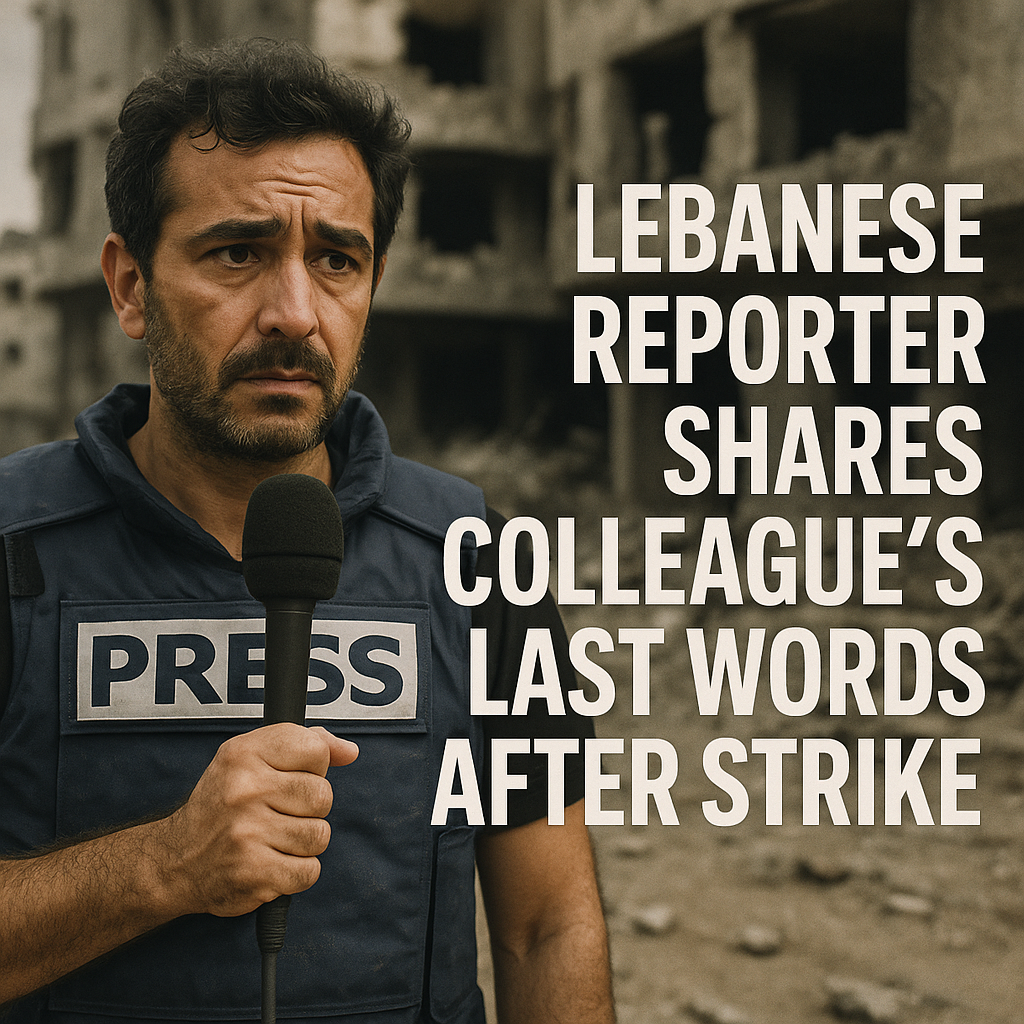
Lebanese Reporter Shares Colleague’s Last Words After Strike

The Heavy Toll of Conflict: Reflections on a Lebanese Reporter’s Last Words
In the heartbreaking wake of conflict, personal stories often emerge that illuminate the human cost of violence. Recently, a Lebanese reporter shared the haunting last words of a colleague who tragically lost their life during an Israeli strike in southern Lebanon. This tragedy not only highlights the dangers faced by journalists in war zones but also prompts a broader examination of media ethics and the challenges of reporting from frontline environments.

The Context of Danger: A Perilous Landscape for Journalists
The dangers faced by journalists in conflict zones are not new, yet they remain alarmingly prevalent. The recent incident involving the Lebanese reporter underscores the grim reality that many journalists confront daily. According to various sources, including Al Jazeera and Sky News, the ongoing tensions and military engagements in the region demand a constant presence of media personnel who are committed to bringing the truth to light.


– Inherent Risks: Journalists in Lebanon often operate in environments rife with potential threats, from airstrikes to ground assaults. The risks are compounded by the volatility of the political climate and the strategic significance of the region.


– Rising Casualty Rates: Reports indicate that the number of journalists killed in war zones has increased, raising alarms about the safety protocols and protective measures in place for those in the field. The Committee to Protect Journalists regularly tracks these incidents, highlighting the troubling trend of violence against media personnel.
The Lebanese reporter’s poignant recounting of their colleague’s last words serves not only as a tribute to a fallen comrade but also as a call for renewed vigilance regarding journalist safety in conflict areas.
Human Stories from the Frontlines: A Call for Accountability
The last words of the deceased journalist—shared in a somber recounting by their colleague—have struck a chord with audiences worldwide. They reflect not merely a moment of personal loss but an enduring reminder of the human stories often overshadowed by statistics and geopolitical narratives.
– Personal Impact: The emotional weight of recounting these last words can resonate deeply with audiences, as it personalizes the often abstract discussions surrounding conflict and war. The shared humanity of these stories draws attention to the living individuals behind the headlines, shifting the focus from the macro-political to the micro-human.
– Ethical Considerations: However, the act of sharing such poignant last words raises ethical questions regarding media practices in conflict zones. While it sheds light on the personal tragedies faced by journalists, it also necessitates a careful consideration of how these narratives are shared and the implications they may have on the public’s understanding of the conflict.
Many media experts advocate for a sensitive approach to reporting, wherein the personal stories of journalists caught in the line of fire can be shared in a respectful and responsible manner.
The Broader Implications of Journalistic Losses
The experiences of journalists operating in volatile regions like Lebanon provide critical insights into the broader implications of conflict on media dynamics. The tragic circumstances surrounding the loss of a colleague not only highlight the personal risks but also reflect the operational challenges faced by news organizations.
– Media Freedom and Safety: The need for improved safety protocols and support systems for journalists in conflict zones cannot be overstated. Calls for enhanced training, better protective gear, and psychological support for reporters are increasingly common in discussions about media freedom.
– Impact on Reporting: The deaths of journalists can also have a chilling effect on media coverage, leading to self-censorship and decreased willingness to report from dangerous areas. This can create a vacuum in war reporting, resulting in a less informed public and a diminished understanding of complex geopolitical issues.
Conclusion: The Continuing Quest for Truth Amidst Violence
The poignant sharing of a colleague’s last words following a tragic strike serves as a grave reminder of the perils faced by journalists committed to uncovering the truth in conflict-ridden regions. While the emotional narratives may enhance public empathy and awareness, they also call forth critical discussions about the responsibilities and protections necessary for media professionals navigating war zones.
As we digest this story and similar accounts, it’s crucial to approach the complexity of these situations with a balanced perspective that honors the memories of those lost while advocating for necessary changes to safeguard the future of journalism. The interplay of human stories in the face of violence emphasizes the importance of not only telling these stories but ensuring that the tellers—our journalists—are protected, respected, and empowered to continue their crucial work.















