
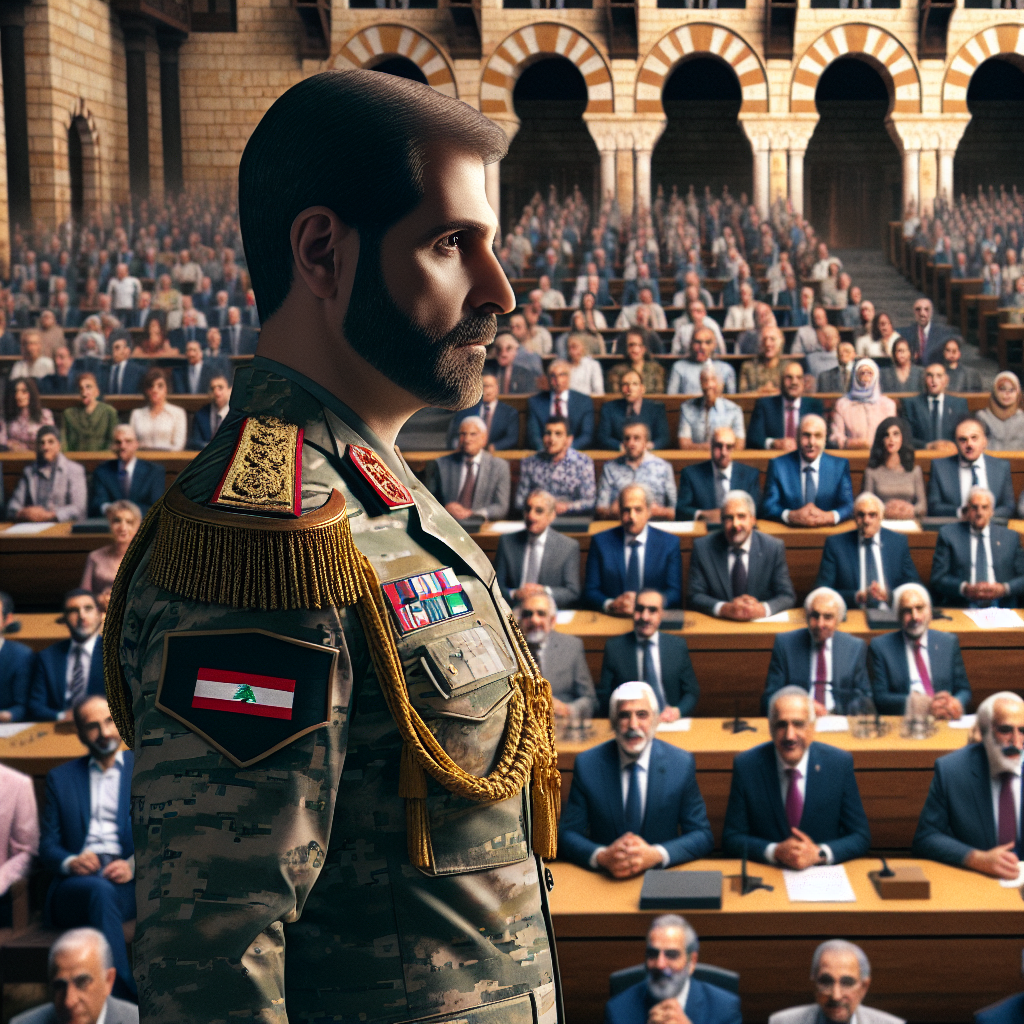
Lebanon’s Parliament Elects Army Chief Joseph Aoun as New President

Lebanon’s Parliament Elects Army Chief Joseph Aoun as New President
Introduction
In a significant political development, Lebanon’s parliament has elected Army Chief Joseph Aoun as the country’s new president. This decision comes amid a backdrop of economic turmoil and political instability, marking a pivotal moment for the nation.

Key Highlights
- Leadership Transition: Joseph Aoun, previously serving as the commander of the Lebanese Armed Forces, steps into the presidential role, bringing a military background to the highest office.
- Political Context: The election follows a prolonged period of political deadlock, with the presidency vacant for several months due to disagreements among political factions.
- Economic Challenges: Aoun’s presidency begins as Lebanon grapples with severe economic challenges, including hyperinflation, currency devaluation, and widespread poverty.
- Public Expectations: Citizens hope for stability and reform, looking to Aoun to address corruption and implement effective governance.
Implications for Lebanon
The election of Joseph Aoun is seen as a potential turning point for Lebanon. His military background may influence his approach to governance, with expectations of a disciplined and strategic leadership style. However, the challenges he faces are formidable, requiring collaboration across political lines and international support.


Conclusion
Joseph Aoun’s election as Lebanon’s president marks a new chapter for the country. As he assumes office, the focus will be on his ability to navigate Lebanon’s complex political landscape and address the pressing economic issues. The nation watches closely, hopeful for a future of stability and progress.

















