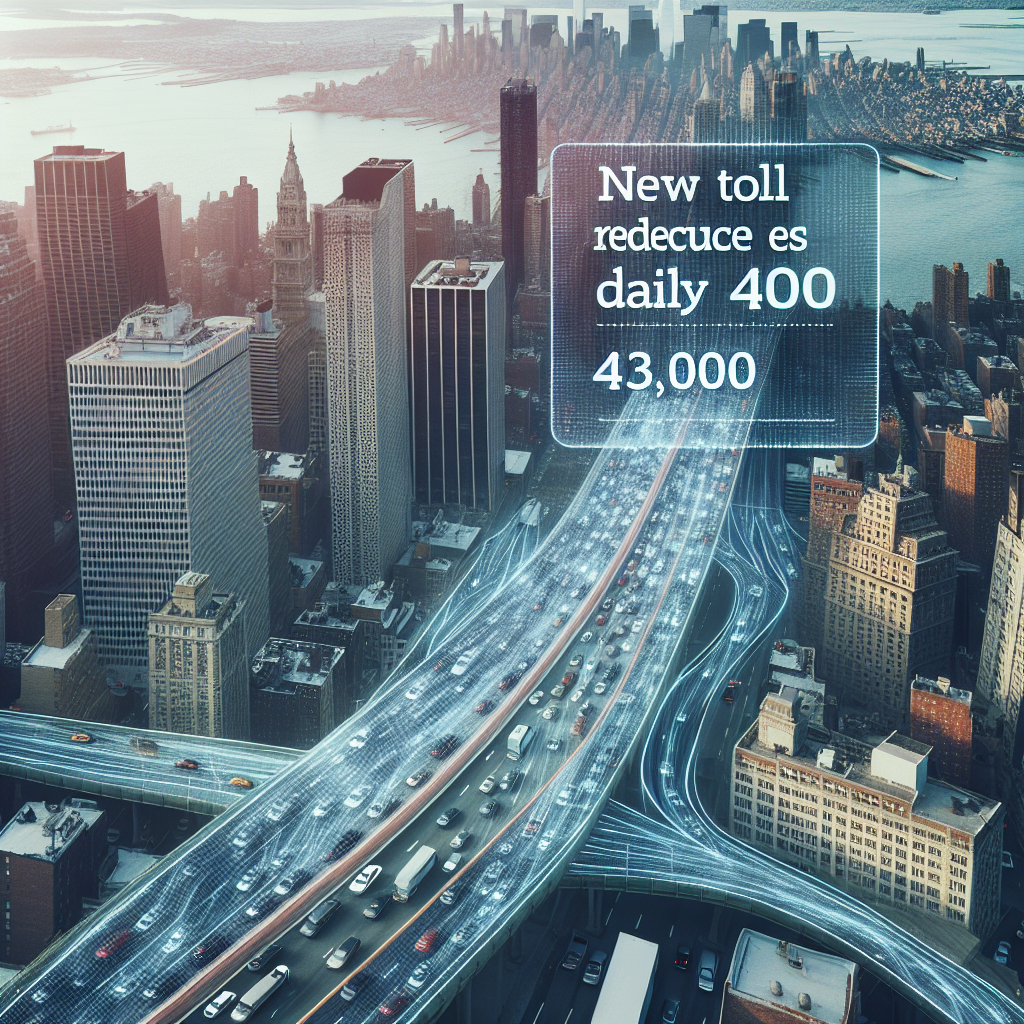
Manhattan Sees 7.5% Traffic Decline with New Toll, Reducing 43,000 Cars Daily

Manhattan Sees 7.5% Traffic Decline with New Toll
Introduction
In a significant move to alleviate congestion, Manhattan has implemented a new toll system that has successfully reduced traffic by 7.5%. This initiative has led to a daily decrease of approximately 43,000 cars, marking a substantial shift in the city’s transportation dynamics.

Key Insights
Impact of the New Toll
- Traffic Reduction: The introduction of the toll has resulted in a 7.5% decrease in traffic, equating to 43,000 fewer cars on the roads each day.
- Environmental Benefits: With fewer vehicles, there is a potential reduction in emissions, contributing to improved air quality in the city.
- Public Transport Usage: The toll has encouraged more residents and commuters to opt for public transportation, further easing road congestion.
Economic and Social Implications
- Revenue Generation: The toll system is expected to generate significant revenue, which can be reinvested into public infrastructure and transportation projects.
- Equity Concerns: There are ongoing discussions about the toll’s impact on low-income individuals who rely on cars for commuting.
- Behavioral Changes: The toll has prompted a shift in commuting habits, with more people considering alternative modes of transport.
Conclusion
The introduction of the new toll in Manhattan has effectively reduced traffic by 7.5%, removing 43,000 cars from the roads daily. This initiative not only alleviates congestion but also offers environmental benefits and encourages public transport use. While the toll generates revenue for infrastructure improvements, it also raises equity concerns that need addressing. Overall, the toll represents a significant step towards a more sustainable and efficient urban transportation system.