
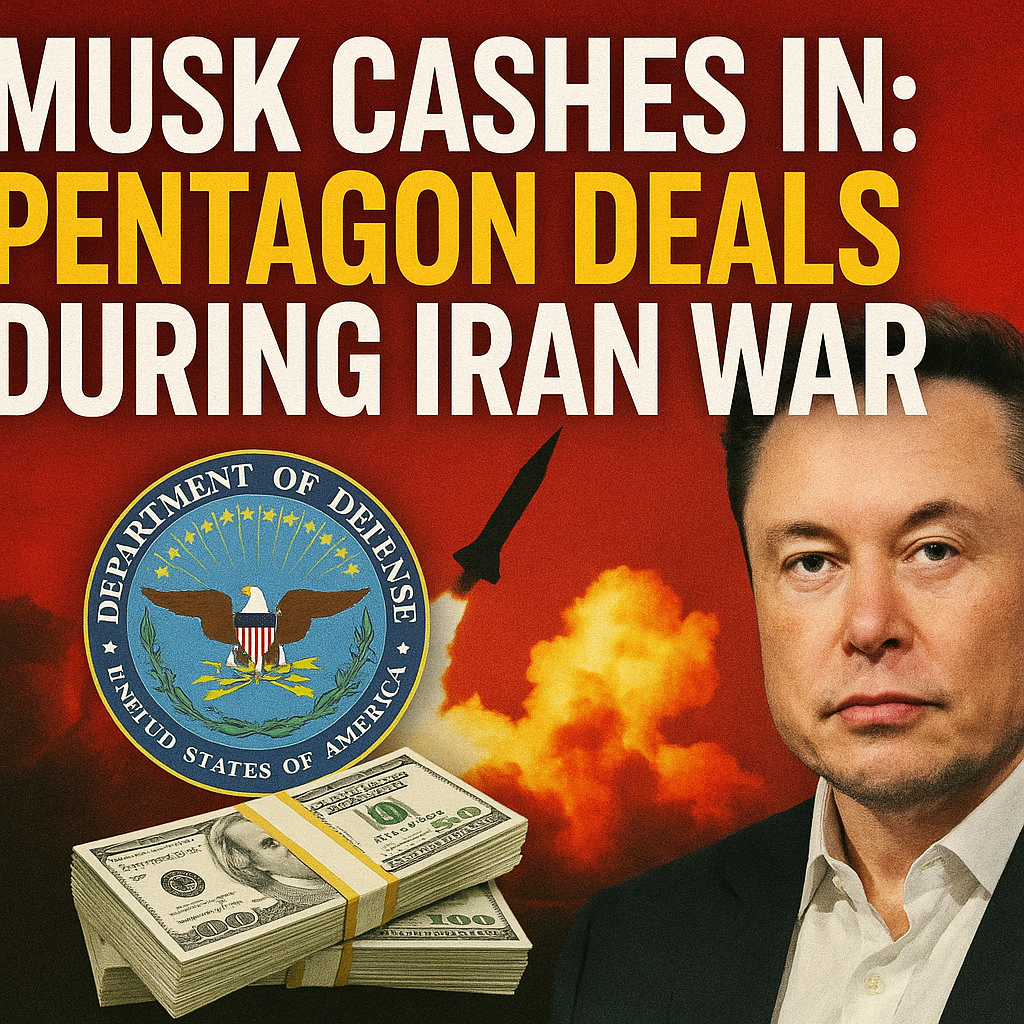
Musk Cashes In: Pentagon Deals During Iran War

Musk Cashes In: Pentagon Deals During Iran War
In a landscape where technological prowess intersects with geopolitical events, the involvement of major firms like SpaceX has come to the fore, particularly in its dealings with the Pentagon during the Iran conflict. This convergence raises questions about military contracts, innovation, and the ethical implications of private companies profiting from war efforts.

The Expanding Role of Private Contractors
During recent conflicts, the role of private contractors in the defense sector has grown significantly. SpaceX, known for its pioneering work in aerospace, has emerged as a vital player, particularly with its Starlink satellite internet service. This technology is not merely a commercial venture; it has strategic military applications, providing robust communications to troops and enhancing situational awareness on the battlefield.


Reports indicate that Starlink has been leveraged in various military operations, allowing real-time data transmission and drone operation control. The Pentagon has recognized the potential of this technology, entering into contracts that enable the military to utilize Starlink for operational supremacy. This cooperation not only underscores the increasing reliance on civilian technology for warfare but also marks a potential revenue boon for SpaceX.


However, the implications of such partnerships are multifaceted. Advocates argue that utilizing cutting-edge technology improves the effectiveness and safety of military operations. Opponents, however, voice concerns over the ethics of profit-making during times of conflict. This tension illustrates the complex interplay between defense needs and corporate interests.
Controversial Contracts and Public Perception
The financial stakes surrounding the Pentagon’s contracts with SpaceX have sparked considerable debate. Data reveal that the Department of Defense has ramped up its spending on private firms like SpaceX, especially for projects related to advanced drone technology and satellite communications. Critics argue that this not only inflates defense spending but also diverts funds from essential services and veteran care.
Furthermore, these transactions raise ethical questions about the motivations driving military engagements. As corporations like SpaceX secure lucrative contracts, the alignment of their business models with warfare operations comes into sharper focus. The potential for profit-motivated decisions could shape the nature of conflicts, leading to an environment where economic gain supersedes humanitarian considerations.
Moreover, contrasting perspectives arise regarding public support for such arrangements. Some citizens see the collaboration between the military and tech firms as a necessary evolution in modern warfare, fostering innovation in an age where speed and information are critical. Conversely, others view this as a disturbing trend, fearing that it may lead to an intertwined military-industrial complex where the lines between commercial interests and national security blur.
The Future of Military Technology Partnerships
As conflicts evolve, so too does the landscape of military technology partnerships. The integration of private firms like SpaceX into strategic military operations signals a transformative shift that benefits both parties: the military gains access to advanced technology, while companies secure substantial contracts and visibility in defense circles.
However, the road ahead is riddled with uncertainties. The implications of these partnerships extend beyond immediate military engagements, raising questions about how this relationship affects international politics, defense spending, and ethical standards in warfare. While SpaceX’s advancements offer promising capabilities, they also evoke cautionary perspectives on the commercialization of war.
In summary, SpaceX’s involvement in Pentagon contracts amid the Iran conflict exemplifies a critical juncture in the balance between innovation and morality in warfare. It highlights the need for ongoing dialogue about the ethical dimensions of private military contracts, ensuring that as technology advances, humanitarian values remain at the forefront of military decision-making processes. As we navigate an increasingly complex world, striking this balance will be crucial for both defense and diplomacy.















