
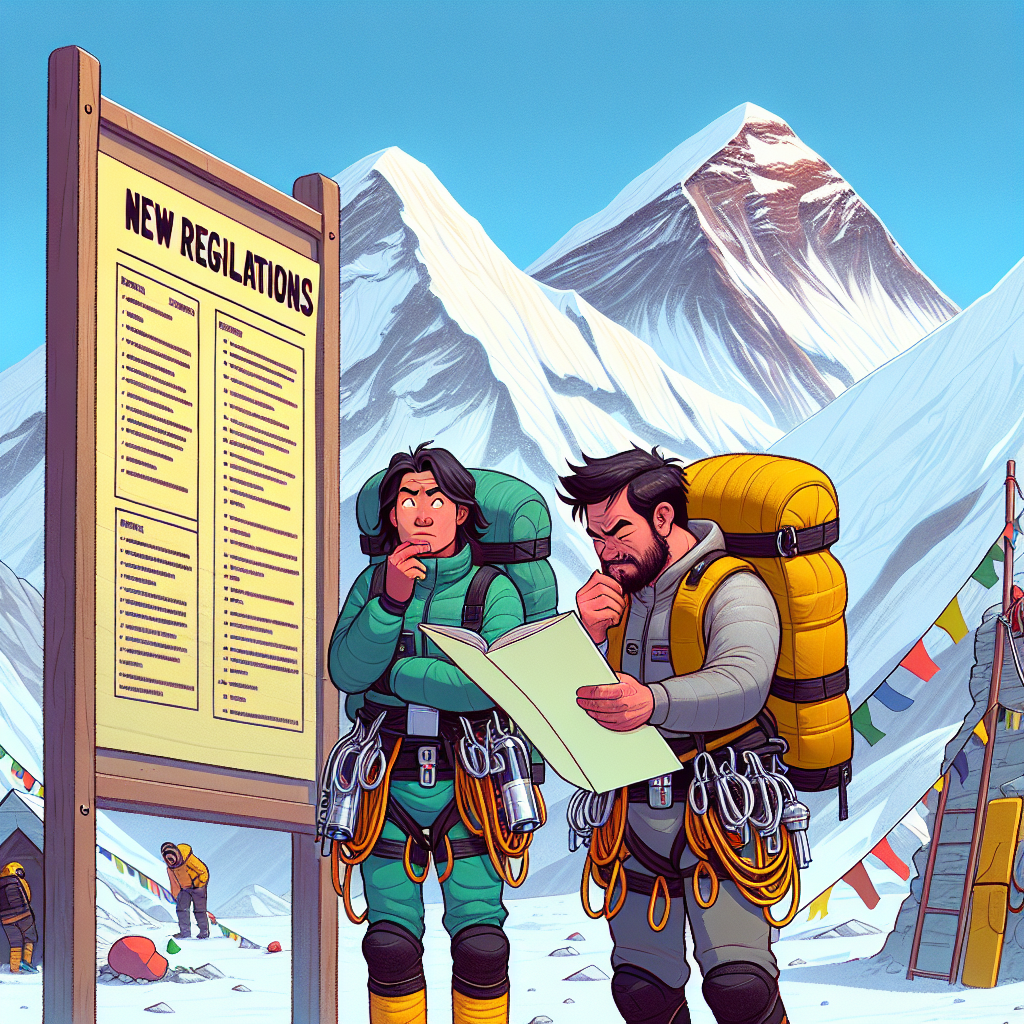
New Regulations for Aspiring Mount Everest Climbers in Nepal

New Regulations for Aspiring Mount Everest Climbers in Nepal
Introduction to the New Regulations
Nepal has introduced a series of new regulations aimed at ensuring the safety and sustainability of climbing Mount Everest. These measures are designed to address the growing concerns over overcrowding, environmental impact, and the safety of climbers.

Key Changes in Climbing Requirements
- Experience Requirement: Climbers must have prior experience of scaling peaks above 6,500 meters (21,325 feet) before attempting Everest.
- Mandatory Training: Aspiring climbers are required to undergo a comprehensive training program in Nepal to better prepare for the challenges of Everest.
- Increased Permit Fees: The cost of climbing permits has been increased to help fund safety measures and environmental conservation efforts.
Environmental and Safety Measures
The new regulations also emphasize the importance of preserving the natural environment and ensuring climber safety. Key initiatives include:


- Waste Management: Climbers must adhere to strict waste management protocols to minimize environmental impact.
- Rescue Operations: Enhanced rescue operations and medical facilities are being established to respond to emergencies more effectively.
Impact on the Climbing Community
These regulations are expected to have a significant impact on the climbing community, potentially reducing the number of climbers but improving overall safety and environmental conditions. The measures aim to create a more sustainable and responsible climbing culture on Everest.


Conclusion
The new regulations for Mount Everest climbers in Nepal are a crucial step towards ensuring the safety of climbers and the preservation of the mountain’s environment. By implementing stricter requirements and enhancing safety measures, Nepal aims to foster a more sustainable and responsible approach to climbing the world’s highest peak.













