
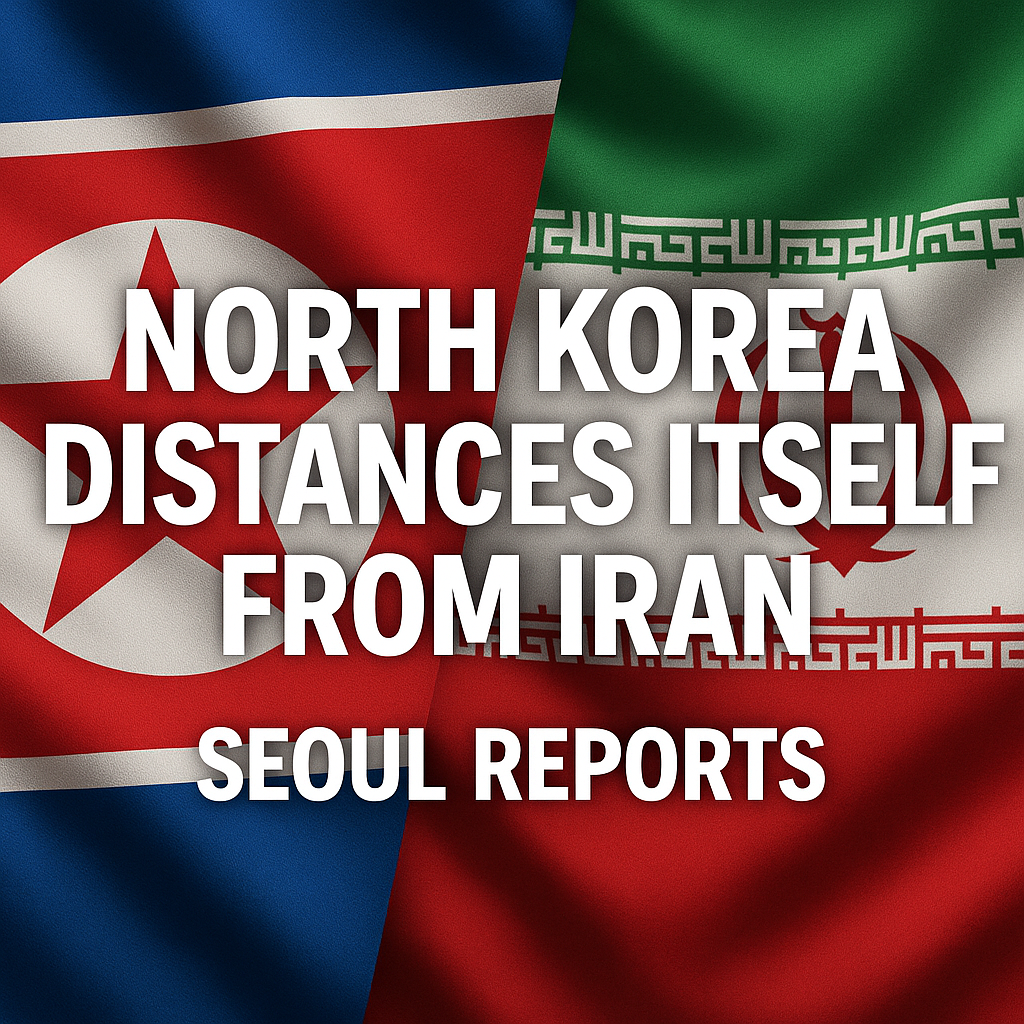
North Korea Distances Itself from Iran, Seoul Reports

North Korea Distances Itself from Iran, Seoul Reports
Recent developments have emerged signaling that North Korea may be distancing itself from Iran, a move that has raised eyebrows among international observers. According to reports from Seoul, the shift in North Korea’s diplomatic posture could have significant implications for geopolitical dynamics in Asia and beyond.

An Emerging Divide?
Several news outlets have reported that North Korea is reevaluating its ties with Tehran, a relationship that has historically been characterized by mutual support against Western powers. According to a recent piece from Al Jazeera, Seoul’s analysis suggests that North Korea is increasingly wary of Iran’s entanglements with international sanction regimes, particularly in relation to its nuclear ambitions. This newfound caution could be a strategic maneuver by Pyongyang, indicating a possible shift in its foreign policy landscape.


The dynamics of this distancing are complex and multifaceted. North Korea has long relied on Iran as a partner for technology transfers and military cooperation, most notably in the realm of missile development. However, recent reports indicate a growing recognition within North Korea that aligning too closely with Iran could bring unwanted scrutiny from global powers, especially as both nations continue to navigate their own internal and external pressures.


Concerns Over Military Cooperation
A key factor influencing North Korea’s distancing from Iran appears to be the deterrent effect of heightened scrutiny from the international community. As highlighted in a report by RT, analysts suggest that North Korea might be reassessing its military cooperation with Iran due to concerns over joint projects being exposed, resulting in intensified sanctions against both nations.
Furthermore, South Korean officials note that North Korea may be prioritizing its relations with other nations, such as China and Russia, who are perceived as being more strategic partners in its ongoing quest for security and legitimacy. By aligning more closely with regional powers, North Korea could avoid the potential pitfalls of being too closely associated with Iran, which has been increasingly isolated on the world stage.
Understanding the Implications
The implications of North Korea’s distancing from Iran are substantial. On one hand, it could be seen as a move toward a more pragmatic foreign policy, one that could potentially open avenues for dialogue with other nations. On the other hand, analysts caution that a shift away from Iran does not necessarily denote a change in North Korea’s overall strategy regarding nuclear weapons. The country has repeatedly asserted its right to pursue its nuclear and missile programs, regardless of international opinion.
Moreover, the potential disengagement raises questions about the stability of alliances in a region already rife with tension. Countries like South Korea and Japan may interpret this distancing as a signal of North Korea’s desire for more flexible alliances, potentially altering the landscape of security in East Asia. If North Korea is indeed charting a new course, its interactions with Iran—or the lack thereof—could serve as a litmus test for broader geopolitical shifts.
Looking Ahead
While North Korea’s distancing from Iran may suggest an evolving international strategy, opinions on the matter are divided. Some experts welcome this potential shift, arguing that it could lead to reduced tensions in the region. Others warn that North Korea’s pursuit of its nuclear aspirations may continue unabated, regardless of its relationships with other countries.
In conclusion, the evolving dynamics between North Korea and Iran merit close attention. Seoul’s assessment suggests significant implications for regional security and international diplomacy. As North Korea navigates this complex situation, the global community must watch carefully to understand how these shifts may affect the broader geopolitical landscape. A nuanced understanding of this divide will be essential for policymakers and analysts as they grapple with the implications of North Korea’s evolving international partnerships.















