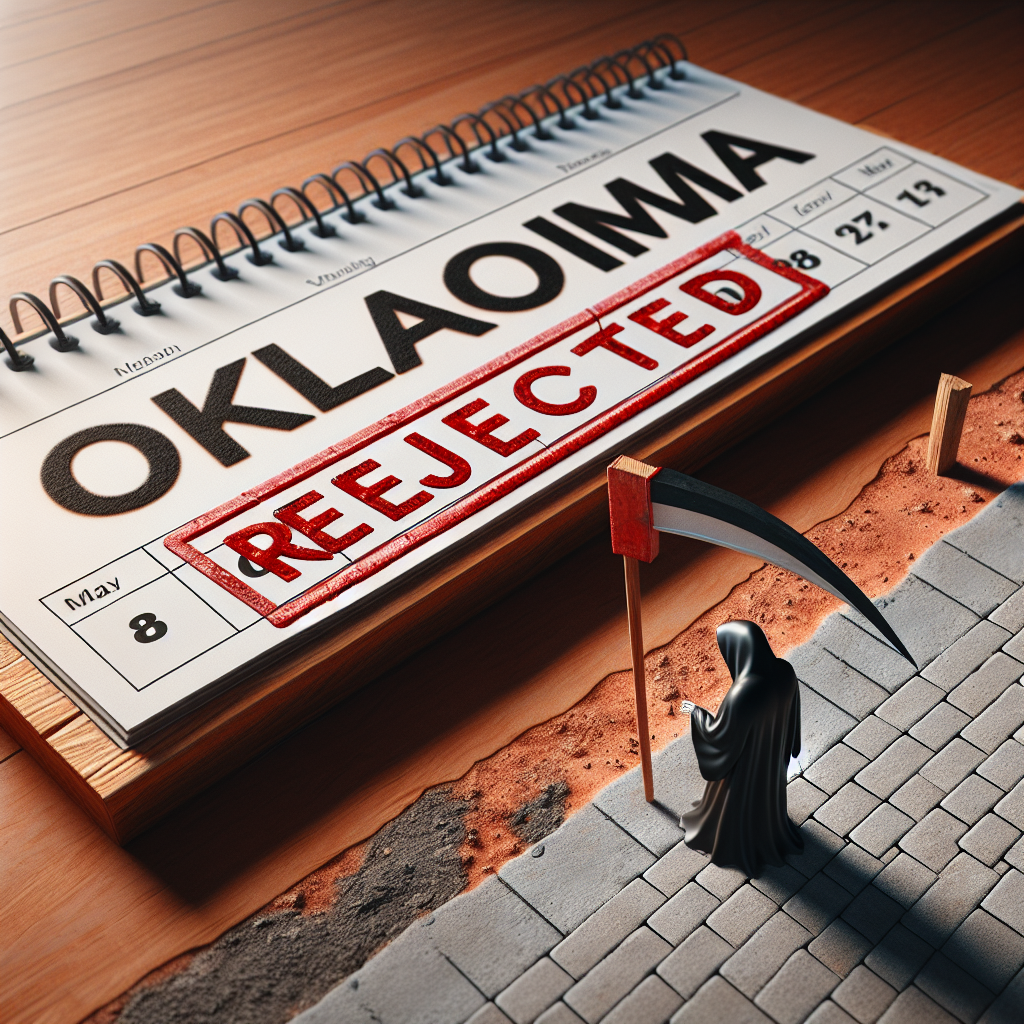
Oklahoma Board Rejects Clemency, Paves Way for March Execution of Death Row Inmate

Oklahoma Board Rejects Clemency, Paves Way for March Execution of Death Row Inmate
Overview
The Oklahoma Pardon and Parole Board has made a pivotal decision, rejecting clemency for a death row inmate, thereby setting the stage for his execution in March. This decision has sparked discussions on the state’s capital punishment policies and the broader implications for justice and human rights.

Key Details
- Decision Outcome: The board voted against granting clemency, with a majority ruling that the execution should proceed as scheduled.
- Inmate Profile: The inmate, whose identity has been a focal point of the case, has been on death row for a significant period, convicted of a high-profile crime.
- Execution Date: The execution is slated for March, marking a significant event in the state’s legal calendar.
Implications
The board’s decision has several implications, both legally and socially:
Ads


- Legal Precedent: This decision reinforces the state’s stance on capital punishment, potentially influencing future clemency appeals.
- Public Reaction: The ruling has elicited varied responses from the public, with some advocating for justice and others calling for a reevaluation of the death penalty.
- Human Rights Concerns: The case has drawn attention from human rights organizations, highlighting ongoing debates about the morality and efficacy of capital punishment.
Conclusion
The Oklahoma Pardon and Parole Board’s decision to deny clemency underscores the complexities surrounding capital punishment. As the execution date approaches, the case continues to provoke discussion on justice, legal ethics, and human rights, reflecting broader societal tensions regarding the death penalty.
Ads

Ads

Ads

Ads

Ads

Ads

Ads

Ads

Ads

Ads

Ads

Ads

Ads