AI’s Next Race Is Not About Bigger Models — It’s About Making Intelligence Work in the Real World
AI’s next phase may focus less on building larger models and more on improving inference, enabling systems to respond and make decisions in real time. AI is also expanding into robotics and other physical applications that interact with the world.
This shift is increasing demand for specialized processors, high-bandwidth networks, data centers, and reliable energy. Smaller, efficient systems operating near users or within machines could drive growth in edge computing, devices, automation, and new product designs.
Artificial intelligence has spent the past few years competing over bigger models, larger datasets, and more powerful computing systems. But the next stage of the industry may be defined by a different question: how effectively can AI operate in the real world?
The shift is already becoming visible across the technology industry. Companies are investing heavily in AI inference, the process that allows trained models to respond to users and make decisions in real time. Unlike model training, inference is what makes AI useful when someone asks a question, an application generates a response, or an automated system needs to make a decision.

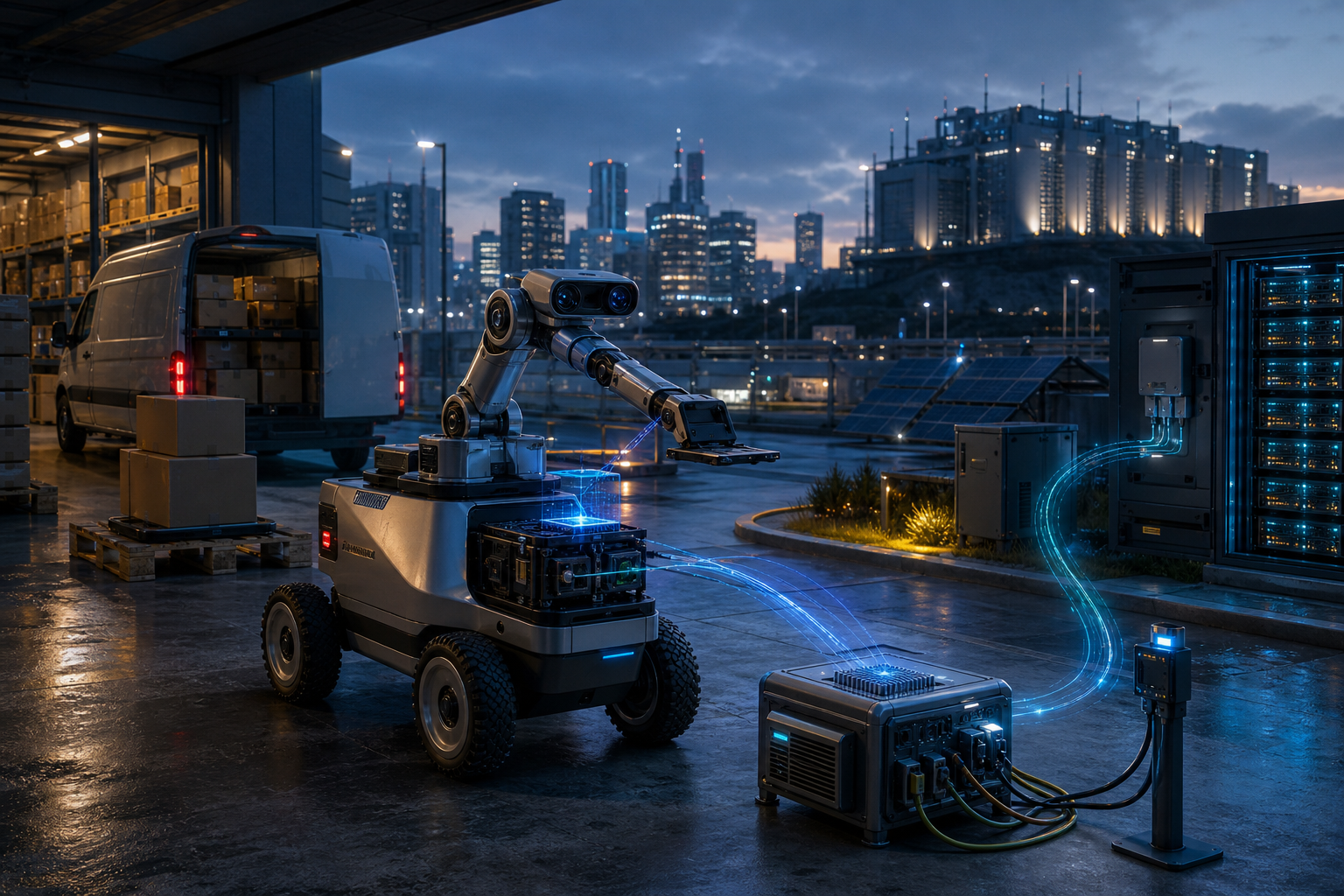
At the same time, AI is moving beyond screens. Robotics companies are developing systems that can perceive their surroundings, interpret information, and perform physical actions. This emerging field, often called Physical AI, connects artificial intelligence with robots, industrial machines, vehicles, and other systems that operate in the physical world.

This transformation is also creating a major infrastructure challenge. As AI applications become more widespread, the industry needs faster processors, specialized chips, high-bandwidth networks, powerful data centers, and reliable energy to support millions of real-time interactions. The challenge is no longer simply building a smarter model; it is creating the technological environment needed to deliver intelligence quickly and efficiently.

The economic implications could be significant. Smaller and more efficient AI systems that operate close to users or directly inside machines may become increasingly valuable. This could accelerate investment in edge computing, specialized processors, AI-enabled devices, and new forms of automation while changing how companies design their products and services.
The next AI winners may therefore not be determined by who creates the biggest model alone. They may be the companies that successfully turn intelligence into something useful, affordable, reliable, and accessible in everyday environments. The future of AI could be less about how large a model becomes and more about how effectively that intelligence can work outside the laboratory.