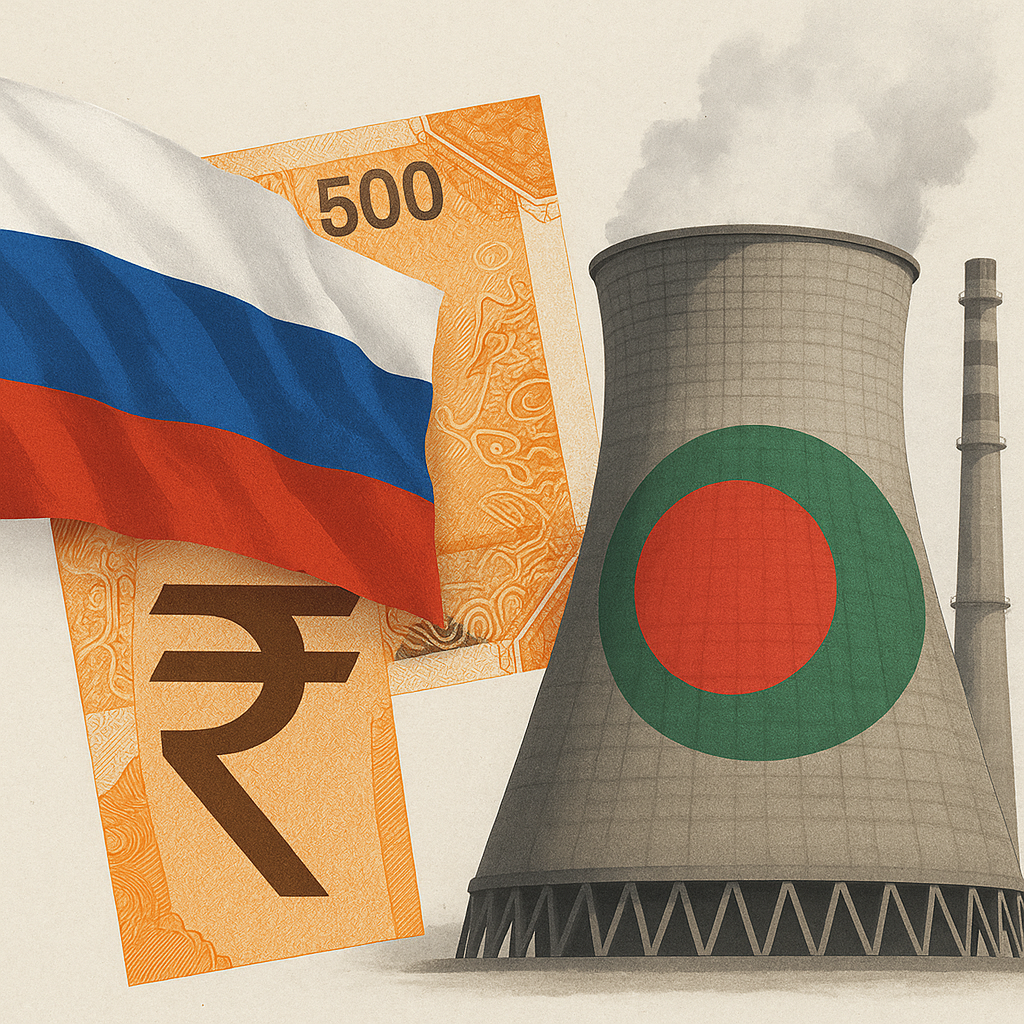
Russia Considers Indian Rupee Payments for Bangladesh Nuclear Plant
Russia is actively considering the use of the Indian rupee for payments related to the ongoing construction of the Rooppur Nuclear Power Plant in Bangladesh. This development represents a significant shift in international financial transactions and highlights the complex geopolitics at play, particularly in the context of ongoing sanctions against Russia.

Shifting Payment Dynamics
Traditionally, international trade involving large projects such as nuclear power plants has relied heavily on major currencies like the US dollar or the euro. However, the increasing pressures from sanctions on Russia following its actions in Ukraine have spurred a reevaluation of these norms. This reevaluation is not merely a financial maneuver, but a reflection of shifting alliances in an increasingly multipolar world.

According to recent reports, Russia’s state nuclear corporation, Rosatom, has proposed handling payments in Indian rupees. This decision may streamline transactions for the project while also enabling a workaround for the sanctions that have hampered Russian financing options. The Indian rupee’s inclusion signifies a strengthening of economic ties between Russia and India, as both nations seek to bolster their economies amid fluctuating global dynamics.

Implications for Bangladesh and its Energy Future
The Rooppur Nuclear Power Plant, which is set to be Bangladesh’s first nuclear facility, is pivotal for the country’s energy strategy. It aims to meet the growing energy demands of its rapidly developing economy, with expectations to generate up to 2,400 megawatts of electricity. Thus, the change in payment method has both immediate and long-term implications for Bangladesh.
By potentially using the Indian rupee, Bangladesh could facilitate easier access to financing and, relatedly, mitigate some of the risks associated with currency fluctuations. However, the reliance on the rupee also raises questions about Bangladesh’s economic independence and its looming reliance on Indian economic influence. Critics express concerns regarding the geopolitical ramifications, including how this relationship may affect Bangladesh’s standing with other nations, particularly those allied with the West.
Diverse Perspectives
In examining this issue, it’s essential to consider the perspectives offered by different stakeholders. Proponents of this financial shift argue that it represents a pragmatic solution to an increasingly complex trade environment. They contend that using the Indian rupee can enhance regional economic cooperation and encourage investments in infrastructure, which is critical for Bangladesh’s growth trajectory.
On the other hand, skeptics highlight potential pitfalls. They argue that this move could further entrench Bangladesh into a dependency on Russia and India for critical energy needs. Moreover, this could alienate other potential partners, especially Western nations, which may view the arrangement as a tacit endorsement of Russia’s position in international conflicts.
The Bigger Picture
The proposal to use the Indian rupee raises broader questions about the future of global trade and finance. Experts suggest that this could signal the beginning of a trend where countries may increasingly turn to alternative currencies to mitigate the effects of sanctions and geopolitical tensions. As countries like Russia seek to foster new trade relationships, the international economic landscape could be reshaped dramatically, leading to heightened competition among alternative currencies.
However, while the implications of this shift are significant, uncertainties remain. As both Russia and Bangladesh navigate these uncharted waters, the true impact of such financial strategies will depend on multiple variables—economic stability, geopolitical alliances, and the evolving global trade climate.
Conclusion
The consideration of Indian rupee payments for the Rooppur Nuclear Power Plant is emblematic of a broader trend towards diversification in global finance, influenced by pressing geopolitical realities. As nations adapt to a changing world, the implications for Bangladesh’s energy future, economic independence, and its role on the international stage will unfold over time. This uncharted territory may redefine existing alliances and economic relationships, underscoring an essential transformation in how countries conduct financial transactions in an ever-changing geopolitical landscape.