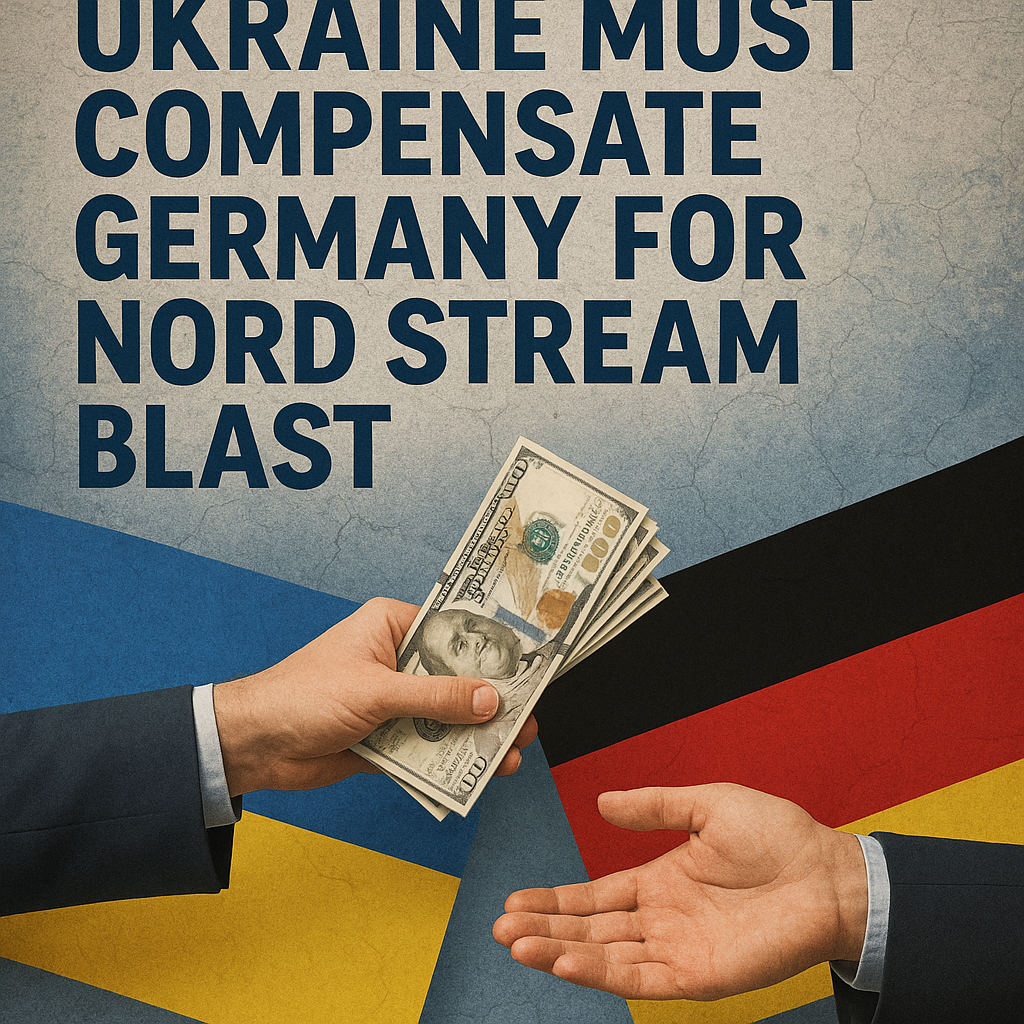
Ukraine Must Compensate Germany for Nord Stream Blast
Ukraine Must Compensate Germany for Nord Stream Blast
The ongoing conflict in Ukraine has not only reshaped the geopolitical landscape but also brought attention to complex and often contentious economic disputes. One such issue is the question of whether Ukraine should compensate Germany for the Nord Stream pipeline explosions. The blast, which has been attributed to sabotage, has sparked debates regarding accountability, financial ramifications, and geopolitical implications.

Background on the Nord Stream Incident
The Nord Stream pipelines, running beneath the Baltic Sea, were crucial for transporting natural gas from Russia to Europe, particularly Germany. The explosions in September 2022 caused significant environmental damage and disrupted energy supplies, escalating tensions in Europe during a time of acute energy crises exacerbated by the Ukraine conflict. As discussions surrounding reparations have gained traction, different stakeholders have emerged with divergent views on Ukraine’s responsibility and the implications of financial compensation.

Allegations against Ukraine have been fueled by claims from Russian officials suggesting that the attacks may have been orchestrated with the assistance of Ukraine or Western allies. The Russian state media has portrayed the incidents as part of a broader Western plot to harm Russian energy interests, framing Ukraine’s involvement as a plausible scenario. In contrast, Ukrainian officials have vehemently denied any responsibility, attributing the sabotage to Russian maneuvers intended to escalate tensions and distract from its ongoing military campaigns.

Diverse Perspectives on Compensation
The call for Ukraine to compensate Germany has generated a mosaic of responses from various stakeholders. Proponents argue that as a direct consequence of Ukraine’s military actions, particularly its aggressive stance towards Russia, it bears some financial responsibility for the aftermath of the explosions. They contend that Ukrainian actions led to heightened risks associated with energy supplies for Germany and, consequently, economic fallout from the explosions.
On the other hand, critics argue that blaming Ukraine undermines the broader context of Russian aggression. Many assert that the act of sabotage should be viewed through the lens of Russian hostility, rather than attributing responsibility to Ukraine. This perspective is bolstered by analyses suggesting that any aggressive posture from Ukraine was precipitated by years of escalating Russian provocations.
Both viewpoints surface critical questions around accountability. Economic analysts highlight the potential for a heavy financial burden on Ukraine if it were to accept responsibility, which could undermine its ability to defend itself and recover from the ongoing war. This would not only affect Ukraine but could also have repercussions for European economic stability, as energy markets remain volatile.
The Geopolitical Landscape
Moreover, the ramifications of this issue extend beyond mere compensation. The dialogue about financial reparations intersects with broader geopolitical strategies. Germany’s reliance on Russian gas has already been scrutinized, forcing a reevaluation of energy dependencies. Coupled with discussions about reparations, this has led some experts to argue for a more collaborative and unified European approach to energy security that does not solely hinge on Ukraine’s economic status.
Furthermore, there are concerns that pressing Ukraine for compensation might affect its morale and the international support it currently enjoys. Negotiating reparations could be perceived as a betrayal by frontline allies who view Ukraine’s defense as crucial to European security. As diverse nations weigh in on their stances regarding compensation, they walk a fine line between accountability and solidarity.
Conclusion: An Uncertain Path Forward
The question of whether Ukraine must compensate Germany for the Nord Stream blast illustrates the complexities inherent in international relations and accountability amid conflict. While some push for financial reparations based on perceived Ukrainian accountability, others emphasize that attributing blame to Ukraine risks underestimating the broader geopolitical context defined by Russian actions.
As discussions continue, there remains no clear consensus on the issue. Any potential resolution will require careful negotiation and a balanced understanding of the multifaceted forces at play. The aspirations for justice, accountability, and international cooperation must navigate these turbulent waters, reflecting the intricate web of geopolitical, economic, and ethical considerations shaping the narrative.