
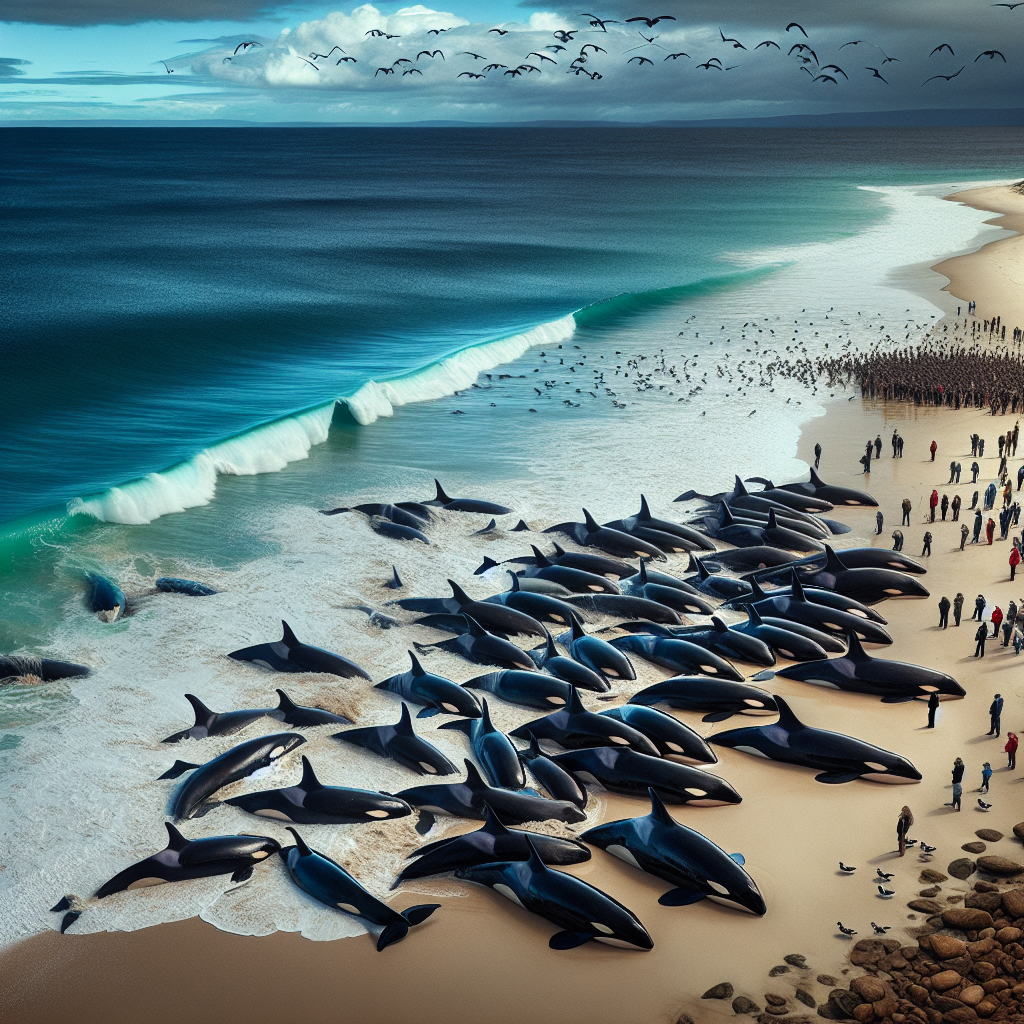
Over 150 False Killer Whales Stranded on Tasmania Beach

Mass Stranding of False Killer Whales on Tasmania Beach
Incident Overview
In a tragic event, over 150 false killer whales were found stranded on a remote beach in Tasmania, Australia. This incident has raised concerns among marine biologists and conservationists, prompting immediate rescue and research efforts.

Key Details
- Location: The stranding occurred on a secluded beach in Tasmania, making access and rescue operations challenging.
- Species Affected: False killer whales, a species known for their social nature and complex behaviors.
- Number of Whales: More than 150 individuals were involved in the stranding.
Rescue Efforts
Rescue teams, including local volunteers and marine experts, have been mobilized to save as many whales as possible. The efforts include:


- Providing immediate care to the stranded whales.
- Attempting to refloat the whales back into deeper waters.
- Monitoring the health and behavior of the rescued whales.
Possible Causes
While the exact cause of the stranding remains unknown, experts suggest several potential factors:


- Disorientation due to environmental changes or human activities.
- Social bonding, where healthy whales follow sick or disoriented leaders.
- Natural phenomena such as geomagnetic anomalies.
Environmental Impact
The stranding event highlights the vulnerability of marine life to environmental changes and human impact. It underscores the need for increased research and conservation efforts to protect these intelligent creatures.
Conclusion
The mass stranding of false killer whales on a Tasmanian beach is a poignant reminder of the delicate balance within marine ecosystems. While rescue efforts are underway, the incident calls for a deeper understanding of the factors leading to such events and reinforces the importance of marine conservation initiatives.















