
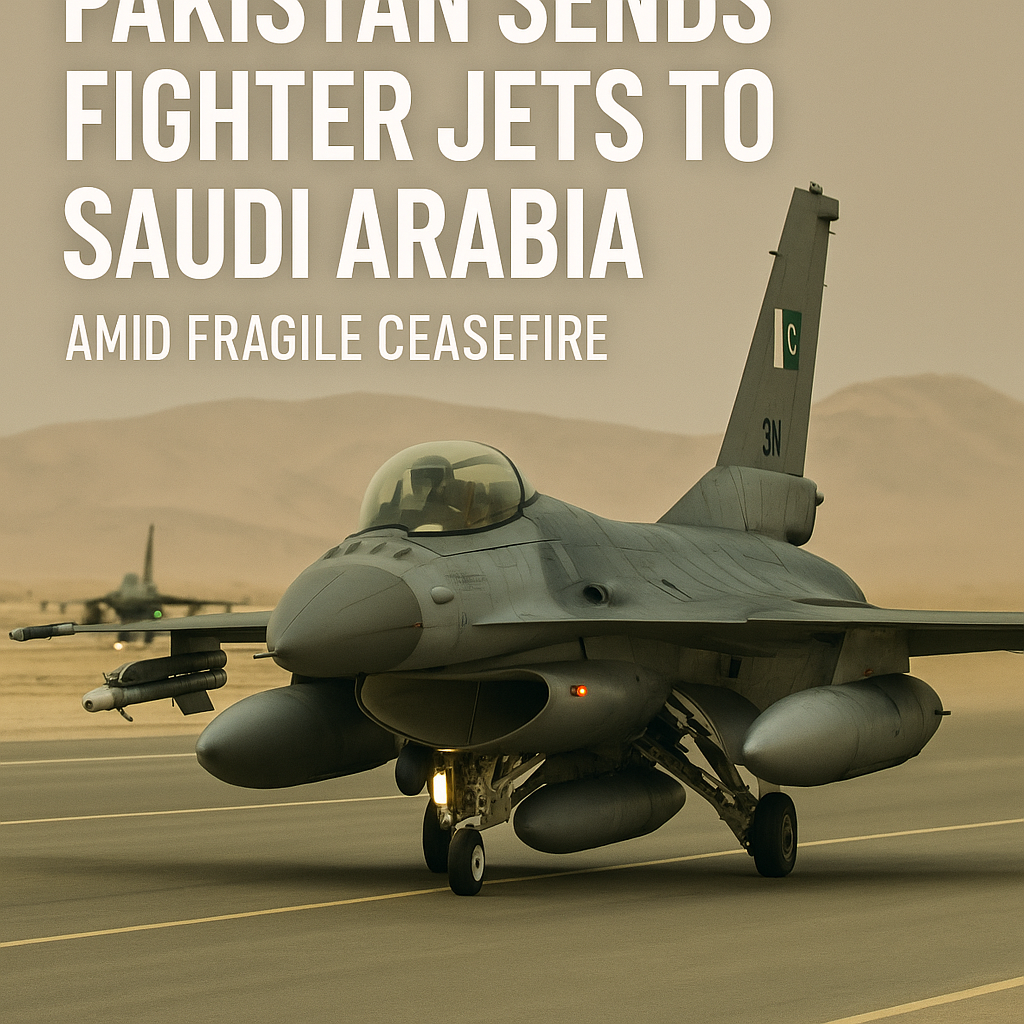
Pakistan Sends Fighter Jets to Saudi Arabia Amid Fragile Ceasefire

Pakistan Sends Fighter Jets to Saudi Arabia Amid Fragile Ceasefire
In a surprising move, Pakistan recently dispatched fighter jets to Saudi Arabia, a decision that comes at a time when the region is navigating a fragile ceasefire mediated primarily by the United States and Iran. This development raises multiple questions about the current geopolitical landscape and the implications for international relations in the Middle East.

An Evolving Regional Dynamic
The deployment of fighter jets signifies not just a military assistance but also a shift in alliances and power dynamics. Historically, Pakistan and Saudi Arabia have maintained a close relationship, particularly fueled by defense cooperation and economic ties. However, the recent ceasefire between the U.S. and Iran adds layers of complexity to their interactions.


Pakistan’s Military Strategy and Regional Relations
According to reports from Al Jazeera, Pakistan’s decision to send these jets to Saudi Arabia is aimed at bolstering the latter’s defense capabilities amid ongoing tensions with Iran-backed Houthi rebels in Yemen. In return, Saudi Arabia has pledged to support Pakistan in countering economic challenges, including a potential financial aid package and investments in various sectors.


However, this assistance may not come without consequences. As Pakistan enhances its military presence in the region, it could potentially aggravate tensions with Iran, which perceives the move as a threat. Iran’s Foreign Ministry has vocalized its views, urging regional nations to prioritize diplomacy over militaristic shows of force. This sentiment echoes a broader concern that military alliances may escalate conflicts rather than resolve them.
Diverse Perspectives on Military Alliances
While some analysts argue that Pakistan’s military support reflects a pragmatic approach to ensuring regional stability, others caution against the implications such actions have on diplomatic relations. For instance, an expert from Sky News commented that Pakistan’s decision could lead to greater militarization in an already volatile region. The fear is that increased military presence may inadvertently provoke clashes, potentially undermining the fragile ceasefire agreement.
Conversely, proponents of the move argue that Pakistan’s involvement is essential for ensuring security in the Gulf, particularly in light of Saudi Arabia’s longstanding vulnerability to external threats. RT news reflected views from regional security analysts who suggest that a robust Saudi defense may deter Iranian aggressive posturing, thus maintaining a delicate equilibrium in the region.
A Balancing Act for Pakistan
For Pakistan, the decision to send fighter jets is a strategic balancing act. On the one hand, it is strengthening ties with a significant ally in Riyadh, a relationship that has garnered substantial military and economic support. On the other hand, it risks alienating Iran, which is increasingly assertive in its regional ambitions.
These actions must also be viewed within the context of Pakistan’s own domestic challenges, including economic instability. By fortifying its military partnerships, Pakistan seeks not only immediate security benefits but also long-term economic aid. However, analysts worry about the increasing entrenchment in a geopolitical quagmire that may lead to greater instability rather than resolution.
Conclusion: The Road Ahead
In essence, Pakistan’s decision to send fighter jets to Saudi Arabia reflects a multifaceted geopolitical landscape that is constantly in flux. While the military support may provide immediate advantages to Riyadh, it also raises significant risks of escalating regional tensions and could complicate the fragile ceasefire brokered between the U.S. and Iran.
As the situation unfolds, all eyes will be on how this development affects not only Saudi-Iranian relations but also the broader Middle Eastern geopolitical architecture. It remains uncertain whether military alliances will bring about stability or merely deepen the region’s existing challenges. Consequently, ongoing dialogue and diplomatic efforts will be crucial in navigating these complexities to foster lasting peace.















