Palestinian Family Mourns Son Killed Seeking Work in Israel

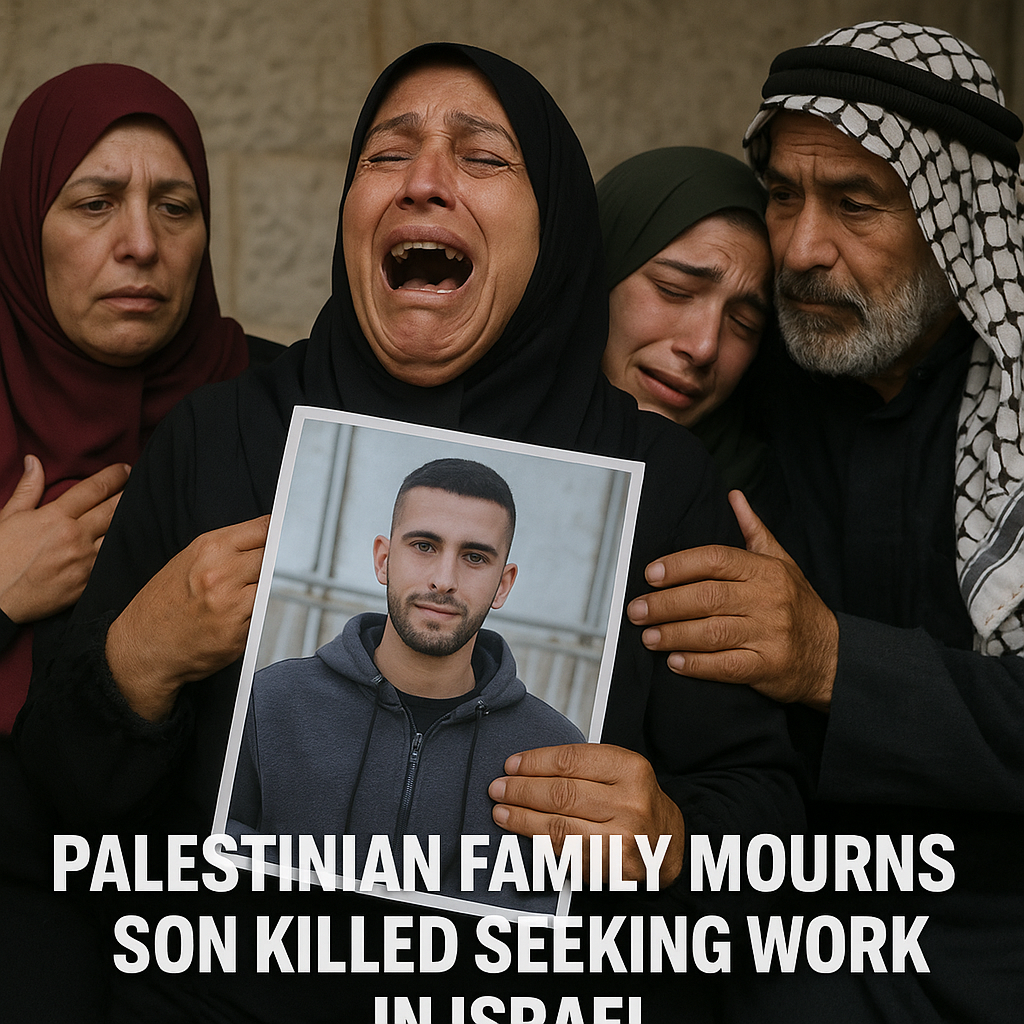
The tragedy of a Palestinian family mourning the loss of their son, who was killed while attempting to find work in Israel, reflects the broader complexities surrounding the Israeli-Palestinian conflict. This incident underscores not only the daily struggles faced by many Palestinians seeking economic opportunities but also the perilous circumstances that often accompany these desires.

The Incident: A Search for Work
Reports indicate that the 22-year-old victim, identified as Ahmed Abu Kf, was trying to cross the separation wall at the Qalandia checkpoint when he was shot by Israeli forces. Witnesses report that he was not involved in any violent activities and was merely looking for employment to support his family. This account aligns with the profiles of many young Palestinians who, faced with limited economic prospects in the occupied territories, often turn their hopes toward Israel, where job opportunities, albeit precarious, might be more plentiful.


The region’s economic conditions have reportedly driven an increasing number of young people to seek work in Israel, a choice that comes with significant risks. According to Al Jazeera, the unemployment rate in Gaza and the West Bank remains alarmingly high, leaving many families in dire straits. Ahmed’s family, like countless others, faced limited options, making the perilous crossing seem like their only path to financial stability.


Spheres of Contention: Responses Varied
The responses to this incident highlight the contrasting narratives that often define the Israeli-Palestinian discourse. Some sources emphasize that individuals crossing into Israel for work must navigate a high-security environment, where Israeli forces are often on alert for perceived threats. Critics argue that the Israeli military’s engagement and use of live ammunition against unarmed individuals attempting to cross the borders raises grave concerns about human rights and the rules of engagement.
On the other hand, Israeli authorities have described their security measures as essential for protecting their citizens from potential threats. They argue that the ongoing regional hostilities and past incidents necessitate a strict stance, particularly at sensitive border checkpoints. However, the deployment of deadly force in situations involving unarmed civilians has drawn significant backlash from various human rights organizations. Reports from RT note that this incident has stirred debate about the appropriateness of force used in such contexts, with calls for accountability and investigations into the incident gaining traction.
The Broader Context: A Cycle of Despair
The death of Ahmed Abu Kf is emblematic of a larger cycle of despair many Palestinians experience, where economic desperation fuels risky choices that can lead to tragic outcomes. Many families voice their heartache over the systemic barriers that limit economic mobility, expressing that their dreams of a more stable life often hang by a thread.
In light of the continuing tensions, the international community’s response remains fragmented. While various organizations advocate for Palestinian rights, others support Israel’s right to defend its borders, creating an intricate balance of opinions. This dissonance complicates matters further, as the ongoing conflict morphs into a cycle of violence and grief.
In the wake of Ahmed’s death, his family has called for justice, reflecting the sentiments of many Palestinian families whose loved ones have suffered at the hands of military actions. The echoes of their pain resonate through both local and international channels, pleading for both recognition of their humanity and for a more profound understanding of their plight.
Conclusion: Seeking Understanding Amidst Grief
This heartbreaking narrative serves to remind us of the intricate human elements intertwined in the politics of the Israeli-Palestinian conflict. While economic desperation drives individuals like Ahmed to take unprecedented risks, it also casts a spotlight on the boundaries between survival and safety, between aspiration and reality.
As international discussions continue, the focus must remain on shaping a discourse that acknowledges the complexities of these lives rather than simply framing them through the lens of conflict. Addressing the underlying economic and social issues that lead individuals to perilous situations can pave the way for healthier dialogues and, ideally, a more peaceful coexistence between Israelis and Palestinians.
Empathy, understanding, and actionable solutions are crucial for moving forward, lest we continue to witness families mourning at the intersection of hope and despair.