
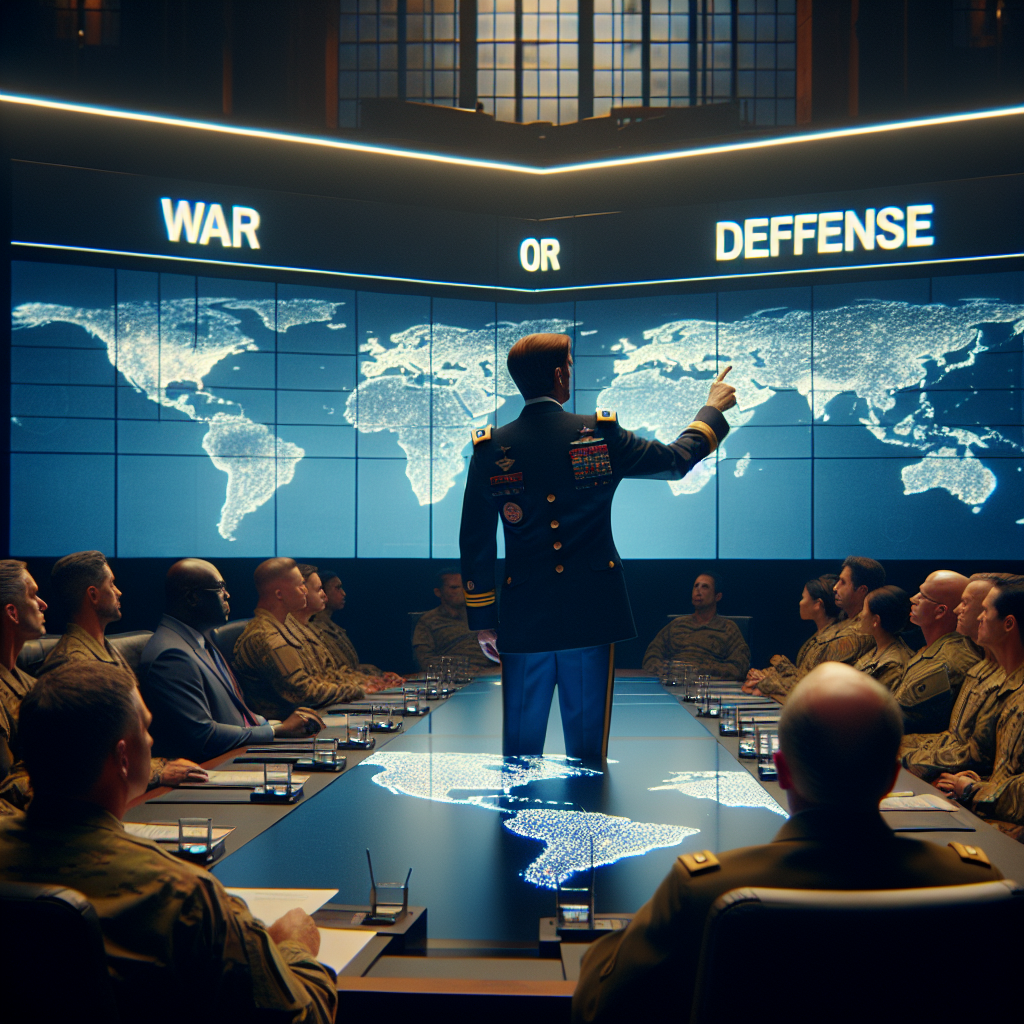
Pentagon Chief Presents Options: War or Defense

Pentagon Chief Presents Options: War or Defense
Introduction
In a pivotal moment for U.S. military strategy, the Pentagon Chief has laid out critical options for the nation’s future approach to global security. The choices presented revolve around two primary paths: engaging in proactive warfare or bolstering defensive capabilities.

Key Options Presented
- Proactive Warfare: This option involves taking an aggressive stance on global threats, potentially engaging in preemptive strikes to neutralize perceived dangers before they escalate.
- Enhanced Defense: Focuses on strengthening the nation’s defensive measures, including advanced technology and strategic alliances, to deter potential aggressors without initiating conflict.
Strategic Considerations
The decision between these options is influenced by several strategic considerations:


- Global Threat Landscape: Analyzing current and emerging threats from state and non-state actors.
- Resource Allocation: Balancing budgetary constraints with the need for effective military readiness.
- International Alliances: The role of partnerships and coalitions in supporting either strategy.
Implications for National Security
The choice between war and defense has profound implications for national security:


- Military Readiness: The ability to respond swiftly and effectively to threats.
- Diplomatic Relations: How each option might affect the U.S.’s standing with allies and adversaries.
- Public Opinion: The potential impact on domestic support for military actions.
Conclusion
The Pentagon Chief’s presentation underscores a critical juncture in U.S. military policy. The decision between pursuing a path of proactive warfare or enhancing defensive capabilities will shape the nation’s security strategy for years to come. As global dynamics continue to evolve, the choice will require careful consideration of both immediate threats and long-term security goals.












