
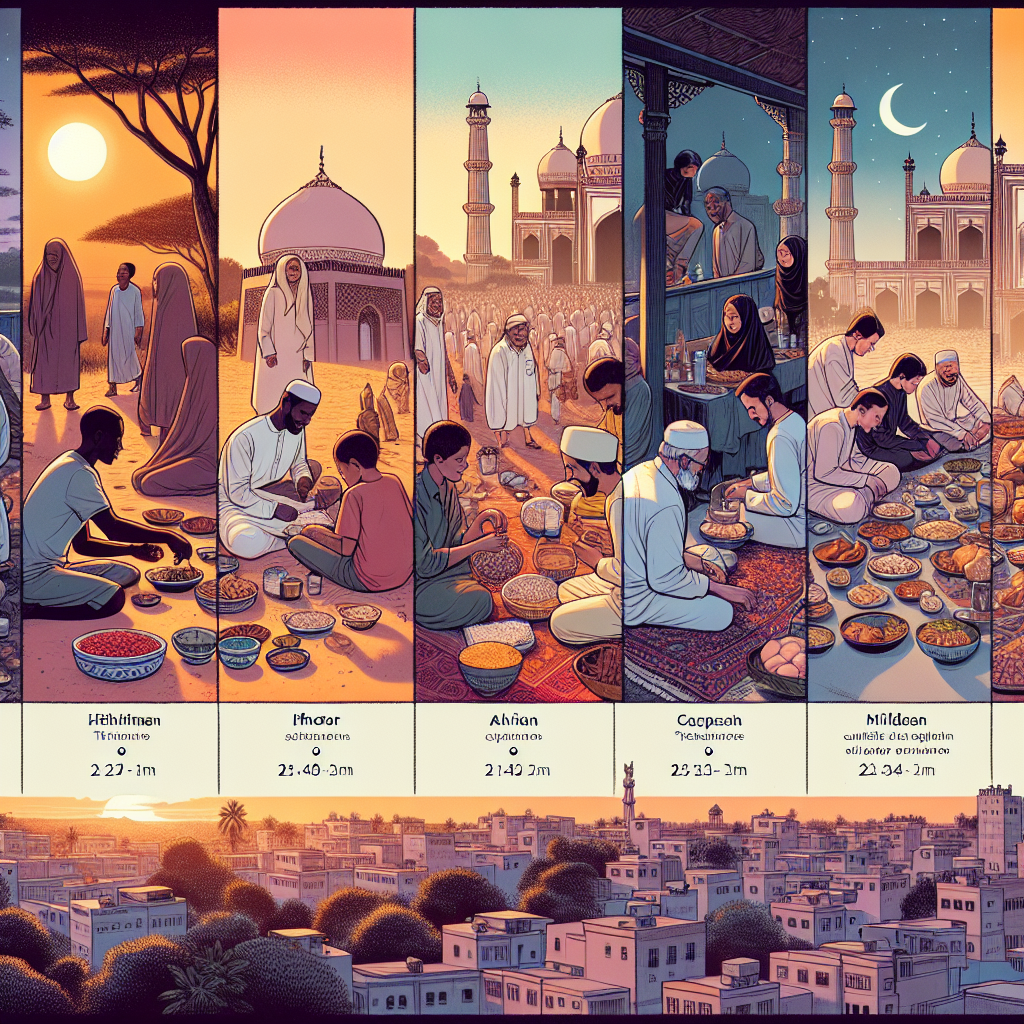
Ramadan 2025: Transition from Suhoor to Iftar Across Different Regions

Ramadan 2025: Transition from Suhoor to Iftar Across Different Regions
Introduction to Ramadan 2025
Ramadan, the holy month of fasting observed by Muslims worldwide, is a time of spiritual reflection, increased devotion, and community. In 2025, the transition from Suhoor (pre-dawn meal) to Iftar (meal to break the fast) varies significantly across different regions, influenced by geographical, cultural, and climatic factors.

Regional Variations in Fasting Hours
The length of fasting during Ramadan is determined by the sunrise and sunset times, which vary globally. Here are some key insights into how different regions experience Ramadan:


- Middle East: Typically experiences moderate fasting hours, ranging from 14 to 16 hours, with a strong emphasis on communal Iftar gatherings.
- Europe: Northern European countries face longer fasting hours, sometimes exceeding 18 hours, while Southern Europe enjoys shorter durations.
- Asia: Countries like Indonesia and Malaysia have relatively consistent fasting hours, around 13 to 14 hours, with vibrant Suhoor and Iftar traditions.
- North America: Fasting hours vary widely, with northern regions experiencing longer days compared to the south.
- Africa: Experiences diverse fasting durations, with North Africa having longer hours compared to sub-Saharan regions.
Cultural Practices and Traditions
Ramadan is not only about fasting but also about embracing cultural practices and traditions that enhance the spiritual experience. Some notable practices include:


- Suhoor Gatherings: Families and communities come together for Suhoor, sharing meals and prayers before the fast begins.
- Iftar Celebrations: Iftar is often a communal event, with families and friends gathering to break their fast with dates and water, followed by a hearty meal.
- Charity and Giving: Emphasis on charity, with many engaging in acts of kindness and donating to those in need.
- Night Prayers: Special prayers, known as Tarawih, are performed at night, fostering a sense of community and devotion.
Challenges and Adaptations
Fasting during Ramadan presents unique challenges, especially in regions with extreme daylight variations. Communities adapt by:
- Adjusting Work Schedules: Many workplaces offer flexible hours to accommodate fasting employees.
- Health Considerations: Emphasis on maintaining hydration and nutrition during non-fasting hours to ensure well-being.
- Community Support: Increased community support systems to assist those struggling with the demands of fasting.
Conclusion
Ramadan 2025 highlights the diverse experiences of Muslims worldwide as they transition from Suhoor to Iftar. Despite regional differences in fasting hours and cultural practices, the essence of Ramadan remains a unifying force, fostering community, spirituality, and compassion. As Muslims navigate the challenges and embrace the traditions of this holy month, the global Muslim community continues to thrive in its shared faith and values.















