
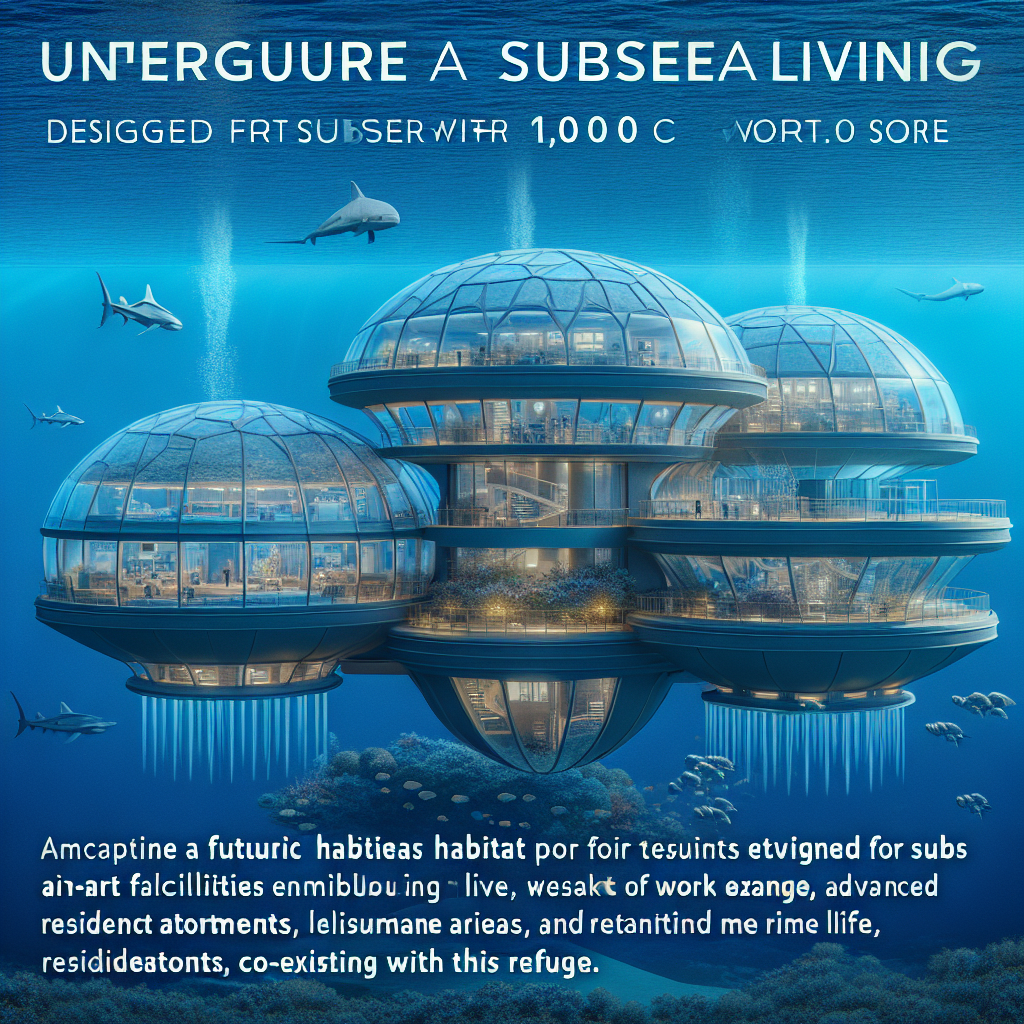
Rs 1,000 Crore Underwater Habitat to Enable Subsea Living by 2027

Rs 1,000 Crore Underwater Habitat: A Vision for Subsea Living by 2027
Introduction to the Ambitious Project
In a groundbreaking initiative, a Rs 1,000 crore project aims to establish an underwater habitat by 2027, marking a significant leap towards subsea living. This ambitious endeavor seeks to blend cutting-edge technology with sustainable living solutions beneath the ocean’s surface.

Key Features of the Underwater Habitat
- Innovative Design: The habitat will feature state-of-the-art architecture designed to withstand underwater pressures while providing a comfortable living environment.
- Sustainability Focus: Emphasis on eco-friendly materials and renewable energy sources to minimize environmental impact.
- Advanced Technology: Integration of smart systems for efficient resource management and communication with the surface.
Potential Benefits of Subsea Living
- Environmental Research: Offers a unique platform for marine scientists to study ocean ecosystems up close.
- Resource Exploration: Facilitates exploration of underwater resources, potentially leading to new discoveries.
- Tourism and Recreation: Opens new avenues for underwater tourism, providing an unparalleled experience for adventure seekers.
Challenges and Considerations
- Technical Hurdles: Overcoming engineering challenges related to pressure, temperature, and corrosion.
- Environmental Impact: Ensuring the project does not disrupt marine life or ecosystems.
- Cost Management: Balancing the high costs of construction and maintenance with potential economic benefits.
Conclusion
The Rs 1,000 crore underwater habitat project represents a bold step towards realizing the dream of subsea living. By 2027, it aims to offer a sustainable and innovative living solution beneath the ocean, with potential benefits for research, resource exploration, and tourism. While challenges remain, the project’s success could pave the way for future underwater habitats, transforming how we interact with our planet’s oceans.
Ads


Ads

Ads

Ads

Ads

Ads

Ads

Ads

Ads

Ads

Ads

Ads



